Expertenanalyse zu Otto Dixs Little Girl
Stil: Verism · Genre: nude painting (nu)
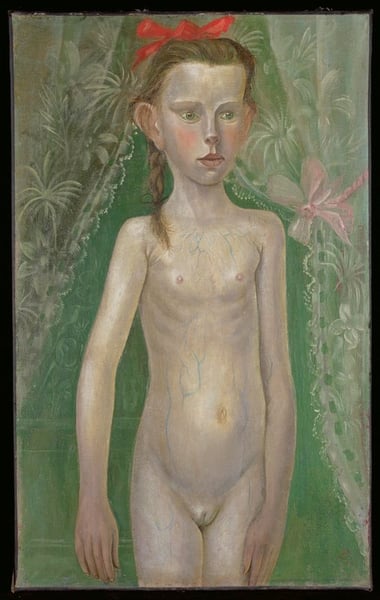
Otto Dix’s Little Girl (ca. 1920s) is a stark exemplar of Verism, the hyper-realist, socially critical wing of the New Objectivity movement. Within the genre of the nude—traditionally idealized in Western art—Dix subverts convention entirely. The work’s significance lies in its unflinching portrayal of childhood vulnerability, stripped of sentimentality. Dix applies the merciless, photorealistic precision of Verism to the young body, emphasizing awkward proportions, pallid skin, and an unsettling directness of gaze. This challenges the viewer to confront innocence as a social construct rather than a sacred ideal. The painting’s clinical detachment—characteristic of Dix’s post-war oeuvre—refuses the eroticized or pastoral conventions of the female nude, instead laying bare a raw, almost accusatory presence. In doing so, Little Girl becomes a moral commentary on the corruption of innocence in Weimar Germany, marking a radical departure from both academic naturalism and expressionist distortion. It is a quintessential Verist statement: truth as disquieting revelation.
Museum / Gallery
Visuell ähnlich
20 Werke mit ähnlicher Komposition und Farbpalette
Young Lady with Hat
Jean Paul Lemieux
Nude girl standing
Paula Modersohn-Becker
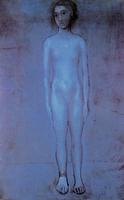
Standing young nude
Pablo Picasso
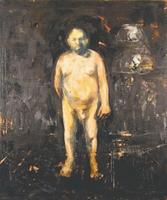
Mueller
Tony Scherman
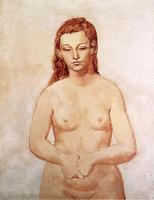
Nude with her hands pressed to each other
Pablo Picasso
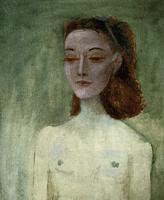
Portrait of Nusch Éluard
Pablo Picasso
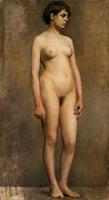
Nude Female Model
Pekka Halonen
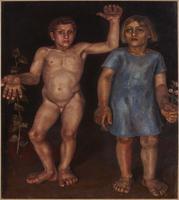
Children and Plants
Ángeles Santos Torroella
Nude Girl Standing, arms folded behind his head
Paula Modersohn-Becker
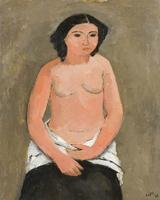
Breton Nude
William Scott
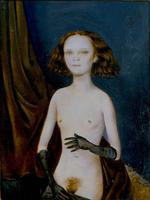
Nude Girl with Gloves
Otto Dix
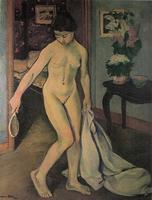
Nude at the Mirror
Suzanne Valadon
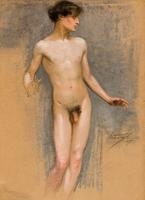
Male nude
Paul Mathiopoulos
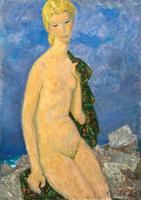
First Day at the Beach
Octav Angheluta
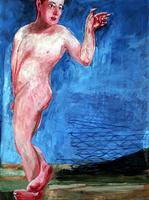
Prehistoric Figure
Charles Garabedian
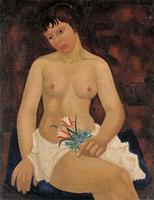
Nude with Tulips
Christopher Wood
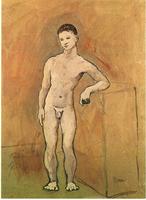
Nude Youth
Pablo Picasso
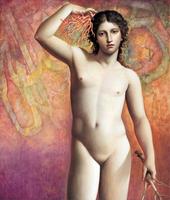
Il corallo
Carlo Maria Mariani
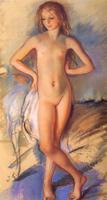
Nude Girl
Zinaida Serebriakova
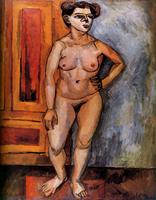
Nude
Raoul Dufy