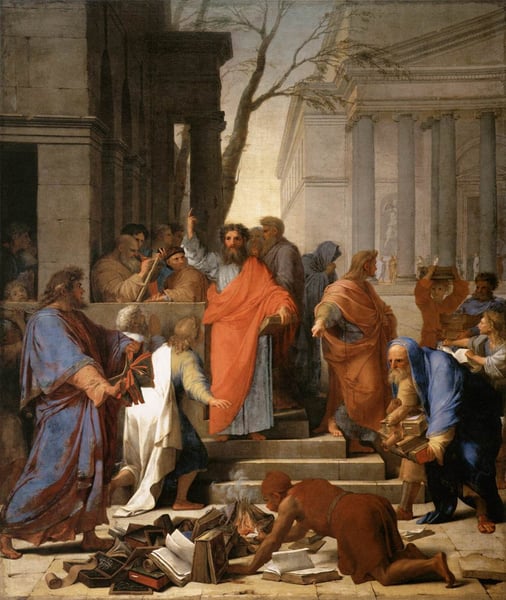
The Preaching of St. Paul at Ephesus
Dettagli
Analisi esperta di The Preaching of St. Paul at Ephesus di Eustache Le Sueur
Stile: Baroque · Genere: religious painting
Expert Analysis of "The Preaching of St. Paul at Ephesus" by Eustache Le Sueur
As a defining work within the French Baroque religious tradition, Eustache Le Sueur’s “The Preaching of St. Paul at Ephesus” exemplifies the period’s fusion of narrative clarity with dramatic spiritual intensity. Painted in a Baroque style that prioritizes emotional engagement and dynamic composition, the work captures the pivotal biblical moment from Acts 19, where St. Paul preaches to a diverse crowd of Ephesians, leading to widespread conversion.
Significance within the Baroque Style: Le Sueur, a leading painter of the French Baroque, distinguishes his approach from the more flamboyant Italian Baroque by emphasizing restraint, order, and a refined sense of classical harmony—a quality often associated with the “Attic” or “Poussiniste” tradition. Yet, the painting still employs quintessential Baroque devices:
- Chiaroscuro and Dramatic Lighting: A strong, directional light falls on St. Paul, elevating him as the spiritual focal point while casting the surrounding crowd into varying degrees of shadow and illumination. This theatrical lighting heightens the sermon’s emotional urgency and suggests divine revelation.
- Expressive Gestures and Composition: The figures are arranged in a dynamic, spiraling composition that draws the viewer’s eye from the foreground listeners—each reacting with awe, contemplation, or resistance—up to the raised arm of the apostle. This movement mirrors the Baroque interest in capturing a single, decisive, and emotionally charged instant.
- Narrative Accessibility: Le Sueur balances complexity with legibility. The scene is densely populated but organized into clear groups, making the biblical message visually immediate—a core goal of Baroque religious art to inspire devotion and understanding.
Significance as a Religious Painting: As a religious painting, the work transcends mere illustration. Le Sueur uses the Baroque formula to both humanize and elevate the miraculous. St. Paul is depicted not as a remote saint but as a fervent orator whose conviction is palpable. The varied reactions of the Ephesians—some clutching their pagan idols, others opening their hands in acceptance—underscore the universal struggle between faith and worldly attachment. The painting thus serves as a didactic tool for Counter-Reformation spirituality, reaffirming the power of preaching and the word of God to transform hearts.
In summary, “The Preaching of St. Paul at Ephesus” is significant for its masterful integration of French Baroque clarity with the emotional and compositional intensity typical of the period. It stands as a testament to Le Sueur’s ability to render a grand religious narrative with psychological depth and formal elegance, ensuring its enduring place in the canon of 17th-century sacred art.
Museum / Gallery
Visivamente simili
20 opere con composizione e palette affini
Saints Peter and John Healing the Lame Man
Nicolas Poussin
The Death of Sapphira
Nicolas Poussin
Oedipus Bids Farewell to Jocasta (study)
Alexandre Cabanel
Scene
Charles Meynier
Judgment of Solomon
Konstantin Flavitsky
St. Paul Preaching at Athens (cartoon for the Sistine Chapel)
Raphael
Esther before Ahasuerus
Nicolas Poussin
The Marriage of the Virgin
Jacques Stella
Ptolemy Philadelphus in the library of Alexandria
Vincenzo Camuccini
Christ healing the blind man
El Greco
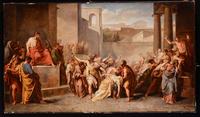
The death of Virginia
Vincenzo Camuccini
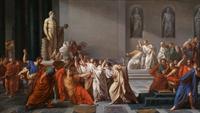
The Death of Julius Caesar
Vincenzo Camuccini
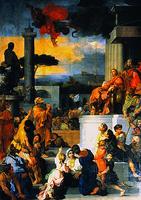
The Fall of Simon Magus
Sebastien Bourdon
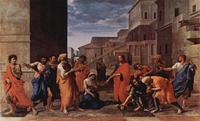
Christ and the Adulteress
Nicolas Poussin
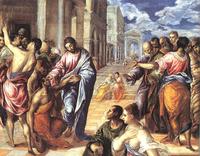
Christ healing the blind
El Greco
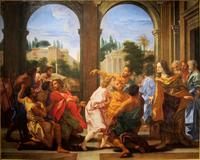
Joseph Reconnu Par Ses Frères
Giovanni Battista Gaulli
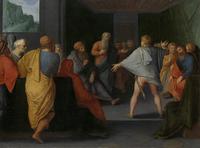
The Meeting of the Gauls in Reims
Otto van Veen
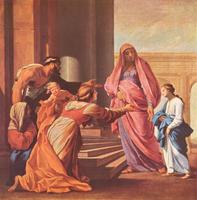
Presentation of the Virgin in the Temple
Eustache Le Sueur
Institution of the Eucharist
Nicolas Poussin
The Death of Saphire
Nicolas Poussin