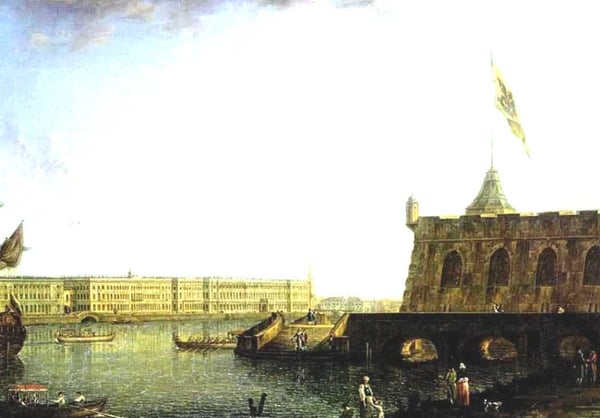
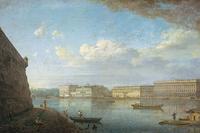
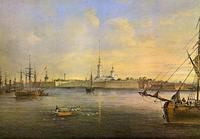
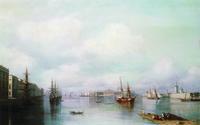
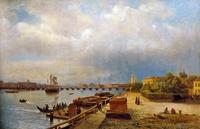
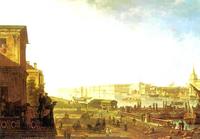
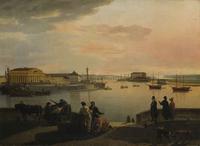
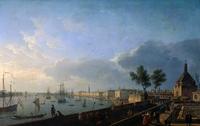
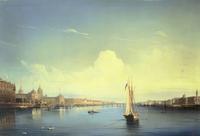
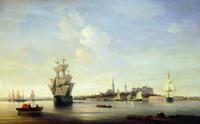
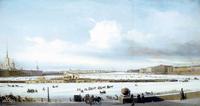
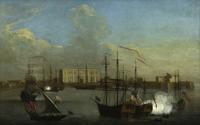
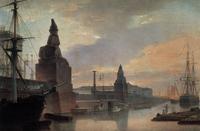
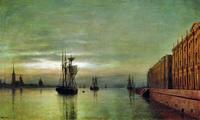
This artwork, "View of the Fortress of St. Peter and Paul and the Palace Embankment" by Fyodor Alekseyev, is a prime example of Neoclassicism operating within the precise documentary genre of the veduta. Its significance lies in how it transforms a specific topographical scene into an idealized, harmonious vision of imperial order.
As a veduta, Alekseyev’s painting is committed to topographical accuracy, capturing the recognizable landmarks of St. Petersburg—the Fortress of St. Peter and Paul and the Palace Embankment. However, its Neoclassical spirit elevates this record beyond mere description. The composition imposes a clear, rational structure: balanced horizontals (the riverbank, the fortress walls) and verticals (spires, masts) create a stable, serene vista. The light is clear and even, and the atmosphere controlled, emphasizing the grandeur of the architecture as a testament to human reason and civic power.
What makes this work truly significant is its role in constructing a national image. Alekseyev applies the Neoclassical ideal of decorum and clarity to a distinctly Russian subject. By composing the scene with classical restraint and highlighting the orderly layout of the city, he presents St. Petersburg not just as a place, but as a symbol of enlightened, imperial ambition. The painting thus bridges the European veduta tradition (as practiced by Canaletto) with a specifically Russian cultural identity, celebrating the new capital as a perfectly ordered, timeless monument.