
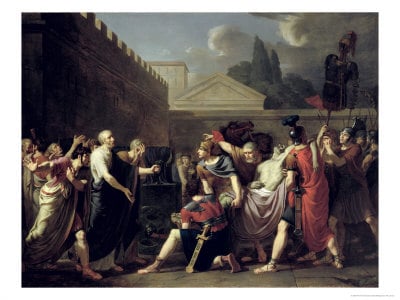
Analisi esperta di The Death of Brutus di Pierre-Narcisse Guerin
Stile: Neoclassicism · Genere: history painting
Expert Analysis: "The Death of Brutus" by Pierre-Narcisse Guerin
Pierre-Narcisse Guerin’s The Death of Brutus (1793) stands as a quintessential example of Neoclassical history painting, embodying the era’s moral gravity and formal rigor. The work depicts the final moments of Marcus Junius Brutus, the Roman senator and primary assassin of Julius Caesar, who, after his defeat at the Battle of Philippi, chose suicide over capture. Guerin, a student of Jacques-Louis David, channels the Neoclassical ideal of stoic sacrifice and civic virtue.
Significance within Neoclassicism and Genre:
- Moral Exemplum: True to Neoclassicism’s didactic purpose, the painting celebrates Brutus as a martyr for republican liberty. His willingness to die rather than submit to tyranny aligns with the revolutionary fervor of the 1790s, when Guerin painted this work—just four years after the French Revolution’s outbreak. The subject resonated deeply with contemporary audiences seeking models of patriotic self-sacrifice.
- Composition and Clarity: Guerin employs a frieze-like arrangement, typical of Neoclassical history painting, with figures placed in a shallow, stage-like space. The diagonal lines of Brutus’s collapsing body and the sword he has used create a clear narrative focus. The restrained palette—dominated by earthy browns, muted reds, and pale flesh tones—avoids Baroque excess, directing attention to the solemnity of the act.
- Emotional Restraint: Unlike Romantic treatments of death, Guerin’s Brutus does not display dramatic agony. His semi-reclined posture, supported by a companion, expresses dignified resignation. The grief of surrounding figures is tempered, mirroring the Neoclassical emphasis on gravitas and control of emotion.
- Historical Context: Painted during the French Revolution’s most radical phase, the work subtly comments on contemporary politics. Brutus, a figure associated with the overthrow of a tyrant, served as a revolutionary icon. Guerin’s rigorous classicism—inspired by ancient Roman sculpture and the paintings of David—affirms the artist’s commitment to the Enlightenment ideals of reason and civic duty.
Artistic Legacy: While Guerin is often overshadowed by David, The Death of Brutus exemplifies the mature Neoclassical style’s integration of historical accuracy, moral instruction, and formal discipline. It anticipates the severe, heroic tone that would dominate French academic painting into the early 19th century, making it a landmark in the evolution of history painting.
Visivamente simili
20 opere con composizione e palette affini
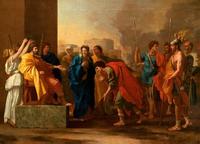
The Continence of Scipio
Nicolas Poussin
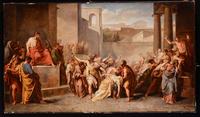
The death of Virginia
Vincenzo Camuccini
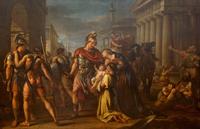
Hector's Farewell to Andromache
Gavin Hamilton
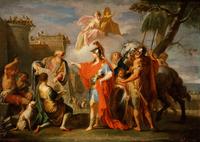
Alexander the Great founding Alexandria
Placido Costanzi
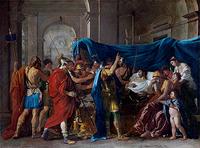
The Death of Germanicus
Nicolas Poussin
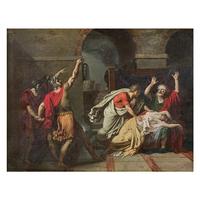
MORT DE LUCRECE
Jacques Réattu
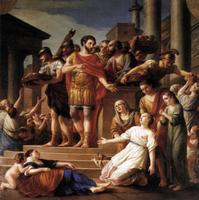
Marcus Aurelius Distributing Bread to the People
Joseph-Marie Vien
La Justification De Suzanne
Jacques Réattu
Saul Reproved by Samuel for Not Obeying the Commandments of the Lord
John Singleton Copley
The Death of Lucretia
Gavin Hamilton
Wamba Renunciando a La Corona
Juan Antonio Ribera
Priam Pleading with Achilles for the Body of Hector
Gavin Hamilton
King Lear Weeping over the Dead Body of Cordelia
James Barry
The wives of Darius before Alexander the great
Pompeo Batoni
Scene
Charles Meynier
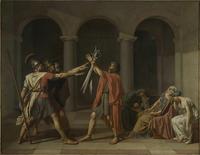
The Oath of Horatii
Jacques-Louis David
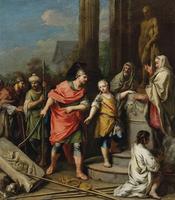
Hannibal Swearing Eternal Enmity
Jacopo Amigoni
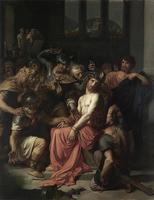
Jesus In The Pretorium
Alexandre Cabanel
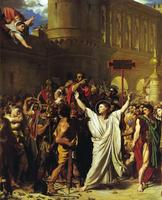
The Martyrdom of St. Symphorian
Jean Auguste Dominique Ingres
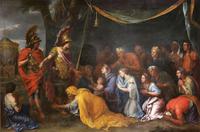
Les Reines De Perse Aux Pieds D'Alexandre Dit Aussi La Tente De Darius
Charles Le Brun