Analisi esperta di Saints Timothy and Maura di Henryk Siemiradzki
Stile: Academicism · Genere: religious painting
Expert Analysis of "Saints Timothy and Maura" by Henryk Siemiradzki
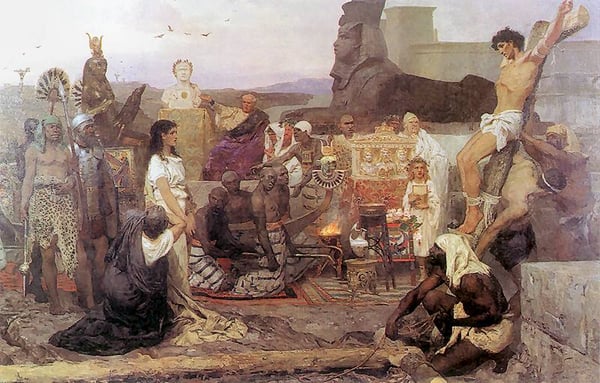
Henryk Siemiradzki’s Saints Timothy and Maura exemplifies the core ideals of Academicism at its peak, blending rigorous classical composition with a deeply poignant religious narrative. The work is significant for its masterful synthesis of historical authenticity, idealized beauty, and emotional restraint—hallmarks of the academic style that dominated European painting in the late 19th century.
Within Academicism, Siemiradzki elevates the religious genre by applying the same sophisticated, polished technique he used for grand historical and mythological canvases. The painting likely depicts the early Christian martyrs Timothy and Maura, who, according to tradition, were tortured and crucified for their faith. True to academic principles, Siemiradzki probably focused on a crucial, dignified moment—perhaps their final embrace or a moment of steadfast prayer—rather than graphic suffering. The composition would be balanced, the figures sculptural in their anatomy and drapery, and the setting rendered with archaeological precision (e.g., Roman-era costumes, architectural details). The light, a signature Siemiradzki device, likely bathes the saints in a warm, golden glow, symbolizing divine grace while also demonstrating the artist’s skill in chiaroscuro.
Significance within its style and period: This artwork represents the idealistic, moralizing function of Academicism. In an era of increasing Realism and Impressionism, Siemiradzki reaffirmed the belief that art should instruct and inspire through noble subjects and technical perfection. Saints Timothy and Maura is not merely a devotional piece; it is a visual sermon on faith, resilience, and sacrifice, presented with the gravity of a classical frieze. The painting’s significance lies in its ability to fuse spiritual intensity with academic formalism—the sacred content is made universally accessible through idealized human forms and a harmonious, ordered composition. For Siemiradzki, a Polish artist working internationally, it also subtly echoed themes of national martyrdom and endurance, resonant with his contemporary audience. Ultimately, this work stands as a testament to the enduring power of Academicism to convey profound religious feeling through the disciplined, beautiful language of classical art.
Visivamente simili
20 opere con composizione e palette affini
Phryne on the Poseidon's celebration in Eleusis
Henryk Siemiradzki
Phryne at the Poseidonia in Eleusis
Henryk Siemiradzki
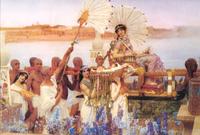
The Finding of Moses
Sir Lawrence Alma-Tadema
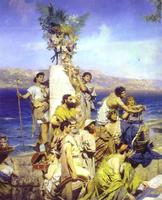
Phryne on the Poseidon's celebration in Eleusis (detail)
Henryk Siemiradzki
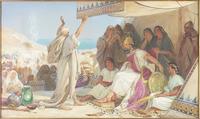
Elijah Before King Ahab
John Absolon
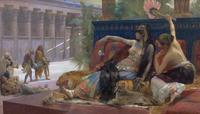
Cleopatra Testing Poisons on Those Condemned to Death
Alexandre Cabanel
Pastimes in Ancient Egyupe 3 000 Years Ago
Sir Lawrence Alma-Tadema
Holy Face
Vasily Surikov
Roma
Henryk Siemiradzki
Consecration of the herm
Fyodor Bronnikov
Jephthah
John Everett Millais
Italy. Scenes of ancient life. (Sketch for the curtain in Russian Private Opera)
Mikhail Vrubel
Cross Jews across Black sea
Wilhelm Kotarbinski
The Festival of Esther
Edward Armitage
Joseph, Overseer of Pharaoh`s Graneries
Sir Lawrence Alma-Tadema
Aman I Mordecai
Paul Leroy
Prodigal Son
Henryk Siemiradzki
Prodigal Son
Vasily Polenov
Christ and the Sinner
Vasily Polenov
Joseph and His Brethren Welcomed by Pharaoh
James Tissot