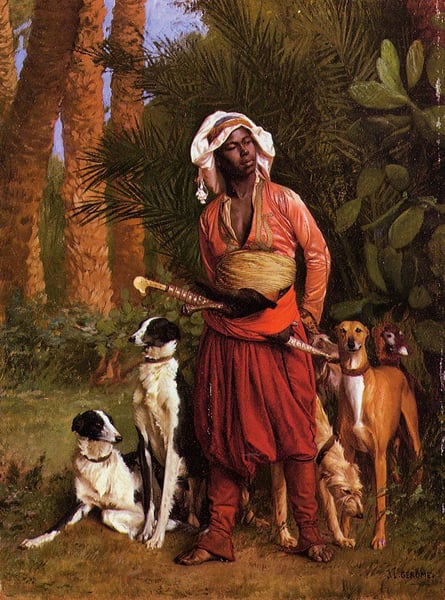
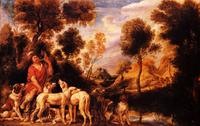
Analysis of "The Negro Master of the Hounds" by Jean-Léon Gérôme
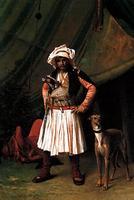
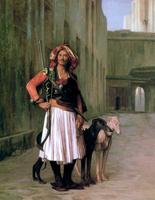
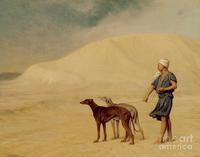
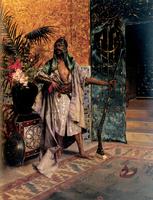
As an exemplar of Orientalist genre painting, this work by Jean-Léon Gérôme is significant for its meticulous depiction of a Black figure in a position of authority within a hierarchical, exoticized setting. Gérôme, a leading academic Orientalist, typically portrayed North African and Middle Eastern scenes through a lens of European fantasy—emphasizing opulence, order, and cultural difference. Here, the "Negro Master of the Hounds" subverts the common Orientalist trope of passive or subservient Black subjects by placing the figure at the center of command, controlling a pack of hounds. This choice reflects the complexity of racial and social hierarchies that Orientalist artists occasionally acknowledged, even as their work remained embedded in colonial power dynamics. The genre painting format allows Gérôme to focus on a moment of everyday life—the mastery of hunting dogs—rendered with his hallmark smooth finish, precise anatomy, and theatrical lighting. The work’s significance lies in its rare foregrounding of Black agency within the Orientalist canon, while simultaneously reinforcing the exotic appeal of the "other" for Western audiences. It stands as a nuanced artifact of 19th-century European visual culture, balancing ethnographic detail with artistic idealization.