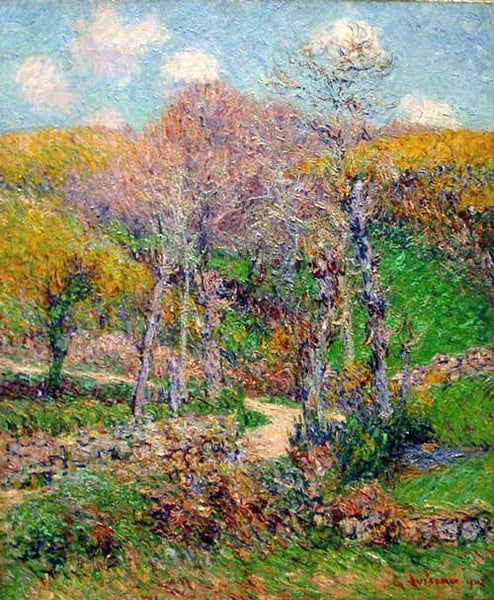
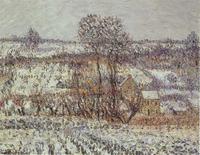
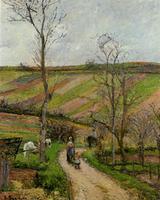
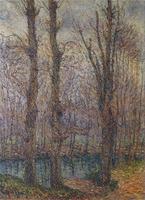
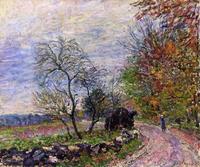
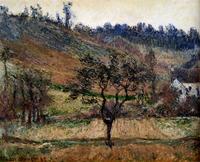
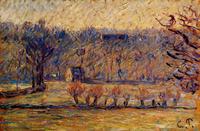
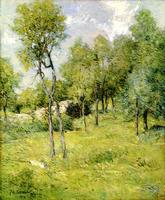
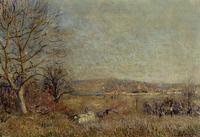
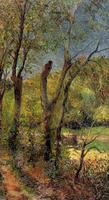
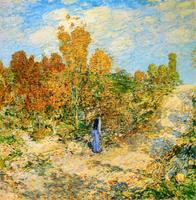
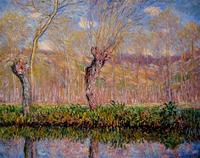
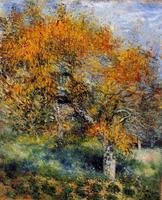
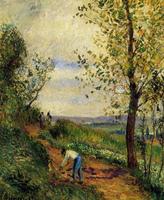
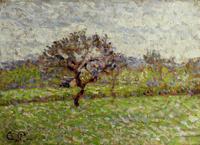
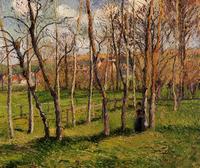
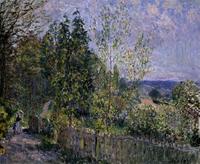
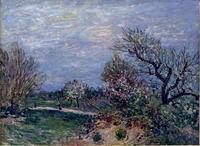
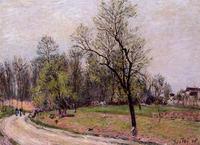
Gustave Loiseau’s Breton landscape exemplifies the Post-Impressionist synthesis of structural form and atmospheric sensitivity, marking a distinct evolution from the spontaneous optical effects of Impressionism. Loiseau, who worked extensively in Brittany, was noted for his “en plein air” practice and his technique of pointillé—a method of short, layered brushstrokes that gave his scenes a vibrant, woven texture. In this work, the rugged terrain and Celtic light of northwestern France are rendered not as transient moments but as enduring, rhythmic compositions. The significance lies in Loiseau’s ability to balance fidelity to nature with a decorative, nearly fabric-like surface, aligning him with the broader Post-Impressionist drive to invest landscape with formal coherence while retaining its emotive, topographical character. This painting thus represents a pivotal moment when landscape painting moved beyond mere depiction to become a vehicle for structured, personal expression.