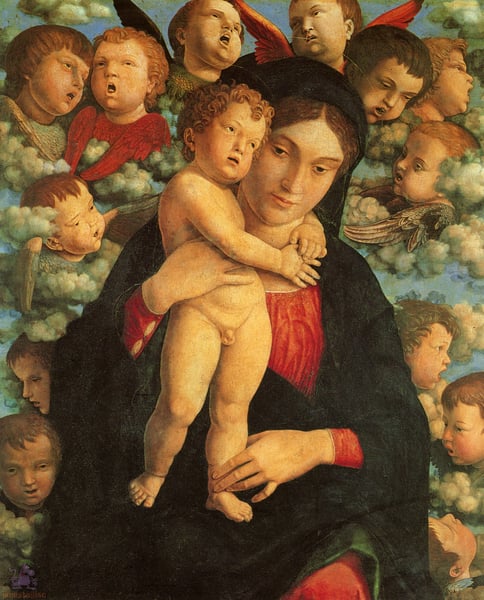
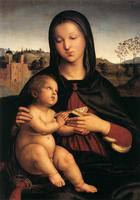
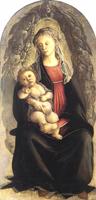
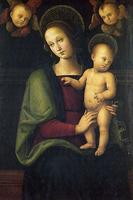
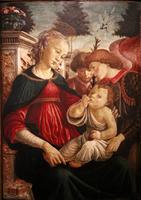
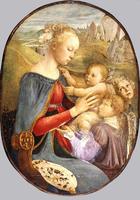
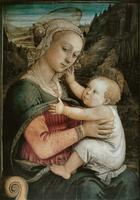
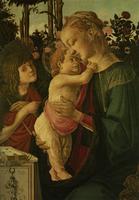
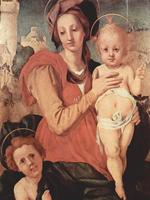
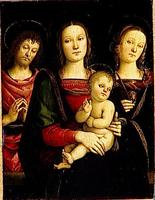
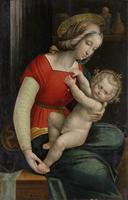
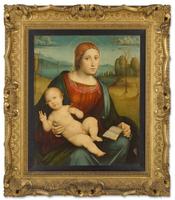
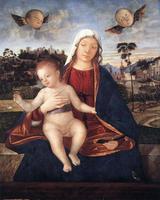
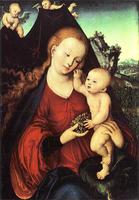
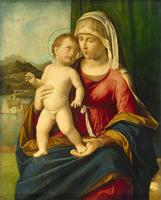
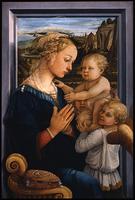
Based solely on the provided facts, the significance of "Madonna and Child with Cherubs" by Andrea Mantegna lies in its representation of the Early Renaissance religious painting genre. Within this style and period, the work is notable for how it exemplifies the shift from medieval iconography toward a more naturalistic and human-centered depiction of sacred subjects. The inclusion of cherubs suggests an interest in classical motifs, which were being revived in Early Renaissance art, while the religious theme anchors it in the devotional traditions that dominated the era. Mantegna’s treatment of the Madonna and Child would reflect the period’s emphasis on clarity, structure, and a restrained emotional tone—hallmarks that distinguish Early Renaissance works from the more ornate Gothic style that preceded it.