Expert analysis of Andrea Mantegna’s Muse
Style: High Renaissance · Genre: mythological painting
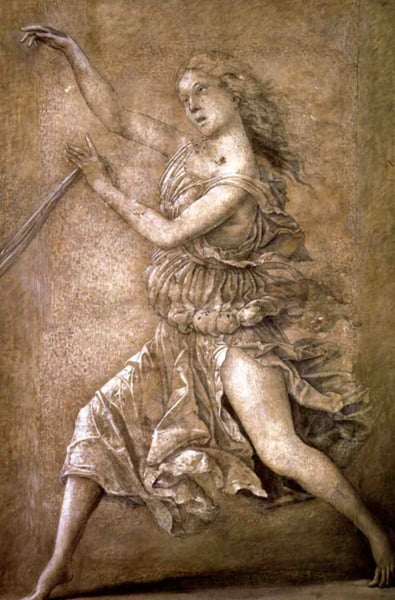
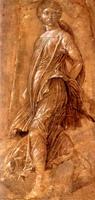
Andrea Mantegna’s Muse exemplifies the High Renaissance’s intellectual and aesthetic engagement with classical antiquity, showcasing the artist’s mastery of form, perspective, and mythological narrative. As a mythological painting, it reflects the era’s fascination with Greco-Roman themes, but Mantegna’s treatment stands out for its archaeological precision and emotional restraint.
-
Significance within the High Renaissance: Mantegna’s work bridges the earlier Quattrocento attention to linear perspective and anatomical rigor with the High Renaissance ideals of ideal beauty and balanced composition. In Muse, the figure is rendered with sculptural solidity—a hallmark of Mantegna’s style—yet infused with a quiet, monumental presence that anticipates the later works of Leonardo and Raphael. The careful drapery, crisp outline, and shallow space create a frieze-like effect, emphasizing the subject’s timelessness.
-
Mythological interpretation: The Muses were crucial to Renaissance humanism as symbols of artistic inspiration. Mantegna depicts the Muse not as a dynamic, active figure but as a contemplative, almost solemn presence—perhaps reflecting his view of art as a disciplined, scholarly pursuit. The incorporation of classical motifs (such as the lyre or laurel, if present) would align with his known archaeological interests, making the painting a visual treatise on the fusion of learning and creativity.
-
Technical achievement: Mantegna’s signature use of di sotto in su (foreshortening) and meticulous handling of light and shadow lend the figure a palpable volume, while the muted, earthy palette—common to his early and mid-career works—grounds the mythological subject in a tangible reality. This tension between the ideal and the real is central to the painting’s significance, demonstrating how High Renaissance artists reinterpreted ancient myths through a lens of naturalism.
In summary, Muse is significant for its synthesis of classical erudition, compositional restraint, and technical precision—qualities that define Mantegna’s contribution to the High Renaissance and his lasting influence on the depiction of mythological themes.
Visually similar
20 works with related composition and palette
Allegory of Abundance
Sandro Botticelli
Pallas
Sandro Botticelli
Three Female Figures Dancing And Playing
Edward Burne-Jones
The aurora
William-Adolphe Bouguereau
Hesiod and the Muse
Gustave Moreau
Study for the Age of Silver
Pietro da Cortona
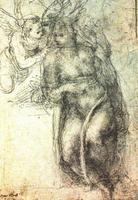
Annunciation (study)
Michelangelo
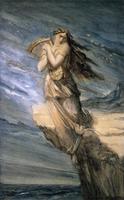
Sappho Leaping into the Sea from the Leucadian Promontory
Theodore Chasseriau
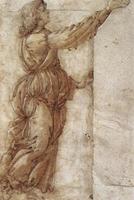
Angel
Sandro Botticelli
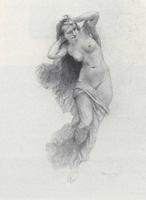
Sketch for Night
William-Adolphe Bouguereau
Die büßende Maria Magdalena
Johann Anton de Peters
Study for Syrinx
Luca Giordano
Dawn and Night
Henri Fantin-Latour

Study for La Vue: Female Figure Revealing Herself
Alexandre Cabanel
Study for the Adulteress: half figure with folded arms, from Guercino
Giovanni Battista Piranesi
Amor a Psyché
Károly Lotz
Sapho dropping into the sea
Jean Victor Schnetz
Psyche presenting Venus with water from the Styx
Raphael
Orpheus and Eurydice
George Frederick Watts
Muse
Andrea Mantegna