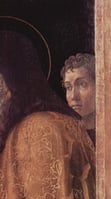
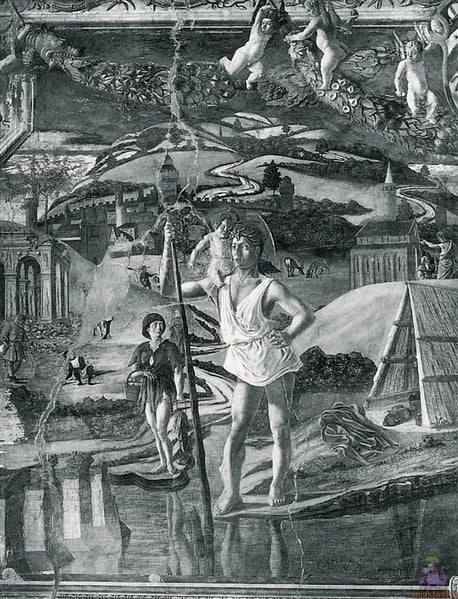
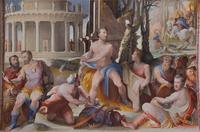
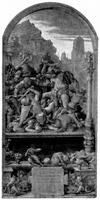
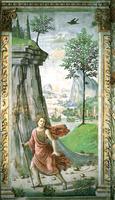
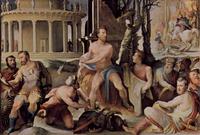
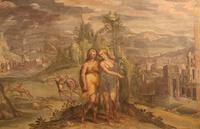
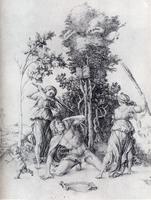
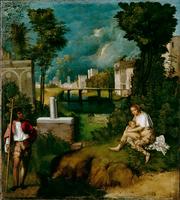
As an expert art historian, I can provide this analysis based solely on the structured facts supplied: "Scenes from the Life of St. Christopher" by Andrea Mantegna, an Early Renaissance religious painting.
Within the context of the Early Renaissance, Mantegna’s work is significant for its rigorous fusion of classical monumentality with religious narrative. The painting exemplifies the period’s shift from Gothic flatness toward a more naturalistic, spatial representation of sacred stories. Mantegna, a master of linear perspective and foreshortening, likely used these techniques to unite multiple episodes from St. Christopher’s hagiography into a coherent, architectonic composition. The work’s importance lies in how it demonstrates the Early Renaissance ideal of istoria: a vivid, emotionally engaging story grounded in convincing human anatomy and Roman-inspired detail. As a religious painting, it served both devotional and didactic purposes, while its stylistic precision—characteristic of Mantegna’s sculptural handling of figures—anticipates the High Renaissance’s deeper exploration of perspective and humanist emotion.