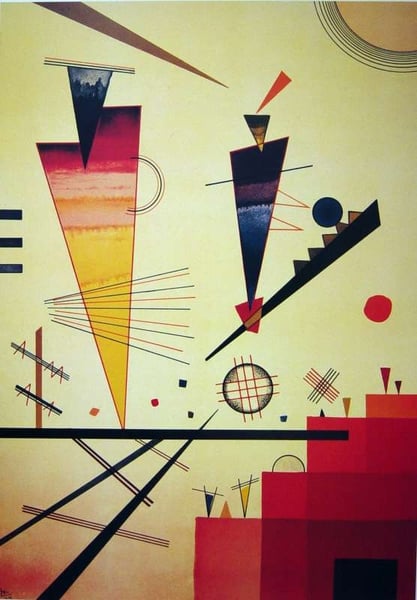
Expert analysis of Wassily Kandinsky’s Merry Structure
Style: Abstract Art · Genre: abstract
Expert Analysis: "Merry Structure" by Wassily Kandinsky
Wassily Kandinsky, a pioneering figure of abstract art, created Merry Structure as a vibrant exemplar of his quest to liberate painting from representational constraints. The work’s significance lies in its embodiment of Kandinsky’s core belief: that color, line, and form could convey emotional and spiritual truths without reference to the physical world.
Composition and Visual Language
True to Kandinsky’s mature style, Merry Structure likely employs a dynamic interplay of geometric shapes—circles, arcs, triangles, and undulating lines—arranged in a seemingly spontaneous yet carefully balanced composition. The title suggests a playful, buoyant mood, achieved through bright, contrasting hues (perhaps yellows, blues, reds, and greens) that “sing” against each other, much like musical notes. The word “structure” indicates an underlying order, yet the arrangement feels improvisational, reflecting Kandinsky’s interest in synesthesia (the fusion of sensory experiences) and the analogy between painting and music.
Significance in Context
This work is significant because it demonstrates Kandinsky’s fully realized abstract vocabulary, developed after his influential writings like Concerning the Spiritual in Art (1912). By the time of Merry Structure, he had moved beyond the loose expressionism of his early abstractions into a more disciplined geometry, influenced by his tenure at the Bauhaus (1922–1933). Here, he synthesized emotional spontaneity with rational construction—a hallmark of his later work. The piece exemplifies how abstract art can evoke pure joy through non-objective means, challenging viewers to respond to color and form directly, without narrative distraction.
Legacy
Merry Structure stands as a testament to Kandinsky’s role in breaking down the barriers between art, music, and emotion, cementing abstract art as a legitimate mode of profound expression. Its balance of rigor and exuberance makes it a key example of early 20th-century abstraction that continues to influence modern explorations of visual harmony and psychological resonance.
Visually similar
20 works with related composition and palette
Composition 8
Wassily Kandinsky
Orange
Wassily Kandinsky
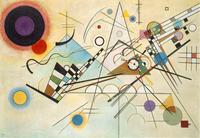
Composition VIII
Wassily Kandinsky
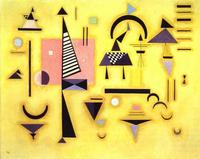
Decisive Pink
Wassily Kandinsky
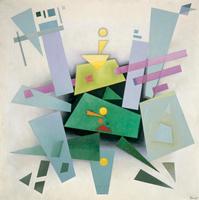
Invention (Composition 31)
Rudolf Bauer
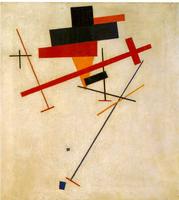
Suprematist Painting
Kazimir Malevich
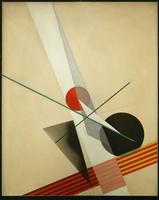
Composition A XXI
Laszlo Moholy-Nagy
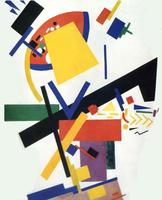
Suprematism
Kazimir Malevich
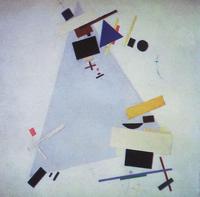
Suprematism
Kazimir Malevich
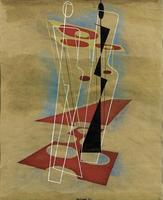
Composition
Leo Leuppi
Composition II, Pink and Blue
Sandor Bortnyik
Delicate Tension. No. 85
Wassily Kandinsky
Black Relationship
Wassily Kandinsky
Suprematism
Kazimir Malevich
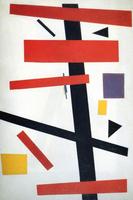
Suprematism
Kazimir Malevich
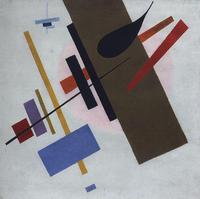
Suprematism
Kazimir Malevich
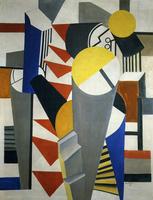
Composition
Fernand Leger
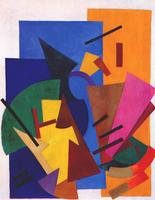
Flight of an Aeroplane
Olga Rozanova
Desarrollo del triángulo
Tomas Maldonado
Black and Violet
Wassily Kandinsky