Untitled Structure
Analisi esperta di Untitled Structure di Sol LeWitt
Stile: Minimalism · Genere: sculpture
Expert Analysis: "Untitled Structure" by Sol LeWitt
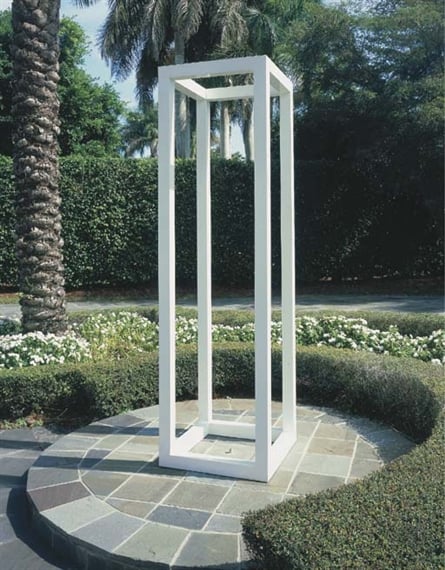
Sol LeWitt’s "Untitled Structure" stands as a quintessential example of Minimalist sculpture, a movement that radically redefined the relationship between object, space, and meaning in the 1960s and 1970s. As a work within LeWitt’s broader oeuvre, this piece encapsulates the core tenets of Minimalism: the rejection of expressive content, the primacy of the idea over the object’s handcrafted appearance, and the activation of the surrounding environment.
Significance within Minimalism:
-
Concept Over Execution: LeWitt famously declared, "The idea becomes a machine that makes the art." An "Untitled Structure" is typically a three-dimensional grid or open framework—often a skeletal cube or rectilinear lattice—made from industrial materials like painted aluminum or wood. The work’s significance lies not in manual skill or unique surface treatment, but in the conceptual system that generates its form. The sculpture is a physical manifestation of an intellectual proposition: a logical arrangement of lines and planes that could, in theory, be replicated indefinitely.
-
Dematerialization of Sculpture: Unlike traditional sculpture that emphasizes mass and volume, LeWitt’s structures are open, permeable, and often skeletal. They define space without filling it. The viewer sees through the piece, and the work’s interior is as important as its exterior. This inversion of conventional sculpture challenges the notion of the object as a solid, impenetrable form, instead presenting it as an idea that occupies space lightly.
-
Viewer Participation and Site Specificity: Minimalist sculpture demands active perception. As one moves around "Untitled Structure," the work transforms: lines align and disalign, negative spaces shift, and the surrounding architecture becomes part of the composition. The significance of LeWitt’s piece is thus inseparable from its context—the gallery floor, the light, the viewer’s physical and temporal experience. It is not a self-contained artwork but a relational object that completes itself in the act of looking.
-
Seriality and Systems: Many of LeWitt’s structures belong to series—variations on a cubic grid or a permutation of modules. This serial approach underscores his belief that art should be systematic and rule-based, devoid of subjective emotional decisions. "Untitled Structure" may appear simple, but its formal logic is rigorous: each element is determined by mathematical or geometric principles, making the work an intellectual puzzle as much as a visual encounter.
Conclusion:
"Untitled Structure" is significant because it epitomizes Minimalism’s shift from expression to structure, from object to idea. LeWitt invites us to consider not what the sculpture represents, but what it does: it defines space, invites movement, and exists as a pure proposition of form. In its stark, unadorned presence, it achieves a kind of radical clarity—a hallmark of Minimalism’s enduring influence on contemporary art.
Genere
Stile
Visivamente simili
20 opere con composizione e palette affini
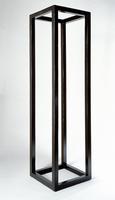
Standing Open Structure Black
Sol LeWitt
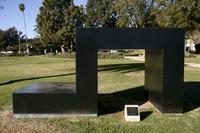
Playground
Tony Smith
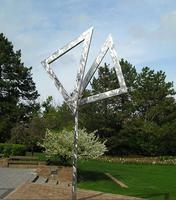
Two Open Triangles Up, Gyratory II
George Rickey
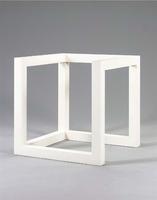
Incomplete Cube 10-4
Sol LeWitt
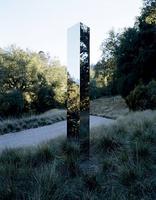
Magic
John McCracken
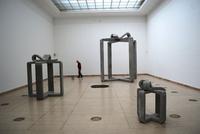
Seven Future Gifts
Mircea Cantor
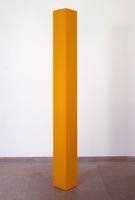
Swannanoa
Anne Truitt
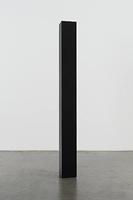
Twining Court II
Anne Truitt
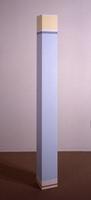
Prima
Anne Truitt
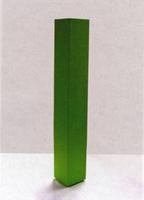
Parva LXX
Anne Truitt
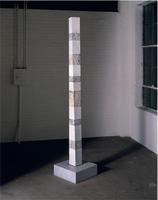
The Spirit's Flight
Noguchi Isamu
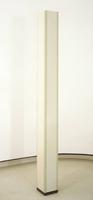
Sentinel
Anne Truitt
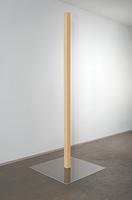
Pink-Yellow Pole III
Gianni Piacentino
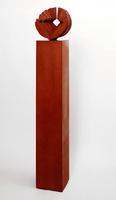
1 Carré dans 1 disque
Pol Bury
One
Anne Truitt
Nom- one, two, three
Grazia Varisco
Come Unto These Yellow Sands II
Anne Truitt
Glacier
John McCracken
Column
Robert Irwin
Return
Anne Truitt