Analisi esperta di Batman di Lino Tagliapietra
Stile: Op Art · Genere: sculpture
Expert Analysis of "Batman" by Lino Tagliapietra
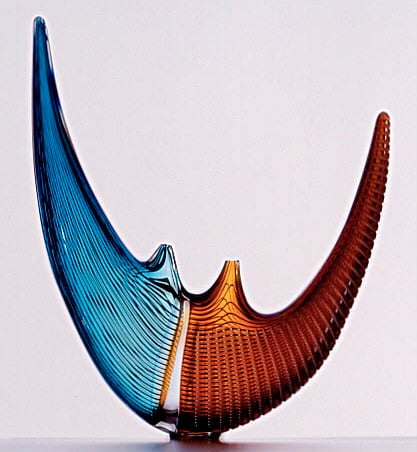
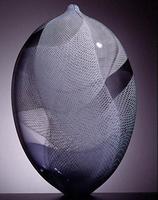
Lino Tagliapietra’s Batman is a remarkable synthesis of Op Art principles and the sculptural possibilities of blown glass, a union that is both technically audacious and conceptually significant. While Op Art—or Optical Art—is most commonly associated with two-dimensional paintings and prints that exploit retinal effects such as moiré patterns, afterimages, and perceptual vibration, Tagliapietra translates these visual phenomena into the physical, volumetric realm of sculpture. This work stands as a pivotal example of how a master glass artist can push the boundaries of both medium and movement.
Significance within Op Art:
- Three-Dimensional Optical Illusion: Traditional Op Art relies on flat surfaces to deceive the eye. In Batman, Tagliapietra embeds the characteristic interlocking patterns, precise concentric geometries, or rhythmic color fields—hallmarks of Op Art—directly into the glass body. The transparency, refraction, and internal reflections of the medium amplify the optical effects, creating an illusion of movement that shifts with the viewer’s position. The sculpture does not merely depict a pattern; it enacts the perceptual flicker and spatial ambiguity that define Op Art.
- Material Mastery as Conceptual Tool: Tagliapietra’s legacy is built on his virtuosic control of murrine (preformed glass rods) and caneworking. In Batman, these techniques are not just decorative but structural to the op-art experience. The meticulous layering of colored glass creates precise, repeating motifs that, when viewed through curved surfaces, warp and pulse in ways impossible on canvas. This elevates the work beyond craft into a dialogue between the rigid geometry of Op Art and the fluid, organic nature of blown glass.
Significance within Sculpture and the Artist’s Oeuvre:
- Bridging Movements: Batman exemplifies Tagliapietra’s role in the Studio Glass Movement, specifically how he integrated mid-20th-century abstract and perceptual art into an ancient Venetian tradition. While Murano glassmaking often emphasized virtuosic decoration, Tagliapietra—influenced by his collaborations with American glass artists and exposure to Minimalism and Op Art—used the medium to explore pure visual sensation. Batman is thus a landmark of conceptual glass: it prioritizes optical experience over representational form or decorative beauty.
- The Name and Form: The title Batman likely references the silhouette or angular, wing-like contours of the piece—a nod to the iconic bat shape—but refracted through a lens of geometric abstraction. This dual identity (pop-culture icon + optical puzzle) underscores Tagliapietra’s ability to root radical perceptual experiments in familiar, evocative forms, making the work accessible yet intellectually demanding.
Conclusion: Batman is significant because it successfully expands the vocabulary of Op Art into three dimensions, using glass as both canvas and engine of illusion. Tagliapietra demonstrates that optical effects are not limited to static, two-dimensional surfaces; they can inhabit space, interact with light, and change with the viewer’s movement. In doing so, the sculpture challenges the traditional boundaries of both Op Art and glass art, securing its place as a milestone of perceptual and material innovation.
Visivamente simili
20 opere con composizione e palette affini
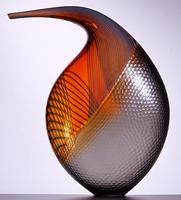
Cornacchia
Lino Tagliapietra
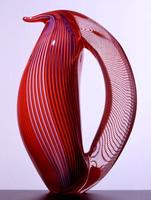
Penguino Ballerino
Lino Tagliapietra
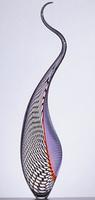
Dinosaur
Lino Tagliapietra
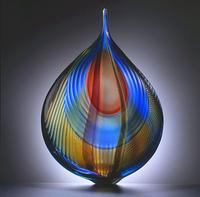
Makah
Lino Tagliapietra
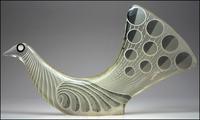
Dove
Abraham Palatnik
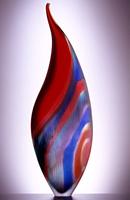
Coinbra
Lino Tagliapietra
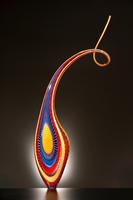
Dinosaur
Lino Tagliapietra
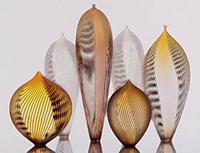
Giudecca
Lino Tagliapietra
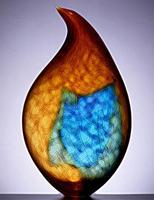
Silea
Lino Tagliapietra
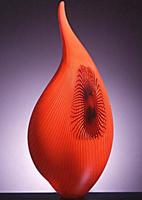
Hama Hama
Lino Tagliapietra
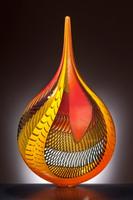
Saba
Lino Tagliapietra
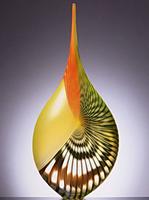
Coronado
Lino Tagliapietra
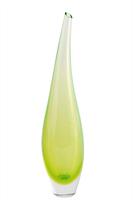
Kalanrakko (Air Bladder of a Fish) 3288 5048, Iittala
Tapio Wirkkala
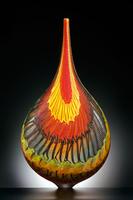
Maui
Lino Tagliapietra
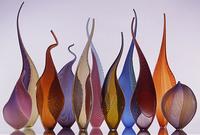
Untitled
Lino Tagliapietra
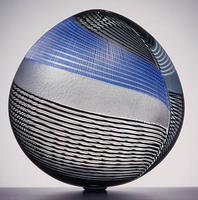
Altare
Lino Tagliapietra
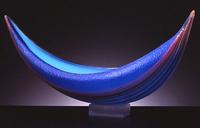
Caicco
Lino Tagliapietra
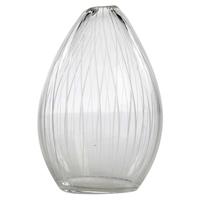
Small 3282 Vase in Glass
Tapio Wirkkala
Ostuni
Lino Tagliapietra
A pair of goose
Daan Lemaire