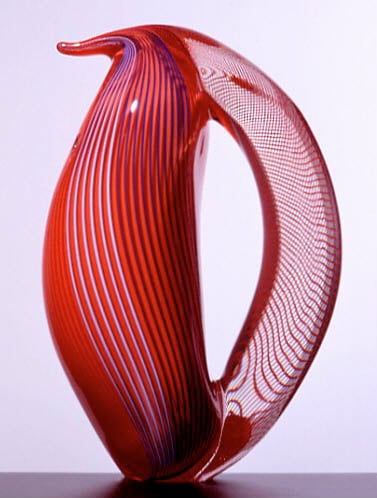
Penguino Ballerino
Expert analysis of Lino Tagliapietra’s Penguino Ballerino
Style: Op Art · Genre: sculpture
Artwork Analysis: "Penguino Ballerino" by Lino Tagliapietra
Style: Op Art | Genre: Sculpture
Significance within Op Art
"Penguino Ballerino" represents a rare and innovative fusion of Op Art’s core principles—optical vibration, perceptual ambiguity, and rhythmic pattern—with the three-dimensional, tangible form of sculpture. While Op Art is traditionally associated with two-dimensional painting (e.g., Bridget Riley, Victor Vasarely), Tagliapietra extends its visual language into space, forcing the viewer to move around the work to experience shifting optical effects. The sculptural medium challenges the static nature of op-art illusions, introducing kinetic potential through viewpoint-dependent distortions.
Key Features
- Material & Execution: Tagliapietra, renowned for his virtuoso glassblowing, likely employs translucent or polychrome glass (though not specified, it is typical of his practice). The material’s inherent reflectivity and transparency amplify Op Art’s play of light and line, creating moiré patterns and afterimages as the viewer changes position.
- Subject: The whimsical title, “Penguino Ballerino” (literally “Little Penguin Ballet Dancer”), juxtaposes the serious, geometric rigor of Op Art with a playful, anthropomorphic figure. This tension between strict illusionism and narrative charm makes the work accessible while retaining conceptual depth—a balance rarely achieved in the genre.
- Form: As a sculpture, it likely uses concentric, staggered, or interlacing forms (e.g., ribbon-like glass planes) that imitate the fluid motion of a dancer. The penguin’s rounded, black-and-white silhouette would be broken into optical stripes or checkerboards, causing the figure to seem to shimmer or shift in space.
Contextual Importance
In the 1960s–70s, Op Art was often criticized as coldly cerebral. “Penguino Ballerino” reasserts emotion and humor within the movement, proving that perceptual puzzles can coexist with delight. By turning the severe optical effects into a dancing penguin, Tagliapietra expands Op Art’s boundaries, demonstrating that the genre need not be limited to abstract grids—it can animate recognizable forms, bridging high-art theory with popular wonder. This work stands as a testament to the artist’s ability to synthesize technical mastery (glass) with conceptual innovation (sculptural op-tics), making it a singular contribution to both Op Art and glass sculpture.
Visually similar
20 works with related composition and palette
Dinosaur
Lino Tagliapietra
Cornacchia
Lino Tagliapietra
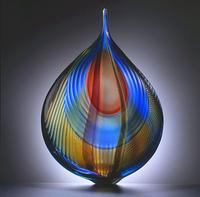
Makah
Lino Tagliapietra
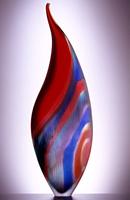
Coinbra
Lino Tagliapietra
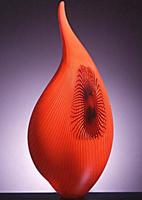
Hama Hama
Lino Tagliapietra
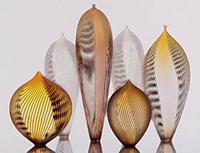
Giudecca
Lino Tagliapietra
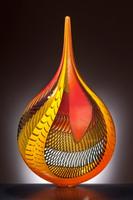
Saba
Lino Tagliapietra
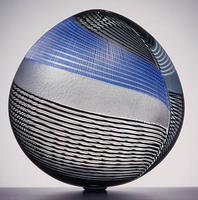
Altare
Lino Tagliapietra
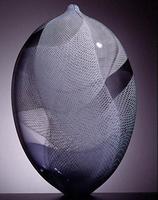
Ostuni
Lino Tagliapietra
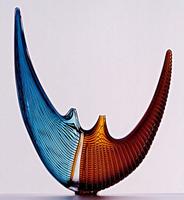
Batman
Lino Tagliapietra
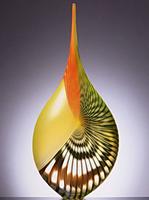
Coronado
Lino Tagliapietra
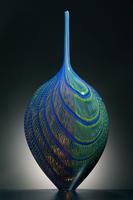
Tatoosh
Lino Tagliapietra
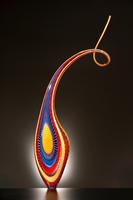
Dinosaur
Lino Tagliapietra
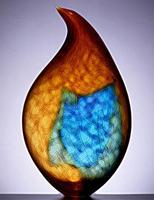
Silea
Lino Tagliapietra
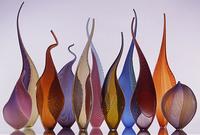
Untitled
Lino Tagliapietra
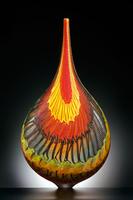
Maui
Lino Tagliapietra
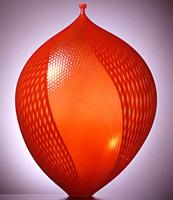
Foemina
Lino Tagliapietra
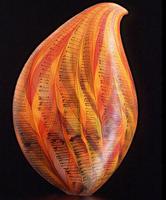
Madras
Lino Tagliapietra
Provenza
Lino Tagliapietra
Hopi
Lino Tagliapietra