
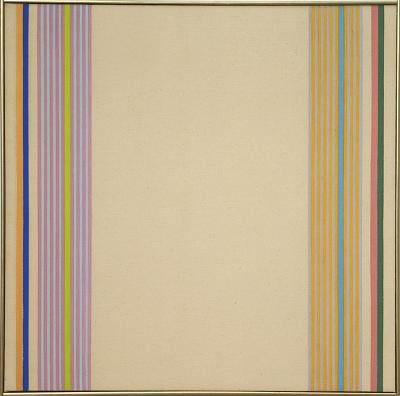
Expertenanalyse zu Gene Daviss End Stripes
Stil: Color Field Painting · Genre: abstract
Expert Analysis: "End Stripes" by Gene Davis
Gene Davis’s "End Stripes" stands as a quintessential example of Color Field Painting, an abstract movement that emerged in the mid-20th century as a radical departure from gestural expressionism. In this work, Davis strips painting to its most elemental components—color and structure—while entirely eliminating representational subject matter. The significance of "End Stripes" lies in its relentless focus on pure optical experience, a hallmark of Color Field practice.
Key Significances within Color Field Painting & Abstraction:
-
Stripe as a Reductive Device – Davis is celebrated for his signature use of repeating vertical bands, and "End Stripes" exemplifies this minimalist motif. By reducing composition to parallel stripes of varying widths, he removes narrative, figuration, or any referential content. The painting’s meaning resides entirely in the interaction of hues and the rhythm of edges.
-
Color as Subject and Emotion – True to Color Field principles, color is not merely decorative but the primary vehicle for expression. Davis’s choice of saturated, often clashing or vibrating hues creates a non-hierarchical field where no single stripe dominates. Instead, the viewer’s eye moves fluidly across the canvas, provoking a direct, visceral response—a key goal of the movement.
-
Flatness and Material Presence – The painting celebrates the literal flatness of the canvas. Davis applied paint in thin, even washes, avoiding texture or brushstroke marks. This denies illusionistic depth, affirming that the art object is a physical surface rather than a window into another space. "End Stripes" thus aligns with Clement Greenberg’s influential definition of modernist painting: an emphasis on the medium’s inherent flatness.
-
Expanding the Abstract Canon – While Jackson Pollock and Willem de Kooning expressed emotion through energetic marks, Davis and his Color Field contemporaries—such as Morris Louis and Kenneth Noland—sought a cooler, more meditative abstraction. "End Stripes" contributes to this dialogue by proving that optical intensity and chromatic harmony could be as powerful as gestural drama.
-
Legacy of the Washington Color School – As a leading figure of the Washington Color School (a regional offshoot of Color Field), Davis’s "End Stripes" exemplifies the group’s commitment to high-keyed color and symmetrical, non-compositional arrangements. The work’s title—"End Stripes"—suggests a deliberate, almost systematic conclusion to the possibilities of the stripe motif, underscoring the painter’s rigorous conceptual approach.
In summary, "End Stripes" is significant because it distills the core tenets of Color Field abstraction: it is a painting about perception, where color, repetition, and flatness converge to create an immersive, purely optical encounter. It demonstrates that abstract art need not evoke the tangible world to be profoundly affecting—a radical idea that reshaped the trajectory of modern art.
Visuell ähnlich
20 Werke mit ähnlicher Komposition und Farbpalette

Lime-Lemon
Gene Davis
Sweet Score-Skylark
Gene Davis

Renoir's Curtain
Gene Davis
Seriel bleu-ocre
Guido Molinari
Halifax
Gene Davis
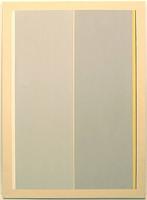
Homage to Newman
Gene Davis
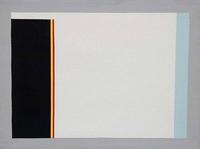
Untitled
Gene Davis
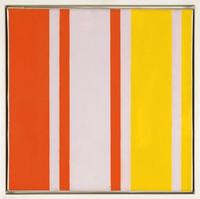
Rhythmische Teilung
Richard Paul Lohse
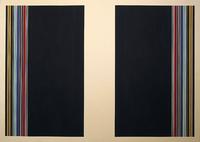
Untitled
Gene Davis
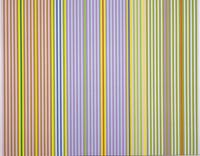
Ianthe
Gene Davis
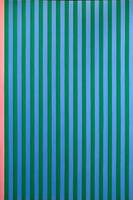
Pink Stripe
Gene Davis
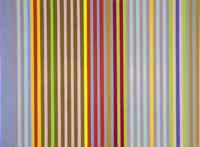
Apricot Ripple
Gene Davis
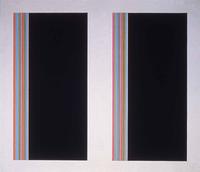
Looking Glass
Gene Davis
Battle for Grownups
Gene Davis
Checkmate
Gene Davis
Lost Twin (One)
Doug Ohlson
Prince Albert
Gene Davis
Celtic Dawn
Gene Davis
White Fire I
Barnett Newman

Ligne rouge II n°19
Genevieve Asse