

Expert analysis of Gene Davis’s Cannonball
Style: Color Field Painting · Genre: abstract
Expert Analysis of "Cannonball" by Gene Davis
Style & Genre: Color Field Painting; Abstract
Significance within the Movement:
As a work of the Washington Color School—the epicenter of mid‑20th‑century Color Field painting—Gene Davis’s “Cannonball” epitomizes the movement’s radical departure from Abstract Expressionism. The painting strips art to its most elemental experience: pure, unmodulated color applied in precise vertical stripes. Davis forgoes any reference to the physical world or the artist’s gesture, instead immersing the viewer in a field of vibrating, optical hue.
“Cannonball” is significant for its extreme compression of space and emotion into a single, repeating motif. The title suggests explosive energy, yet the execution is coolly methodical—a paradox that defines Davis’s contribution to Color Field. By placing saturated bands side by side, he creates a perceptual shimmer that challenges the eye and asserts color as the sole subject. In the broader context of the period, “Cannonball” demonstrates how Washington Color School artists like Davis pushed abstraction toward a kind of visual phenomenology: the painting becomes an event of pure sensory reception, not representation or narrative. This focus on the direct, unmediated experience of color makes the work a landmark of mid‑century American abstraction.
Visually similar
20 works with related composition and palette

Midnight Watch
Gene Davis

Red Baron
Gene Davis

Royal Canoe
Gene Davis

Apricot Ripple
Gene Davis

Royal Veil
Gene Davis

Zebra
Gene Davis

Jack-in-the-Box
Gene Davis

Battle for Grownups
Gene Davis
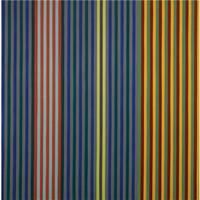
Split Beat
Gene Davis

Black Popcorn
Gene Davis
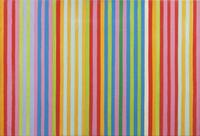
Red Chatterbox
Gene Davis

Lemon Ice
Gene Davis
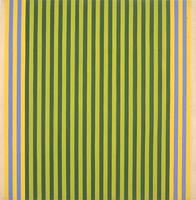
Limelight/Sounds of Grass
Gene Davis

Gothic Jab
Gene Davis

Orange Twitter
Gene Davis

RA 2
Bridget Riley

Dr. Peppercorn
Gene Davis

Powwow
Gene Davis
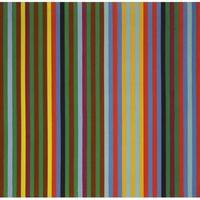
Circus Sounds
Gene Davis

Red Witch
Gene Davis