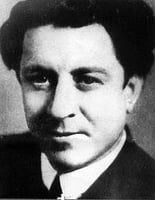
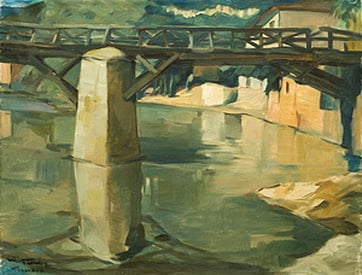
Analisi esperta di Tarnovo di Nikola Tanev
Stile: Post-Impressionism · Genere: landscape
Expert Analysis of "Tarnovo" by Nikola Tanev
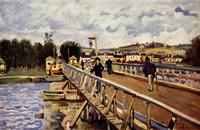
Based solely on the provided facts—that the work is a Post-Impressionist landscape by Bulgarian artist Nikola Tanev, titled "Tarnovo"—its significance can be understood within the broader evolution of early 20th-century painting.
1. Post-Impressionist Embellishment of Place
As a Post-Impressionist landscape, "Tarnovo" likely moves beyond a simple topographical record. The style’s hallmark—using vivid, often arbitrary color and expressive, simplified forms to convey emotional or spiritual truth rather than optical accuracy—would transform the historic city of Tarnovo (Veliko Tarnovo) into a subjective, atmospheric vision. This aligns with the period’s shift from Impressionism’s fleeting light effects toward a more symbolic, structured approach.
2. National School Context
Nikola Tanev is recognized as a pivotal figure in Bulgarian modernism. His adherence to Post-Impressionism, a style then spreading from Western Europe, marks a deliberate step away from academic realism and toward a personal, modern idiom. "Tarnovo" thus stands as an example of how Bulgarian artists adapted international movements to local subject matter—infusing a national landmark with the formal innovations of Cézanne, Van Gogh, or Gauguin. This duality (international technique + national identity) is key to its significance: it documents both an artistic evolution and a cultural assertion.
3. Landscape as Genre
Within the landscape genre, Post-Impressionism rejected naturalistic depiction in favor of rhythmic line, flattened perspective, and heightened palette. The choice of Tarnovo—a city of dramatic hills, winding streets, and medieval heritage—offers rich material for such treatment. The painting’s significance likely lies in how it compresses and distills that complex topography into a coherent, emotive composition, making the viewer experience the essence of the place rather than its photographic likeness.
Conclusion
Without additional facts about the painting’s specific color scheme, brushwork, or dimensions, its primary significance is as a representative work of Bulgarian Post-Impressionism: a synthesis of European avant-garde technique with local iconography, reflecting both Tanev’s personal artistic voice and the broader cultural project of modernizing Bulgarian art in the early 20th century.
Visivamente simili
20 opere con composizione e palette affini
The Old Bridge, France
Guy Rose
The Wooden Bridge
Claude Monet
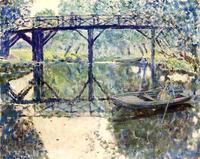
The Bridge, Giverny
Frederick Carl Frieseke
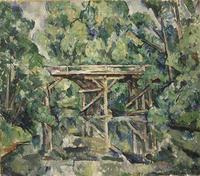
Bridge
Pyotr Konchalovsky

Fauve
Alfred Freddy Krupa
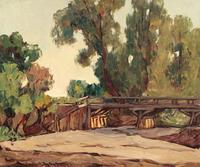
Autumn Landscape
Ion Theodorescu-Sion
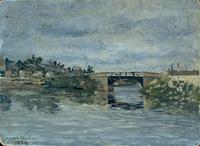
The old Bridge in Barbin
Maxime Maufra
Bridge. Astrakhan
Boris Kustodiev
The old bridge at the Korana river
Alfred Krupa
Bridge over the pond
Paul Cezanne
Pont d'Argenteuil
Gustave Caillebotte
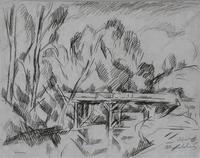
Abramtsevo. The bridge. Drawing for the painting 'Bridge in Abramtsevo'.
Pyotr Konchalovsky
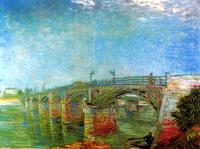
The Seine Bridge at Asnieres
Vincent van Gogh
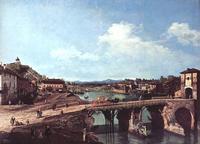
View of an Old Bridge Over the River Po, Turin
Bernardo Bellotto
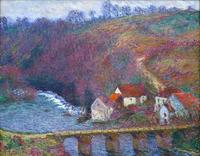
The Grande Creuse by the Bridge at Vervy
Claude Monet
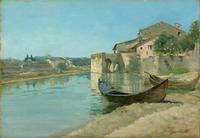
The Arno in Rovezzano
Odoardo Borrani
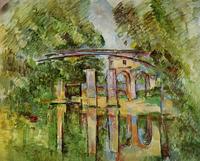
The Aqueduct and Lock
Paul Cezanne
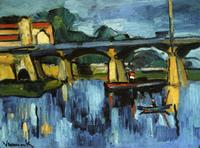
The Bridge at Chatou
Maurice de Vlaminck
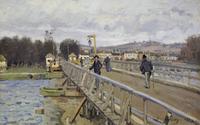
Footbridge at Argenteuil
Alfred Sisley
Langland Bay
Alfred Sisley