Analisi esperta di Two Figures di Janos Mattis-Teutsch
Stile: Constructivism, Socialist Realism · Genere: figurative
Expert Analysis: "Two Figures" by János Mattis-Teutsch
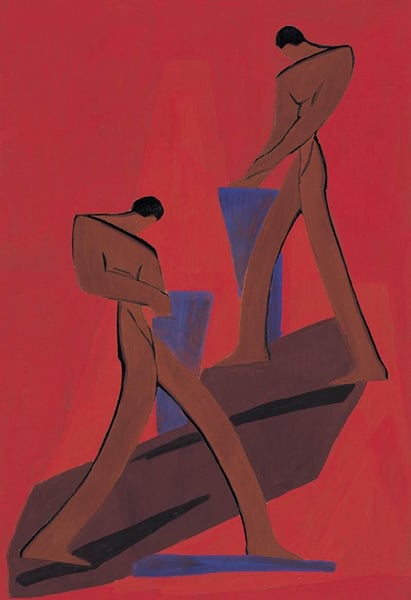
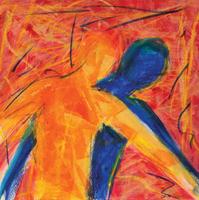
János Mattis-Teutsch’s Two Figures is a striking example of the artist’s attempt to reconcile two seemingly opposing modernist currents: the geometric abstraction of Constructivism and the narrative clarity of Socialist Realism. This synthesis is what makes the work particularly significant within the broader history of 20th-century art.
Significance within Style and Period
-
Constructivist Foundations: The painting retains the structured, planar organization and simplified forms characteristic of Constructivism, a movement that Mattis-Teutsch embraced in the 1920s. The figures are likely reduced to essential geometric volumes—cylinders, rectangles, and intersecting planes—suggesting a concern with the underlying rhythm and order of human presence rather than individual likeness. This echoes the Constructivist belief in art as a tool for building a new, rational society.
-
Socialist Realist Embrace: By the time Socialist Realism became the official doctrine of the Eastern Bloc, Mattis-Teutsch adapted his avant-garde vocabulary to depict recognizable, dignified human subjects. Two Figures likely portrays workers or peasants, rendered with a sense of monumentality and purpose. This represents a shift away from pure abstraction toward communicative, didactic imagery that could speak to a mass audience—a core tenet of Socialist Realism.
-
Bridging Avant-Garde and State Art: The work’s real significance lies in its rare fusion of two poles that are often seen as irreconcilable. While many Constructivists rejected traditional figurative art as bourgeois, and Socialist Realists later suppressed abstraction as decadent, Mattis-Teutsch’s Two Figures demonstrates that geometric formalism could serve socialist ideals. The figures are not naturalistic portraits but symbolic types—constructed, like society itself, from harmonious parts.
-
Cultural and Historical Context: As a Romanian-Hungarian artist active in the interwar and postwar periods, Mattis-Teutsch navigated multiple cultural and political pressures. Two Figures reflects his enduring commitment to a progressive, human-centered art that evolves its language without losing contact with the viewer. The work stands as a testament to the possibility of formal rigor coexisting with social engagement—a quiet but powerful statement within the polarized debates of mid-century modernism.
In summary, Two Figures is significant because it embodies a hybrid moment: the artist retains Constructivism’s logic while embracing Socialist Realism’s mandate, creating a work that is at once abstract in structure and concrete in its humanist message.
Genere
Visivamente simili
20 opere con composizione e palette affini
Composition
Janos Mattis-Teutsch
Composition (Attitudes)
Janos Mattis-Teutsch
Assembly Line (fresco draft)
Janos Mattis-Teutsch

Composition with Five Figures
Janos Mattis-Teutsch
Composition
Janos Mattis-Teutsch
Visitors to the sun
Ossip Zadkine
Torso
Kazimir Malevich
Rock Art Figures
Walter Battiss
Conversation
Ossip Zadkine
The messengers of the Day
Ossip Zadkine
Bortnyik Sándor, Épitők
Sandor Bortnyik
Erotic
Yiannis Moralis
The Manual Workers and the Intellectuals
Janos Mattis-Teutsch
Jitterbugs (IV)
William H. Johnson
Nude gathering flowers
Pablo Picasso
Promenade
Man Ray
Scheiber Hugó, Biliárd
Scheiber Hugó
Blue Figure
Janos Mattis-Teutsch
Pagan Ritual
George Stefanescu
Untitled
Antonio Palolo