Analisi esperta di In the Tavern di Laszlo Mednyanszky
Stile: Expressionism · Genere: genre painting
Expert Analysis: "In the Tavern" by László Mednyánszky
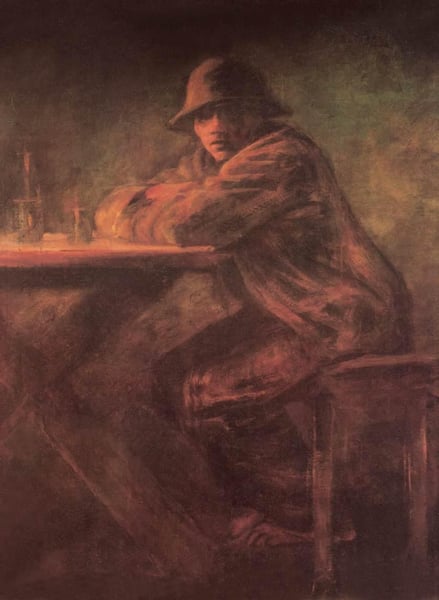
László Mednyánszky’s "In the Tavern" stands as a compelling example of how Central European Expressionism transformed traditional genre painting into a vehicle for psychological depth and social empathy. While genre scenes of tavern life had long been used to depict conviviality or moral lessons, Mednyánszky subverts this convention by filtering the subject through an Expressionist lens—emphasizing emotional atmosphere over narrative clarity.
What makes this work significant is its ability to convey a sense of melancholic isolation even within a communal setting. Mednyánszky often painted the marginalized—peasants, vagrants, and the poor—and here the tavern becomes a space of weary refuge rather than celebration. The artist’s characteristic earthy palette, dominated by deep browns, ochres, and muted greys, combined with thick, agitated brushwork, creates a tactile, almost claustrophobic environment. Figures are rendered with a deliberate roughness; their postures slouched, faces partially obscured, as if absorbed in private sorrows.
This approach aligns with Expressionism’s rejection of idealized representation in favor of raw, subjective experience. Mednyánszky’s brushstrokes do not simply describe a scene—they express a mood of exhaustion, longing, or existential weight. The dim lighting, likely from a single lamp or window, casts long shadows that fragment the space, echoing the psychological fragmentation of the characters.
Historically, "In the Tavern" bridges the Hungarian naturalist tradition (with its focus on peasant life) and the emerging modernist impulse to probe inner states. Mednyánszky’s work influenced later Hungarian Expressionists and remains a poignant record of the human condition in the late Habsburg Empire. The painting’s significance lies not in narrative detail but in its power to turn a humble genre scene into a universal meditation on alienation and the search for solace in shared, yet solitary, spaces.
Genere
Stile
Visivamente simili
20 opere con composizione e palette affini
Posthumous Portrait of Frederic Bazille
Pierre-Auguste Renoir
Man Waiting
Ottone Rosai
Student at a table by candlelight
Rembrandt
Two Peasants
Adriaen Brouwer
Old Winegrower in Moret
Camille Pissarro
The cheater
Ludwig Knaus
The Thankful Poor
Henry Ossawa Tanner
The Drunkards
James Ensor
Saying Grace
Arthur Hacker
Reading Self Portrait
Kmetty János
Wine Drinkers
Octav Bancila
Homme de profil Man in profile
Charles Frederic Ulrich
Encore, Encore
Pavel Fedotov
Two Drunks
Nicolae Grigorescu
Professionals at Rehearsal
Thomas Eakins
Drinkers (Wine Drinkers)
Vilmos Aba-Novak
My Friend Michael Mangan
Paul Henry
The Card Players
Paul Cezanne
Villon - The Singer Fate Fashioned to Her Liking
Howard Pyle
Interior with Smokers
Adriaen Brouwer