John William Godward sanatçısının Drusilla eseri hakkında uzman analizi
Tarz: Neoclassicism · Tür: portrait
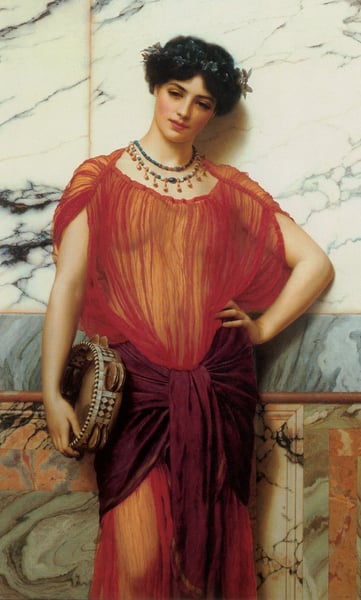
John William Godward’s “Drusilla” is a masterful example of late Neoclassical portraiture, created at a time when the art world was rapidly turning toward Modernism. Godward remained steadfast in his devotion to the classical ideal, and this work encapsulates both the technical brilliance and the thematic purity that make his oeuvre significant.
Composition and Stylistic Context
The portrait presents a single female figure—presumably a Roman matron or idealized classical woman—set against a shallow, architecturally inspired background. Godward’s signature use of cool, luminous marble tones and precisely rendered fabrics (linen, silk, or wool) anchors the composition in a timeless, sun-drenched Mediterranean antiquity. The figure’s serene, slightly averted gaze and graceful contrapposto posture echo the balance and harmony prized by Neoclassical artists, while the meticulous attention to texture—the polish of stone, the soft fall of drapery—reveals Godward’s debt to Academic painting of the nineteenth century.
Significance within Neoclassicism
What makes “Drusilla” truly significant is its role as a late, uncompromising statement of Neoclassical aesthetic ideals during the early twentieth century. While contemporaries such as the Pre-Raphaelites or Symbolists infused their classical subjects with narrative tension or psychological ambiguity, Godward maintained a cool, unruffled perfection. The title “Drusilla” itself invokes Roman history (the name belonged to several imperial women), yet Godward avoids historical specificity in favor of a generalized, ideal beauty. This very refusal to engage with contemporary anxieties or stylistic novelty is the work’s boldest gesture: it asserts that classical form, grace, and technical finish are enduring and self-sufficient.
Color and Light
Godward’s palette in “Drusilla” is characteristically subtle, dominated by whites, ivories, soft greens, and touches of coral or rose. The light is even, diffused, and slightly cool, as if filtered through a translucent marble atrium. This deliberate suppression of dramatic chiaroscuro amplifies the figure’s sculptural quality—she seems carved rather than painted—emphasizing Neoclassical ideals of clarity and permanence.
Legacy
Today, “Drusilla” stands as a testament to Godward’s disciplined vision. It rejects the rapid industrial and social changes of its time by retreating into a vision of antique serenity. For art historians, the work encapsulates the last flourish of a tradition that stretched from David and Ingres through Alma-Tadema; Godward’s unwavering commitment to this lineage, even as it fell out of favor, gives “Drusilla” a poignant, almost defiant significance. It is a portrait not just of a woman, but of an entire artistic conviction.
Museum / Gallery
Görsel olarak benzer
İlişkili kompozisyon ve renk paletine sahip 20 eser
The Tambourine Girl
John William Godward
The Tambourine Player
John William Godward
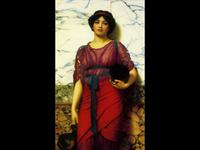
Grecian Idyll
John William Godward
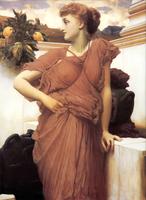
At the Fountain
Frederic Leighton
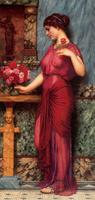
An Offering to Venus
John William Godward
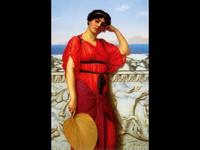
A Classical Lady
John William Godward

Contemplation
John William Godward
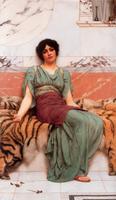
Sweet Dreams
John William Godward
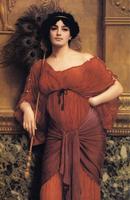
A Roman Matron
John William Godward
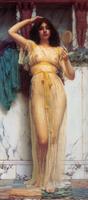
Girl with a Mirror
John William Godward
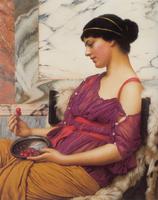
Ismenia
John William Godward
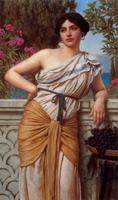
Reverie
John William Godward

At the Thermae
John William Godward
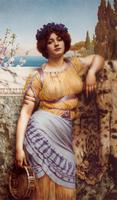
Ionian Dancing Girl
John William Godward
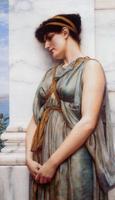
Pompeian Girl
John William Godward
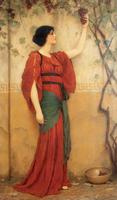
Autumn
John William Godward
Absence Makes the Heart Grow Fonder
John William Godward
A Congenial Task
John William Godward
The Ring
John William Godward

The Peacock Fan
John William Godward