Lotus
Analisi esperta di Lotus di Bada Shanren
Stile: Ink and wash painting · Genere: flower painting
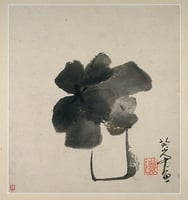
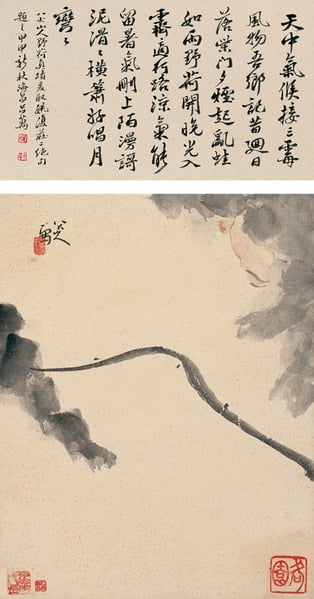
Bada Shanren’s Lotus stands as a masterwork of late Ming–early Qing ink painting, distinguished by its radical economy of means and profound emotional resonance. Executed in the xieyi (sketching-ideas) tradition, the painting transforms a conventional floral subject into a vehicle for personal and political expression.
Stylistic significance:
Bada Shanren (Zhu Da, 1626–1705) was a descendant of the Ming imperial family who became a Chan Buddhist monk after the dynasty’s fall. His lotus paintings are celebrated for their extreme simplification and bold, almost calligraphic brushstrokes. In Lotus, the stem is rendered with a single, sinuous line that arcs upward with tensile strength, while the leaves are reduced to broad, wet ink washes—some dark, some pale—that seem to float without grounding. The composition often creates a dramatic void: a single lotus blossom hovers above a massive leaf, isolated in empty space, evoking fragility and defiance.
Historical and symbolic context:
The lotus traditionally symbolizes purity (rising unstained from mud) and resilience. For Bada Shanren, this took on added meaning: as a Ming loyalist living under Manchu rule, his lotuses are often read as metaphors for the artist’s own unyielding integrity and sorrow. The deliberate asymmetries, the “broken” or incomplete brush lines, and the eccentric, slightly awkward stance of the flower align with his broader practice of using “eccentric” (qi) aesthetics to convey alienation and protest.
Technical innovation:
Bada paradoxically achieved maximum expressiveness with minimal brushwork. He used “side-tip” (cefeng) strokes for the leaves, alternating wet and dry ink to create texture without descriptive detail. The lotus petals are often just a few quick, separated strokes, never fully closed—a signature that suggests a tension between bud and bloom, hope and decline. This distillation of form influenced later “literati” painters and stands as a precursor to modern abstract expressionism in Chinese art.
In essence, Lotus is not merely a flower painting; it is a distilled statement of resilience, loss, and the power of emptiness—a quiet, defiant masterwork of the ink-and-wash tradition.
Genere
Visivamente simili
20 opere con composizione e palette affini
The lonely Mountain
Shitao
Dragon Stone
Emperor Huizong
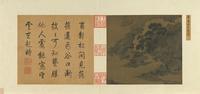
Sitting on Rocks Gazing at the Mist
Li Tang
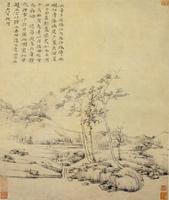
The Distant Cold Flow Pine
Ni Zan
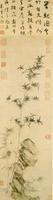
Bamboo and Stone
Guan Daosheng
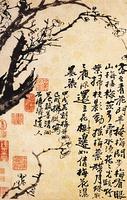
Prunus in flower
Shitao
The lake Cao
Shitao
Autumn Wind in Gemstones Trees
Ni Zan
楼台殿阁图
Qian Xuan
Blind Men Crossing a Bridge
Hakuin Ekaku
Water and Bamboo Dwelling
Ni Zan
The Rongxi Studio
Ni Zan
Bamboo, and Elegant Stone
Ni Zan
行草王昌龄诗
Chen Peiqiu
Chrysanthemums
Hakuin Ekaku
On the Lotus Pond
Shitao
Go by the cold paths
Shitao
Twelve Plants and Calligraphy
Xu Wei
Two friends in the moonlight
Shitao
Mists on the mountain
Shitao