Analisi esperta di Snow Fall at Kiyomizu Temple, Kyoto di Hasui Kawase
Stile: Shin-hanga · Genere: cityscape
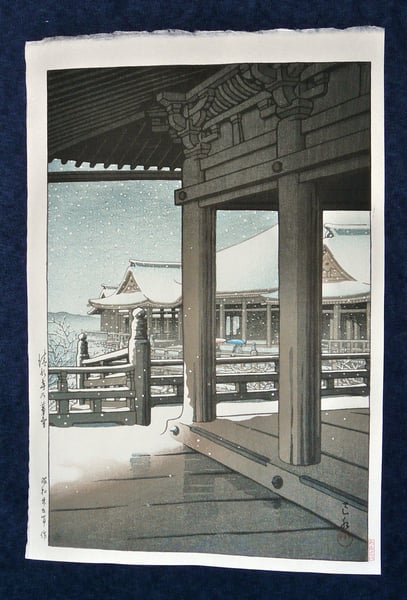
Expert Analysis: "Snow Fall at Kiyomizu Temple, Kyoto" by Hasui Kawase
Context and Significance
This work is a quintessential example of the Shin-hanga (New Prints) movement, which revitalized the traditional ukiyo-e woodblock print in early 20th-century Japan. Unlike the commercial, mass-produced ukiyo-e of the Edo period, Shin-hanga artists like Hasui Kawase aimed to create fine art prints with a more painterly, atmospheric quality, often incorporating Western perspective and naturalistic light effects.
Style and Treatment
As a cityscape, the composition captures a famous Kyoto landmark—Kiyomizu Temple—under a heavy snowfall. Kawase masterfully balances the geometric architecture of the temple’s wooden stage and pagoda with the organic, muffled softness of snow. His use of subtle gradations (bokashi) in the sky and on the rooftops demonstrates the technical perfection of Shin-hanga printmaking, where carvers and printers collaborated closely with the artist. The falling snowflakes are depicted as delicate white droplets against a dark, muted palette, creating a sense of tranquil isolation.
What Makes It Significant
- Kawase’s Snow Scenes: Hasui Kawase is widely celebrated for his depictions of snow, rain, and twilight. Snow Fall at Kiyomizu Temple exemplifies his ability to evoke stillness and quiet beauty, turning a familiar tourist site into a meditative, almost ethereal landscape.
- Shin-hanga’s Modernized Vision: While rooted in ukiyo-e tradition (e.g., Hiroshige’s series One Hundred Famous Views of Edo), Kawase introduces a more realistic sense of depth and atmosphere. The snow is not simply decorative but actively transforms the scene, softening edges and unifying composition.
- Cultural Icon: Kiyomizu Temple is a UNESCO World Heritage site and a symbol of Kyoto’s ancient heritage. By rendering it in a winter storm, Kawase juxtaposes timeless architecture with the transience of weather, a theme resonant in Japanese aesthetics (mono no aware).
This print remains a masterwork of Shin-hanga for its serene beauty, technical skill, and evocative capture of a fleeting moment in one of Japan’s most storied settings.
Genere
Stile
Visivamente simili
20 opere con composizione e palette affini
Self-Portrait at Kiyomizu Temple, Kyoto
Hasui Kawase
Kozu, Osaka
Hasui Kawase
Asakusa Kannon, Tokyo
Shotei Takahashi
Kankai Pavillion at Wakaura Beach
Hasui Kawase
Rain in Sanjyusangendo Temple, Kyoto
Asano Takeji
Drizzling Rain in Ukimido
Asano Takeji
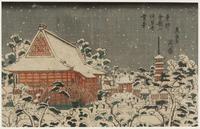
Snow Scene at Sensô-ji Temple at Kinryûzan in the Eastern Capital
Keisai Eisen
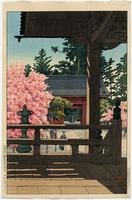
Myohon Temple, Kamakura
Hasui Kawase
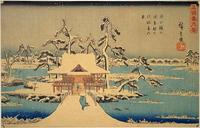
Benzaiten Shrine at Inokashira in Snow
Hiroshige
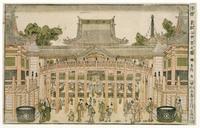
Inside the Courtyard of the Toeizan Temple at Ueno
Katsushika Hokusai
Konjikido in Snow, Hiraizumi
Hasui Kawase
66 (70) The Sazaidō Hall at the Five Hundred Rakan Temple
Hiroshige
Rain in Kiyomizu Temple
Asano Takeji
Snowy Inokashira, Benten
Hasui Kawase
View of mountains of Awa Province from Tsurugaoka, near Kamakura
Utagawa Toyokuni II
Evening Scene at Ishiyama Temple
Ito Shinsui
Chion-in Temple Gate
Hiroshi Yoshida
Miyoshin-ji Kyoto (A)
Kiyoshi Saito
Snow at Shiba Park
Hasui Kawase
Snow at Hiunkaku Temple, Kyoto
Asano Takeji