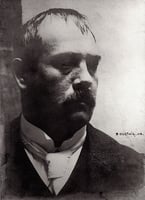
Expert analysis of Lovis Corinth’s In a Black Coat
Style: Impressionism · Genre: portrait
Analysis of "In a Black Coat" by Lovis Corinth
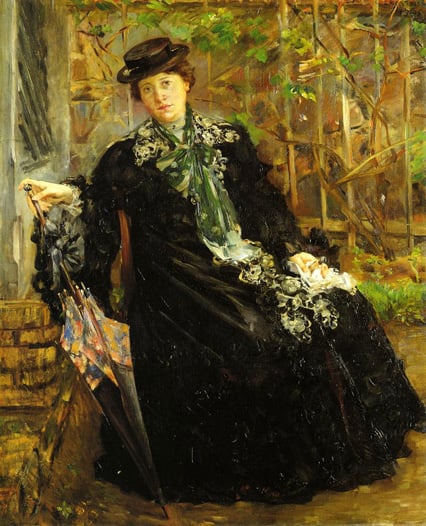
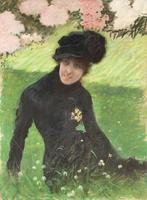
Lovis Corinth’s In a Black Coat is a compelling example of the German master’s mature Impressionist period, a phase that bridged the late-nineteenth-century fascination with optical sensation and the burgeoning psychological expressiveness of early modernism. As a portrait within the Impressionist style, the work demonstrates Corinth’s signature ability to merge the movement’s core preoccupation with light and fleeting visual effects with a penetrating, often unsettling scrutiny of human character.
Significance within Impressionism and Corinth’s Oeuvre
-
Subverting the Bright Palette: While French Impressionism famously reveled in high-key color and sunny outdoor light, Corinth’s In a Black Coat proves that Impressionist brushwork and analysis of form need not abandon darkness. The eponymous black coat becomes a technical tour de force – a challenge to render a non-color as a field of subtle, shifting tonalities. Rather than a flat silhouette, the coat is built from vigorous, broken strokes of deep blues, purples, deep browns, and hints of cool gray, demonstrating that “black” is refracted light. This approach aligns Corinth with the German Impressionist dedication to plein-air energy adapted for the studio, where psychological atmosphere replaces naturalistic brightness.
-
Psychological Depth over Decorative Harmony: Corinth’s portraiture consistently pushes beyond the pleasant surface typical of much earlier Impressionist portraiture (e.g., Renoir’s glowing society women). Here, the subject’s gaze and posture, combined with the heavy, enveloping coat, suggest interiority and perhaps melancholy or detachment. This is where Corinth’s work gains its unique significance: he uses Impressionist techniques – loose handling, visible strokes, and an emphasis on the painterly facture – not to dissolve the sitter into light, but to build a dense, tangible presence. The black coat acts as a foil, framing the face and hands with a drama that anticipates his later Expressionist intensity.
-
Bridging to Modernism: Painted at a time when Corinth was moving away from the strict naturalism of his academic training, In a Black Coat exemplifies the shift from representing what is seen to conveying how the artist feels about what is seen. The energetic, almost aggressive brushwork (particularly in the background and the coat’s folds) imbues the canvas with a vital, tactile rhythm. This fuses the fleeting impression with a palpable sense of artistic will, placing Corinth ahead of many French colleagues in linking Impressionist observation to the subjective, gestural language of Expressionism. In this sense, the painting is historically significant: it captures a pivotal moment when Impressionism in Germany ceased to be a derivative style and became a vehicle for profound personal expression.
In short, In a Black Coat matters because it demonstrates that Impressionism could be a dark, introspective, and psychologically charged mode of seeing – not merely a celebration of light, but a tool for probing the human condition through the very substance of paint.
Visually similar
20 works with related composition and palette
In the garden
Vittorio Corcos
Woman in a Garden
Berthe Morisot
Young Lady Seated on a Bench
Berthe Morisot
Portrait of a Woman in a pink dress
Berthe Morisot
Portrait of a seated lady
Constant Mayer
Miss Wedewood and Miss Sargent Sketching
John Singer Sargent
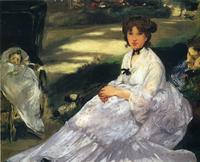
In the Garden
Edouard Manet
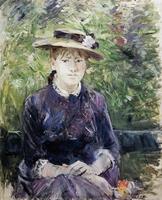
Portrait of Paule Gobillard
Berthe Morisot
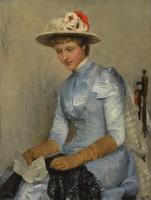
Forget Me Nots
Arthur Hacker
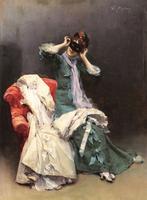
Preparing for the Costume Ball
Raimundo de Madrazo
Nanny with a Child
Eva Gonzales
Lady with a Parasol
Tom Roberts
Reverie
Alfred Stevens
Spring (Study of Jeanne Demarsy)
Edouard Manet
On the Terrace at Sèvres
Marie Bracquemond
On the terrace
Pierre-Auguste Renoir
Mother in the Garden at Bellevue
Edouard Manet
The friends
Anton Romako

Contemplation
Adrien Moreau
Léontine in the garden of the De Nittis house
Giuseppe De Nittis