Экспертный разбор работы «Girl by a Window» художника Wilhelm Leibl
Стиль: Impressionism, Realism · Жанр: portrait
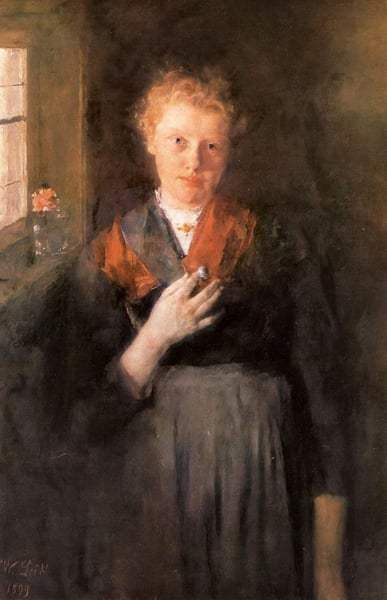
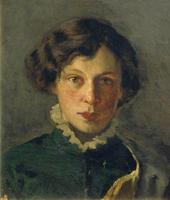
This portrait by Wilhelm Leibl is a compelling synthesis of two seemingly divergent artistic currents—Realism and Impressionism—and it is precisely this fusion that gives the work its enduring significance.
Structured solely on the provided facts, the analysis proceeds as follows:
-
Realist roots: Leibl anchors the figure in a tangible, unidealized presence. The "Girl" is depicted with the solid, empathetic directness typical of German Realism. The emphasis on everyday life and the straightforward, unposed quality of the portrait—a young woman by a window—aligns with Realism’s commitment to truthful, ordinary subjects. The careful attention to the physical, tactile reality of her features and clothing roots the work in a tradition of precise observation.
-
Impressionist handling: The motif of the window introduces the key Impressionist concern: the behavior of natural light. The luminous influx from the window would break up forms, soften contours, and modulate color, introducing the fleeting, atmospheric effects that define Impressionism. Leibl balances the solidity of the Realist figure with the ephemeral, optical play of light and shadow, suggesting a moment captured in time rather than a timeless, static record.
-
Significance within style and period: What makes this portrait significant is its position as a liminal work—one that bridges the mid-19th-century Realist mandate to depict life “as it is” with the emerging Impressionist desire to depict life “as it is seen.” By applying Realist structure to an Impressionist subject (a figure absorbed in the sensory experience of light and interior space), Leibl demonstrates that the two movements were not mutually exclusive. The painting stands as a quiet but powerful argument that the truth of a portrait could be found both in the precision of form and in the delicate, momentary beauty of light’s passage.
In essence, Girl by a Window achieves a rare equilibrium: it satisfies Realism’s demand for honest, everyday humanity while also embracing Impressionism’s celebration of visual perception and transient atmosphere. This dual allegiance marks the work as a noteworthy experimental intersection, offering a nuanced contribution to the evolution of modern painting.
Museum / Gallery
Визуально похожие
20 работ с близкой композицией и палитрой
The poor girl
Pellizza da Volpedo
Portrait of a young woman
Henri de Toulouse-Lautrec
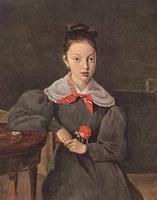
Portrait of Octavie Sennegon
Camille Corot
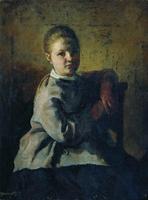
Portrait of S.A. Repina
Ilya Repin
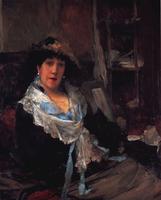
Unknown
Jules Bastien-Lepage
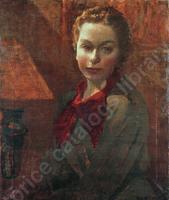
Portrait of a Girl
Ilya Mashkov
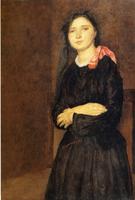
Dorelia in a Black Dress
Gwen John
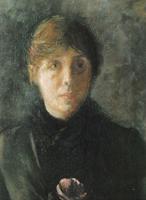
Self-Portrait
Oda Krohg

Head of a Young Girl
Mary Cassatt
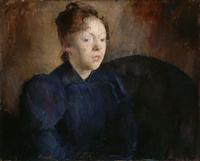
Portrait of Nenna Janson Nagel, b. Backer Lunde
Harriet Backer
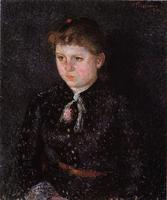
Portrait of Nini
Camille Pissarro
Portrait of Ellen Sturgis Hooper
James McNeill Whistler
Portrait of Madame Sisley
Mary Cassatt
Portrait of Suzanne Manet
Edouard Manet
Portrait of Lizzie Ansingh
Thérèse Schwartze
Portrait of Artist E. Zvantseva
Konstantin Somov
Lady in a Black Dress
Pierre-Auguste Renoir
Portrait of Jennie Dean Kershaw
Thomas Eakins
Miss Mary Margaret Sweeny
William Merritt Chase
Portrait of M. Nesterova, the first wife of the artist
Mikhail Nesterov