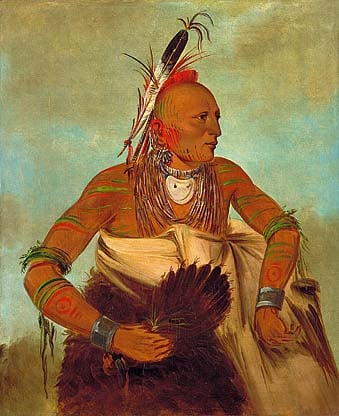
Osage warrior of the Wha-sha-she band (a subdivision of Hunkah)
Details
Expert analysis of George Catlin’s Osage warrior of the Wha-sha-she band (a subdivision of Hunkah)
Style: Realism · Genre: portrait
This portrait by George Catlin holds significant value as both a work of art and an ethnographic document. Painted in the style of Realism, Catlin’s portrayal of the Osage warrior is not merely a likeness but a deliberate, fact-based record of a specific individual and his cultural affiliations. The title itself—identifying the subject as a member of the Wha-sha-she band (a subdivision of the Hunkah, or Hunkpapa, band of the Osage)—demonstrates Catlin’s commitment to precise ethnographic detail, a hallmark of his broader project to document indigenous peoples of the American frontier before their traditional ways of life were permanently altered.
What makes this artwork particularly significant is its place within Catlin’s larger “Indian Gallery,” a collection intended to create a visual encyclopedia of Native American peoples during the 1830s. The Realist style here serves a dual purpose: it ensures accuracy of regalia, facial features, and bearing, while also elevating the sitter with the dignity and gravity typical of formal portraiture. Catlin’s careful observation of the warrior’s attire—likely including paint, ornaments, and weaponry—provides modern scholars with a rare, firsthand visual record of Osage material culture and warrior identity. By focusing on a named band and its subdivision, Catlin underscores the diversity among Native nations and resists the era’s tendency to homogenize indigenous peoples. In this way, the work transcends its genre as a simple portrait and becomes a vital historical artifact of cross-cultural encounter and preservationist art.
Visually similar
20 works with related composition and palette
Little Bear, Hunkpapa Brave
George Catlin
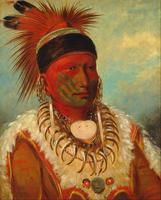
The White Cloud, Head Chief of the Iowa
George Catlin
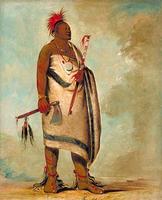
Shonka Sabe (Black Dog). Chief of the Hunkah division of the Osage tribe
George Catlin
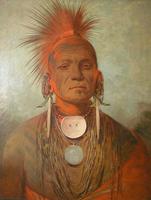
See-non-ty-a, an Iowa Medicine Man
George Catlin
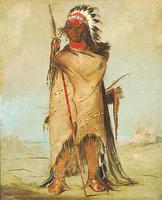
Hó-ra-tó-a, a Brave, Fort Union (Crow/Apsaalooke)
George Catlin
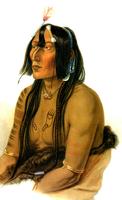
Psihdja Sahpa, Yanktonian Indian
Karl Bodmer
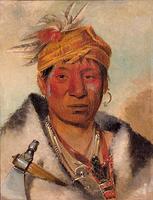
Ah-yaw-ne-tak-oár-ron, a Warrior
George Catlin
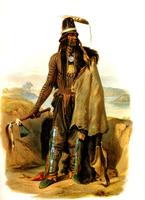
Abdih Hiddisch, Mandan Chief
Karl Bodmer
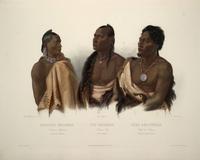
A Missouri Indian, an Oto Indian and the Chief of the Puncas, plate 7 from 'Travels in the Interior of North America'
Karl Bodmer
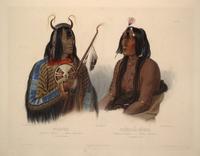
Noapeh, an Assiniboin Indian and Psihdja-Sahpa, a Yanktonan Indian, plate 12 from Volume 2 of 'Travels in the Interior of North America'
Karl Bodmer
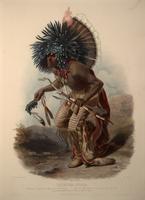
Pehriska-Ruhpa, Minatarre Warrior in the Costume of the Dog Dance, plate 23 from Volume 2 of 'Travels in the Interior of North America'
Karl Bodmer
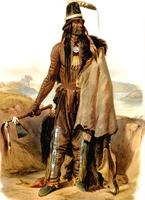
Rolled Scalp
Karl Bodmer
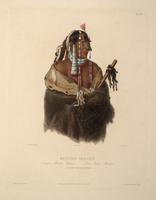
Mándeh Páhchu, a Young Mandan Indian, plate 24 from Volume 1 of 'Travels in the Interior of North America'
Karl Bodmer
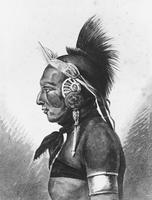
An Osage Warrior
Pavel Svinyin
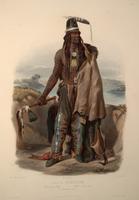
Abdih- Hiddisch. A Minatarre Chief, plate 24 from Volume 1 of 'Travels in the Interior of North America'
Karl Bodmer
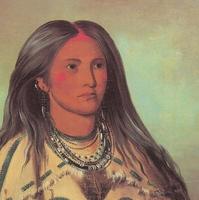
Sha-kó-ka (mint), a Mandan girl
George Catlin
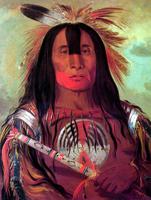
Buffalo Bull's Back Fat (Stu-mick-o-súcks) Head Chief of the Blood Tribe (Blackfoot)
George Catlin
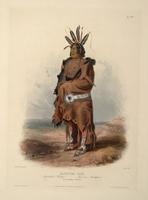
Pachtuwa-Chta, an Arrikkara Warrior, plate 27 from Volume 1 of 'Travels in the Interior of North America'
Karl Bodmer
Woman of The Cree Tribe
Karl Bodmer
Tul-lock-chísh-ko, Drinks the Juice of the Stone (Choctaw)
George Catlin