Expert analysis of George Catlin’s Sha-kó-ka (mint), a Mandan girl
Style: Realism · Genre: portrait
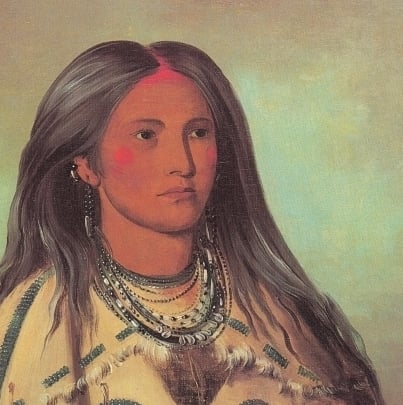
Expert Analysis: "Sha-kó-ka (mint), a Mandan girl" by George Catlin
This portrait by George Catlin holds significance as both a meticulous exercise in Realist portraiture and a vital ethnographic document of the Mandan people in the early 19th century. Executed during Catlin’s travels through the American frontier, the work exemplifies the artist’s dual commitment to artistic fidelity and cultural preservation. The subject, a Mandan girl named Sha-kó-ka (meaning “mint”), is rendered with the hallmark precision of Realism: her facial features, traditional attire, and adornments are captured without idealization, aiming for an unvarnished likeness that respects individual identity.
Within the context of Catlin’s larger body of work, this portrait contributes to one of the most extensive visual records of Native American life before forced displacement and cultural disruption. The choice to name the sitter and include her tribal designation (Mandan) underscores Catlin’s intent to personalize and dignify his subjects, countering contemporary stereotypes. The genre of portraiture here transcends mere representation; it becomes an act of resistance against erasure, preserving the distinct material culture—from beadwork to hair styling—of the Mandan people.
What makes this artwork particularly significant is its role at the intersection of art and anthropology. Catlin’s Realist style, while rooted in academic tradition, serves a documentary function: every detail, from the pattern of her clothing to the subtle expression in her eyes, offers a window into the lived experience of a Mandan girl in the 1830s. As a result, "Sha-kó-ka (mint), a Mandan girl" remains a poignant testament to a culture facing imminent change, and a landmark in the history of American portrait painting.
Visually similar
20 works with related composition and palette
Kei-a-gis-gis, a woman of the Plains Ojibwa
George Catlin
Woman of The Cree Tribe
Karl Bodmer
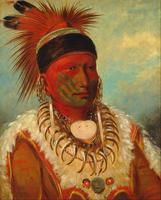
The White Cloud, Head Chief of the Iowa
George Catlin
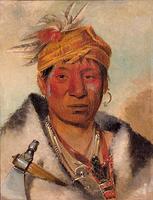
Ah-yaw-ne-tak-oár-ron, a Warrior
George Catlin
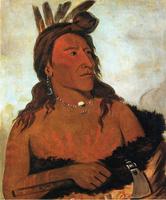
Little Bear, Hunkpapa Brave
George Catlin
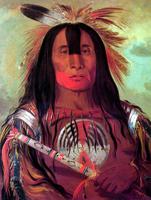
Buffalo Bull's Back Fat (Stu-mick-o-súcks) Head Chief of the Blood Tribe (Blackfoot)
George Catlin
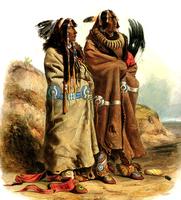
Sih-Chida and Mahchsi-Karehde, Mandan Indians, plate 20 from Volume 2 of 'Travels in the Interior of North America'
Karl Bodmer
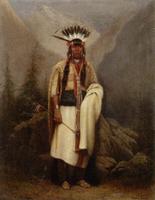
Indian
Jaroslav Čermák
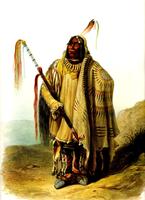
Pehriska Ruhpa Minatarre or Big Bellied Indian
Karl Bodmer
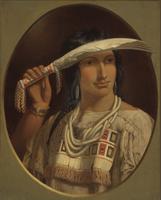
Cunnawa-bum
Paul Kane
The Chief
Aleksander Belyaev
The Man That Gives the War Whoop
Paul Kane
Psihdja Sahpa, Yanktonian Indian
Karl Bodmer
A Minatarre or Big bellied indian, plate 17 from Volume 2 of 'Travels in the Interior of North America'
Karl Bodmer
Abdih Hiddisch, Mandan Chief
Karl Bodmer
Po-Tse-Water Eagle
Robert Henri
Noapeh, an Assiniboin Indian and Psihdja-Sahpa, a Yanktonan Indian, plate 12 from Volume 2 of 'Travels in the Interior of North America'
Karl Bodmer
Mandan indians
Karl Bodmer
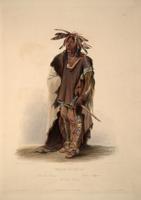
Wahk-Ta-Ge-Li, a Sioux Warrior, plate 8 from Volume 2 of 'Travels in the Interior of North America'
Karl Bodmer
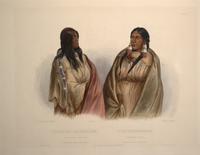
Woman of the Snake tribe and woman of the Cree tribe, plate 33 from Volume 1 of 'Travels in the Interior of North America'
Karl Bodmer