Description
Style: Romanticism · Genre: portrait
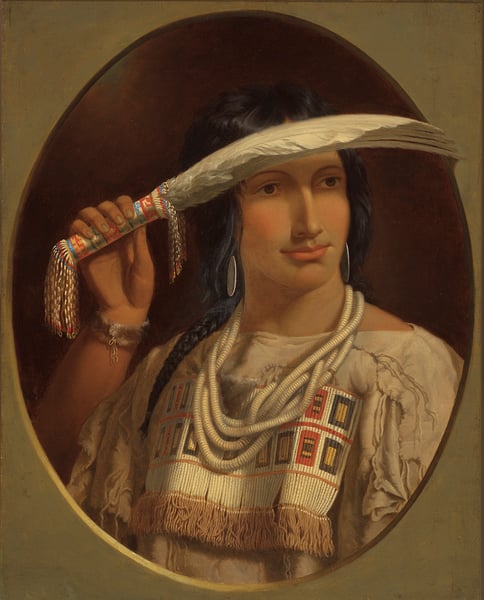
Out of the cycle of one hundred paintings that Kane created, it is this one, Cunnawa-bum, that is used as the frontispiece in his book Wanderings of an Artist among the Indians of North America. Although the image of the young Metis woman of Plains Cree and British ancestry featured in the book is only one of numerous portraits in the painted cycle, as frontispiece she becomes a sort of cover girl for Kane’s life project. Wanderings of an Artist recounts how the young woman, whom Kane met at Fort Edmonton, held her swan’s-wing fan “in a most coquettish manner” and that it was her charm that inspired Kane. No preliminary portrait sketch or drawing exists of Cunnawa-bum. Kane developed his general concept for a fan portrait through several schematic drawings of a figure holding a fan, sometimes within an oval. One of these drawings is a profile of a “flathead” woman; none are articulated with features that suggest an individual. In the painting the awkwardly disembodied arm implicitly suggests that Kane’s focus was the beguiling fan, underlined by its trompe l’oeil nudge into the viewer’s space. This strangely generic aspect of the portrait, despite its connection to an individual, is carried over into its life as the chromolithograph frontispiece to Wanderings of an Artist where its title becomes the anonymous Portrait of a Half-Breed Cree Girl. According to the ethnologist Daniel Wilson (1816–1892), a friend of Kane’s who reviewed Wanderings of an Artist, the oil captures the racial duality of the sitter; Wilson writes that Kane’s painting “presents an exceedingly interesting illustration of the blending of the white and Indian features in the female Half-breed.” Wilson is criticizing the work of the chromolithographer, Vincent Brooks, who had “sacrificed every trace of Indian features in his desire to produce his own ideal of a pretty face, such as might equally well have been copied for an ordinary wax doll.” For the artist, ethnographer, and lithographer, respectively, the essence of Cunnawa-bum’s charm was presented as a fan, in her identity as a half-breed, and as a wax doll. It is perhaps in Cunnawa-bum’s best interest that modern viewers shift the focus to the meaning of her name—“One That Looks at the Stars”—as a way to subvert the nineteenth-century male gaze and recognize her as empowered.
Visually similar
20 works with related composition and palette
Woman of The Cree Tribe
Karl Bodmer
Sha-kó-ka (mint), a Mandan girl
George Catlin
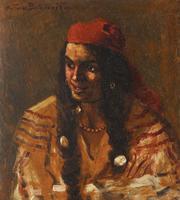
Gypsy Woman with Red Scarf
Octav Bancila
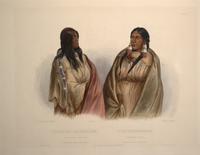
Woman of the Snake tribe and woman of the Cree tribe, plate 33 from Volume 1 of 'Travels in the Interior of North America'
Karl Bodmer
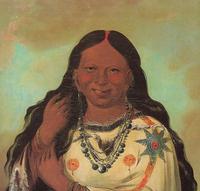
Kei-a-gis-gis, a woman of the Plains Ojibwa
George Catlin
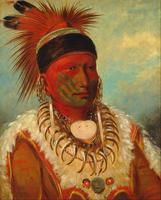
The White Cloud, Head Chief of the Iowa
George Catlin
Po-Tse-Water Eagle
Robert Henri
The Man That Gives the War Whoop
Paul Kane
Gypsy Girl in White
Robert Henri
The Chief
Aleksander Belyaev
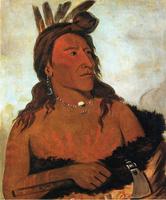
Little Bear, Hunkpapa Brave
George Catlin
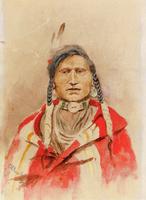
Portrait of an Indian
Charles M. Russell
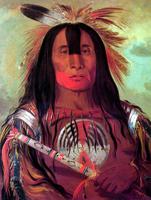
Buffalo Bull's Back Fat (Stu-mick-o-súcks) Head Chief of the Blood Tribe (Blackfoot)
George Catlin
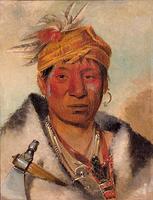
Ah-yaw-ne-tak-oár-ron, a Warrior
George Catlin
Indian
Jaroslav Čermák
Indian Girl of San Ildefonso
Robert Henri
Mándeh Páhchu, a Young Mandan Indian, plate 24 from Volume 1 of 'Travels in the Interior of North America'
Karl Bodmer
Dacota Woman and Assiniboin Girl, plate 9 from volume 2 of `Travels in the Interior of North America'
Karl Bodmer
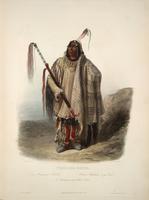
A Minatarre or Big bellied indian, plate 17 from Volume 2 of 'Travels in the Interior of North America'
Karl Bodmer
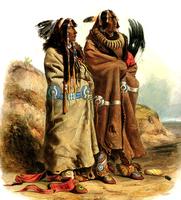
Sih-Chida and Mahchsi-Karehde, Mandan Indians, plate 20 from Volume 2 of 'Travels in the Interior of North America'
Karl Bodmer