Analisi esperta di Peacock and Dragon woven wool furnishing fabric di William Morris
Stile: Romanticism · Genere: design
Expert Analysis: "Peacock and Dragon Woven Wool Furnishing Fabric" (1878) by William Morris
Style: Romanticism
Genre: Design
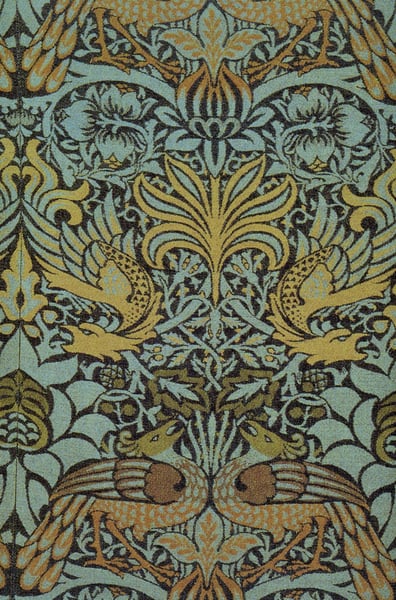
Within the Romantic movement, William Morris’s furnishing fabric stands as a landmark in the applied arts—a genre that Romanticism elevated from mere decoration to a vehicle for emotional expression and historical revival. The work’s significance lies in how it synthesizes three Romantic ideals: a deep reverence for nature, a fascination with medieval symbolism, and a passionate resistance to the dehumanizing effects of industrialization.
Romantic Naturalism and Symbolic Imagery
The peacock and dragon are not arbitrary ornaments; they embody the Romantic preoccupation with the exotic, the mythical, and the sublime. The peacock, with its iridescent plumage and “eyes,” has long symbolized beauty, immortality, and watchfulness—themes central to Romantic poetry’s celebration of nature’s mystery. The dragon, meanwhile, evokes medieval chivalric romance and the Gothic revival that Romantic writers like Sir Walter Scott popularized. By intertwining these creatures in a symmetrical, repeatable pattern, Morris translates the Romantic taste for the fantastic into a functional textile, making the sublime accessible in everyday life.
Handcraft vs. Machine: The Fabric as Manifesto
Though the fabric is classified as “design,” its creation method underscores Morris’s Romantic conviction that art must be made by hand to retain its soul. The woven wool technique—using traditional hand‑looms and natural dyes—directly opposed the mass‑produced, aniline‑dyed textiles of the Victorian era. In doing so, the fabric becomes a material critique of industrial capitalism, echoing Romantic-era fears of mechanization and loss of individual creativity. It is a practical demonstration of Morris’s belief that “the true secret of happiness lies in taking a genuine interest in all the details of daily life”—a Romantic creed of beauty as moral necessity.
Significance within Romanticism and Beyond
This work is significant because it bridges the Romantic reverence for the past (medieval design, handmade craft) with a forward‑looking social ideal: that art should be democratic, not reserved for galleries. It predates and influences the Arts and Crafts Movement, itself a direct descendant of Romantic anti‑industrial sentiment. As a “furnishing fabric,” it challenges the Romantic hierarchy that placed painting and poetry above the decorative arts, arguing that the domestic sphere deserves equal aesthetic attention—a radical notion that reshaped how we understand design today.
In sum, Peacock and Dragon is not merely a pattern; it is a Romantic manifesto woven in wool, where nature, myth, and craft converge to assert that even the humblest object can carry the deepest human aspirations.
Visivamente simili
20 opere con composizione e palette affini
Snakeshead printed textile
William Morris
Strawberry Thief, furnishing fabric
William Morris
Acanthus embroidered panel
William Morris
Strawberry Thief
William Morris
Elizabethan Ornament no. 3. Painted ornaments and ornaments on woolen fabrics from the time of Henry VIII to that of Charles II
Owen Jones
Medieval Ornament no. 1. Conventional leaves and flowers from illuminated manuscript
Owen Jones
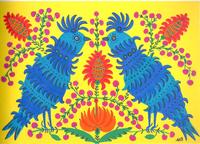
Two Kites
Maria Primachenko
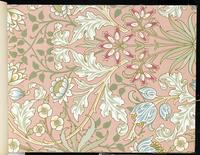
Wallpaper - Hyacinth, pattern #480
William Morris
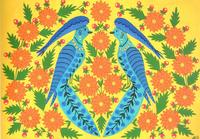
Blue Birds in Flowers
Maria Primachenko
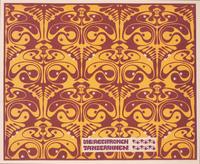
The reciprocal of dancers
Koloman Moser
Two Blue Tomties - Two Sisters Walk on the Grass
Maria Primachenko
Moresque ornament from the Alhambra no. 3. Lozenge diapers
Owen Jones
Pigeon and Dove
Maria Primachenko
Untitled
Louis Wain
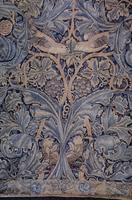
Cabbage and vine tapestry
William Morris
Ukrainian Dancers
Maria Primachenko
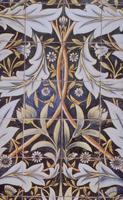
Panel of ceramic tiles designed by Morris and produced by William De Morgan
William Morris
Fairy bird – Peacock
Maria Primachenko
Blooming Fantasy
Alla Horska
A good tree has grown
Nicholas Roerich