Analisi esperta di Wallpaper - Hyacinth, pattern #480 di William Morris
Stile: Romanticism · Genere: design
Expert Analysis of William Morris's Wallpaper - Hyacinth, pattern #480 (Style: Romanticism; Genre: Design)
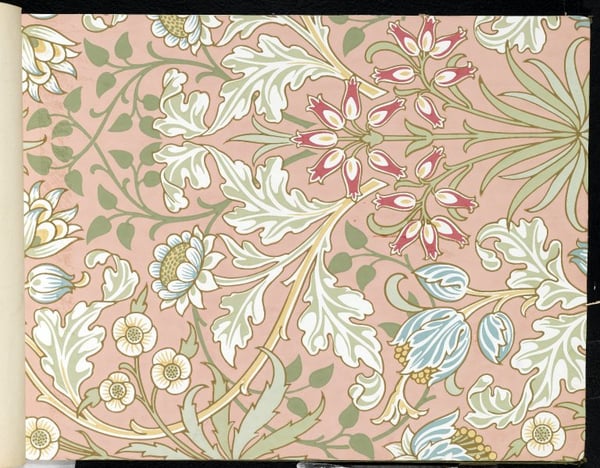
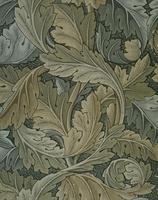
Within the Romanticist tradition, William Morris’s Wallpaper - Hyacinth, pattern #480 transforms the movement’s core values—nature worship, emotional depth, and a longing for a pre-industrial past—into a functional, decorative object. While the genre is design, the work is profoundly significant for how it embodies Romanticism’s resistance to mechanization and its celebration of organic, handmade beauty.
Significance within Romanticism and Period Context:
-
Nature as Idealized, Living Form – Romantic artists revered nature as a source of truth and spirituality. Morris’s hyacinth pattern does not merely copy botanical form; it stylizes the flower into a rhythmic, repeating motif that suggests growth, vitality, and the sublime order of the natural world. The dense, interlocking stems and blossoms evoke a Romantic sense of nature’s lush, uncontrollable abundance—a direct contrast to the rigid, geometric patterns of Victorian industrial design.
-
Revival of Handcraft and Medieval Romanticism – At a time when mass-produced, machine-made wallpaper flooded the market, Morris insisted on hand-block printing and natural dyes. This process aligns with Romanticism’s nostalgic embrace of the medieval era, seen as a time of authentic craftsmanship and unity between art and life. The hyacinth pattern, like all Morris designs, carries a moral and aesthetic critique of industrialization—a Romantic yearning for a simpler, more harmonious age.
-
Emotional and Sensory Richness – Romanticism valued the emotional impact of art over cold rationality. Morris’s dense, twining hyacinth tendrils create a tactile, enveloping surface that invites contemplation and immersion. The repeated curves and subtle color shifts (likely indigo and ochre, typical of Morris’s palette) generate a gentle, hypnotic rhythm—a visual equivalent of Romantic music or poetry, aiming to stir the viewer’s inner life.
-
Unity of Art and Life – Morris was central to the Arts and Crafts Movement, but his foundations are deeply Romantic. Hyacinth wallpaper demonstrates his belief that beautiful, well-made objects could elevate daily existence—a Romantic ideal of art transforming the domestic sphere into a refuge from the ugliness of industrial cities. The pattern is not just a surface decoration; it is a statement about the moral and aesthetic renewal of society through design.
In summary, Wallpaper - Hyacinth, pattern #480 is significant as a quintessential Romantic design: it marries a reverence for nature with a rebellious return to handcraft, infuses the home with emotional and sensory richness, and stands as a manifesto against the dehumanizing forces of the Industrial Age. Morris turned the humble wallpaper into a vehicle for Romantic philosophy, making this piece a landmark in both design history and the broader Romantic movement.
Visivamente simili
20 opere con composizione e palette affini
Snakeshead printed textile
William Morris
Acanthus embroidered panel
William Morris
Elizabethan Ornament no. 3. Painted ornaments and ornaments on woolen fabrics from the time of Henry VIII to that of Charles II
Owen Jones
Peacock and Dragon woven wool furnishing fabric
William Morris
Wallpaper - Blackberry, pattern #388
William Morris
Moresque ornament from the Alhambra no. 3. Lozenge diapers
Owen Jones
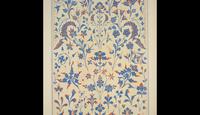
Medieval Ornament no. 1. Conventional leaves and flowers from illuminated manuscript
Owen Jones
Untitled
Louis Wain
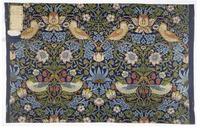
Strawberry Thief, furnishing fabric
William Morris
Blooming Fantasy
Alla Horska
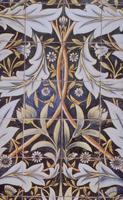
Panel of ceramic tiles designed by Morris and produced by William De Morgan
William Morris
Poppy
Maria Primachenko
Strawberry Thief
William Morris
Design for Windrush printed textile
William Morris
Red Poppies
Maria Primachenko
Indian Ornament no. 4. Ornaments from woven fabrics and paintings on vases exhibited in the Indian Collection, now at Marlborough House
Owen Jones
The reciprocal of dancers
Koloman Moser
A Bunch of Red Flowers on Read Army Day
Maria Primachenko
Acanthus wallpaper
William Morris
Cotton Seed
Robert Zakanitch