Analyse experte de Evocação 11 de Julio Resende
Style : Expressionism · Genre : figurative
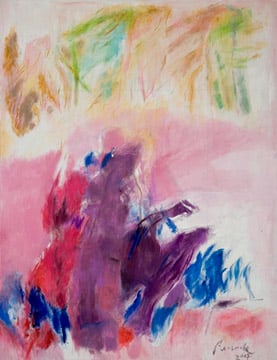
Expert Analysis: "Evocação 11" by Julio Resende
As an Expressionist figurative work, "Evocação 11" holds significance in its ability to channel raw emotional intensity through recognizable forms—a hallmark of Expressionism’s rebellion against naturalism. Resende, a key figure in Portuguese modernism, uses the genre of figurative art not to replicate reality, but to distort and amplify it, conveying inner psychological states or social commentary. The title “Evocação” (Evocation) suggests a memory or dream, and the numeral “11” implies a serial exploration of a theme.
What makes this piece significant is its tension between figuration and expression: the human figure—likely present—is not abandoned to pure abstraction but is instead subjected to exaggerated lines, jarring colors, and agitated brushwork. This approach allows Resende to preserve a narrative anchor while pushing the expressive limits of the canvas. In the context of Expressionism, such works demonstrate how the genre of figurative painting can be a vehicle for subjective truth, emotional immediacy, and cultural identity—particularly within the Portuguese neo-realist and expressionist circles of the mid‑20th century. The work stands as a testament to the enduring power of the (distorted) figure to move the viewer beyond the visual into the visceral.
Genre
Style
Visuellement similaire
20 œuvres à la composition et à la palette proches
Janus-Kopf
Bernard Schultze
Landscape
Arshile Gorky
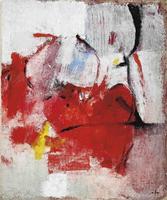
Figure
Afro
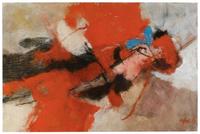
L'uccello Di Fuoco
Afro
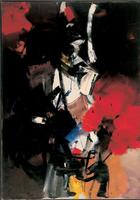
Etreinte
Jean Miotte
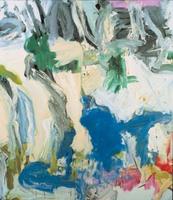
Two trees on Mary Street . . . Amen!
Willem de Kooning
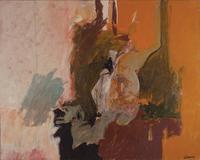
Ear of Earth
Nicolas Carone
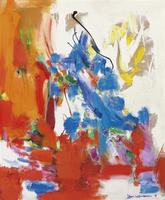
Wild Vine
Hans Hofmann

Autumn Landscape
Ralph Rosenborg
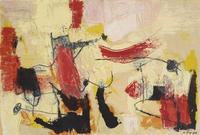
Il pendolo
Afro
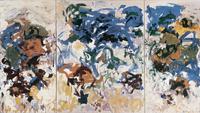
Bracket
Joan Mitchell
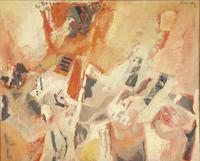
Untitled
Julio Resende
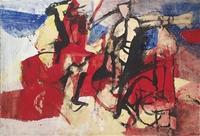
Torneo
Afro

Spring Smell
Friedel Dzubas
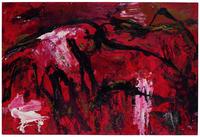
Libusa
Emil Schumacher
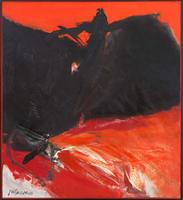
Rojo Sombrío
Jose Guerrero
Après la pluie
Albert Bitran
Untitled
Friedel Dzubas
Painting I
Milton Resnick
Confession cannibale ou le festin interdite
Jean Miotte