
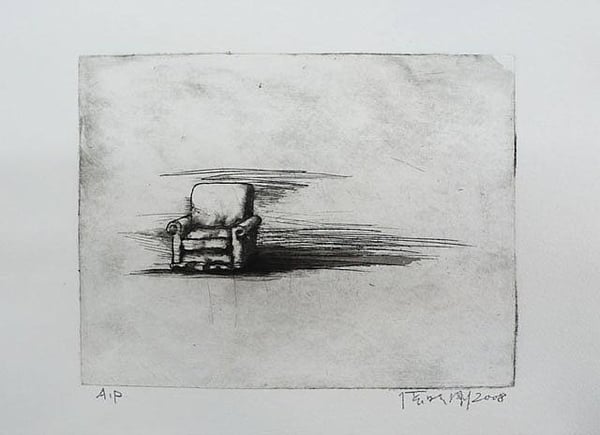
Zhang Xiaogang sanatçısının Green Wall series No. 4 eseri hakkında uzman analizi
Tarz: Magic Realism · Tür: interior
Expert Analysis of "Green Wall series No. 4" by Zhang Xiaogang
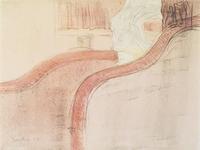
Zhang Xiaogang’s Green Wall series No. 4 is a compelling example of contemporary Magic Realism, a style that infuses the ordinary with the extraordinary, the mundane with the psychologically charged. Here, within the genre of interior, the artist transforms a domestic space into a haunting vessel of memory, identity, and cultural history.
The Significance of the Green Wall
The titular green wall is not merely a backdrop; it is the emotional and symbolic core of the work. In Zhang Xiaogang’s broader practice, the “green wall” refers to the ubiquitous, institutional green paint found in Chinese hospitals, schools, and government buildings from the mid-20th century—especially during the Cultural Revolution. By isolating this color and texture in an interior setting, Zhang evokes a collective, almost spectral nostalgia for a past that is at once personal and national. The wall becomes a psychological barrier, a screen onto which repressed histories and family traumas are projected.
Magic Realism as a Tool for Memory
True to the magic realist tradition, the painting disrupts the viewer’s sense of reality. The interior appears familiar—a room with a door, a window, or furniture—but is rendered with an uncanny stillness. Figures or objects may be slightly distorted, floating, or disconnected from their surroundings, suggesting that this space exists in a dream or a memory half-remembered. Zhang Xiaogang’s characteristic use of pale, almost ghostly skin tones and large, staring eyes imbues the scene with a quiet anxiety. The magic here lies in the tension between the concrete green wall and the ambiguous emotional residue it contains.
Contribution to Contemporary Chinese Art
This work is significant because it bridges the personal and the political without overt propaganda. Instead of depicting historical events directly, Zhang uses the interior—a space of everyday life—as a stage for psychological realism. The green wall functions as a silent witness, a repository of time. In doing so, Green Wall series No. 4 expands the vocabulary of Magic Realism by grounding its surrealism in specific Chinese material culture, making it both universal and deeply particular. It challenges the viewer to see a wall not as a passive surface, but as an active agent of memory, loss, and ideological imprint.
Görsel olarak benzer
İlişkili kompozisyon ve renk paletine sahip 20 eser
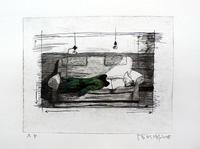
Green Wall series No. 3
Zhang Xiaogang
Chair
George Bouzianis
Armchair
Domenico Gnoli
Four Armchairs in the Sky
Salvador Dali
Tribute toTziakometti
Chronis Botsoglou
Light Blue Movers
Jean-Michel Basquiat
Modok Mária, Enerior Hotel De Bois
Modok Mária
Daddy
Kateryna Lysovenko
Night Tears. From the Album 'Florence'
Viktor Pivovarov
Woman on an armchair
Federico Zandomeneghi
Chair
Matthias Weischer
Anne at her computer, rue de la Chaise
Avigdor Arikha
Bereny Robert , Leining Nude 1911
Berény Róbert
Girl in Pink in An Interior
Henri Matisse
1909 Seated Woman 2018 Seated Man
Anthony Padgett
Check In, Check Out
Michael Bell
Sobakevich near armchair
Marc Chagall
Furniture in the Valley
Giorgio de Chirico
1911 Woman on the Guitar Pa Jolly 2018
Anthony Padgett
Little Lodge
Henri de Toulouse-Lautrec