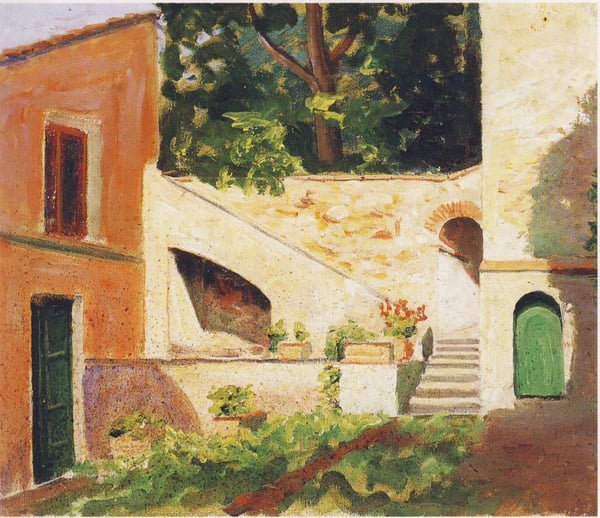
Shadows on a Staircase in Southern France
Analisi esperta di Shadows on a Staircase in Southern France di Winston Churchill
Stile: Impressionism · Genere: landscape
“Shadows on a Staircase in Southern France” by Winston Churchill is a notable example of an amateur artist fully embracing the core tenets of Impressionism. Painted in a landscape genre, the work demonstrates Churchill’s keen observation of light and atmosphere—hallmarks of the Impressionist movement, which prioritized capturing fleeting moments and the play of natural illumination. The title itself emphasizes the artist’s focus on shadows, a classic Impressionist motif used to convey depth, time of day, and the transient quality of sunlight. The specific setting in Southern France places the work within a region beloved by renowned Impressionists like Monet and Renoir, linking Churchill’s practice to the movement’s celebrated subjects. The artwork’s significance lies in its expression of how even a statesman of global stature—Churchill turned to painting as a respite from political life—could engage with and contribute to Impressionism’s legacy, proving the movement’s enduring appeal across diverse practitioners.
Genere
Stile
Visivamente simili
20 opere con composizione e palette affini
House in Collett at Cagnes
Pierre-Auguste Renoir
Corner of Castellone
Antonio Sicurezza
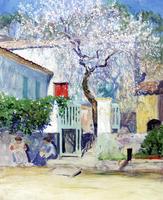
Spring on the Riviera
Guy Rose
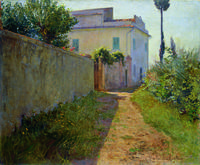
Benvenutis Hus
Elin Danielson-Gambogi
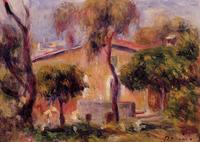
Houses in Cagnes
Pierre-Auguste Renoir
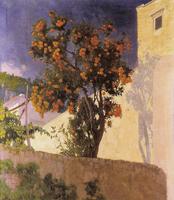
Oranges and lemons
Edward Okuń
A Roof Garden
August von Pettenkofen
Garden view (Untitled)
Vincenzo Irolli
Houses at Collioure
Henri Martin
Cypress-House
Thalia Flora-Karavia
Geraniums
Corneliu Michailescu
The Garden of San Miniato near Florence
John Ruskin
The house of Don Giovanni Verità
Silvestro Lega
Gardener's Cottage at Mme Balsan's House
Winston Churchill
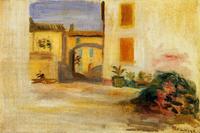
Farm Courtyard
Pierre-Auguste Renoir
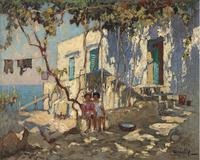
Resting in the Shadow. Capri
Konstantin Gorbatov
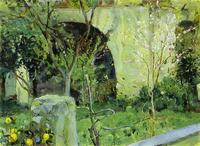
Capri. Almond trees in blossom.
Mikhail Nesterov
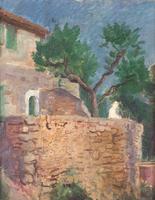
Mas de Galeron
Augustus John
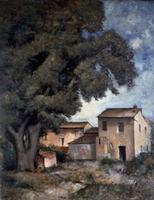
Meriggio
Carlo Carra
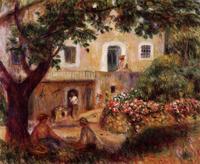
The Farm
Pierre-Auguste Renoir