Expertenanalyse zu Piero di Cosimos The Misfortunes of Silenus
Stil: High Renaissance · Genre: mythological painting
Expert Analysis of The Misfortunes of Silenus by Piero di Cosimo
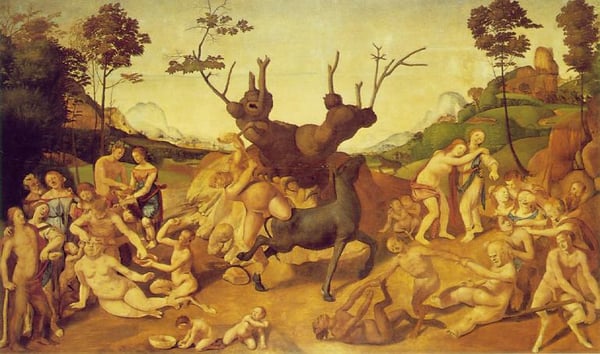
As a mythological painting from the High Renaissance, The Misfortunes of Silenus occupies a distinctive place within the period’s tradition. Unlike the balanced, idealized mythological scenes of contemporaries such as Raphael or Leonardo, Piero di Cosimo infuses his work with a raw, almost primitive energy that subverts the classical harmony often associated with High Renaissance art.
Significance in Style and Period:
-
Eccentric Naturalism: Piero di Cosimo was known for his fascination with the untamed and the grotesque. In this work, the misfortune of Silenus—a drunken, wise companion of Dionysus—is rendered with vivid, almost unsettling naturalism. The figures are not idealized gods but earthy, flawed beings, reflecting a more anecdotal and humanized approach to mythology that was unusual for the High Renaissance’s pursuit of perfect form.
-
Narrative Chaos vs. Classical Order: The composition likely eschews the calm, pyramidal stability of other High Renaissance masterpieces in favor of a crowded, emotionally charged scene. This aligns with Piero’s tendency to depict moments of crisis or absurdity, making the painting a bridge between the High Renaissance’s decorum and the expressiveness of later Mannerism.
-
Landscape and Atmosphere: Piero di Cosimo was a pioneer in embedding mythological figures within richly detailed, often fantastical landscapes. The “misfortunes” of Silenus presumably unfold in a wild, primordial setting—a hallmark of Piero’s work that elevates the painting beyond simple illustration into a meditation on primal human experiences (drunkenness, vulnerability, mockery).
Conclusion: The Misfortunes of Silenus is significant because it demonstrates how the High Renaissance could accommodate idiosyncratic, even anti-classical visions within its broader humanist framework. It stands as a testament to Piero di Cosimo’s singular imagination—a reminder that not all masters of the period sought serene perfection; some found profundity in chaos and misfortune.
Visuell ähnlich
20 Werke mit ähnlicher Komposition und Farbpalette
The Discovery of Honey by Bacchus
Piero di Cosimo
Paradise
Lucas Cranach the Elder
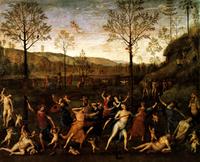
The Combat of Love and Chastity
Andrea Mantegna
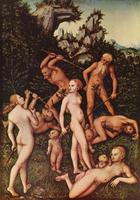
The Silver Age
Lucas Cranach the Elder
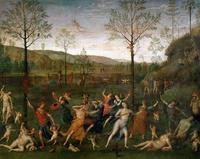
Combat of Love and Chastity
Pietro Perugino
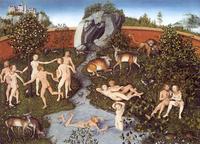
The Golden Age
Lucas Cranach the Elder
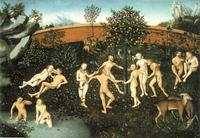
The Golden Age
Lucas Cranach the Elder
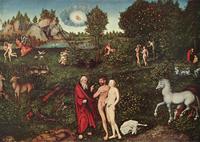
Adam and Eve in the Garden of Eden
Lucas Cranach the Elder
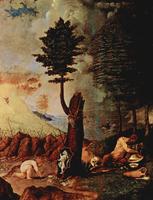
Allegory (Allegory of Prudence and Wisdom)
Lorenzo Lotto
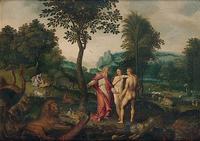
LE PARADIS TERRESTRE
Frans Pourbus the Elder
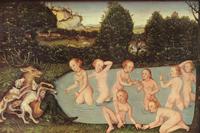
Diana and Actaeon
Lucas Cranach the Elder
Haywain (detail)
Hieronymus Bosch
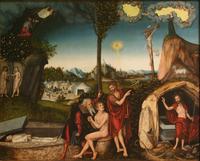
Law and Grace
Lucas Cranach the Elder
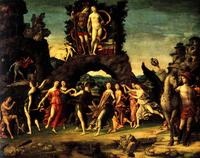
The Parnassus: Mars and Venus
Andrea Mantegna
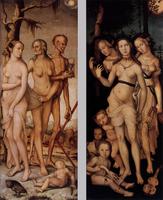
Three Ages of Man and Three Graces
Hans Baldung
Orpheus
Giovanni Bellini
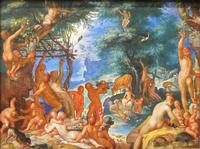
The Golden Age
Joachim Wtewael
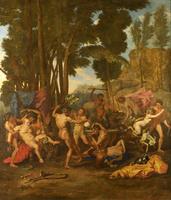
The Triumph of Silenus
Nicolas Poussin
Venus, Mars, and Cupid
Piero di Cosimo
Terrestrial Paradise
Hieronymus Bosch