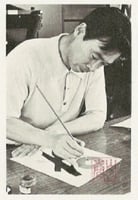
Analyse experte de Poem 69-41 de Maki Haku
Style : Sōsaku hanga · Genre : abstract
Expert Analysis of "Poem 69-41" by Maki Haku
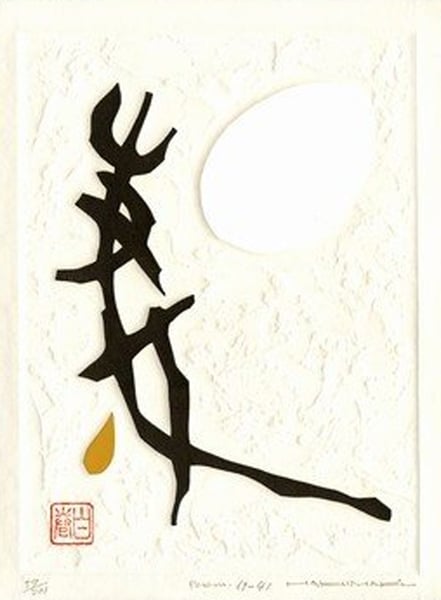
Maki Haku’s Poem 69-41 is a striking example of the Sōsaku hanga (Creative Print) movement, which revolutionized Japanese printmaking in the 20th century by insisting that the artist personally design, carve, and print the work—rejecting the traditional division of labor in ukiyo-e. This piece, part of Haku’s seminal “Poem” series, distills calligraphic gesture into pure abstract form, bridging ancient Japanese aesthetics with modernist abstraction.
Significance within Sōsaku hanga:
Haku belongs to the second generation of Sōsaku hanga artists who, after World War II, pushed the movement further toward individual expression. Unlike earlier practitioners who often retained representational elements, Haku embraced non-objective abstraction, using woodblock printing as a medium for personal, lyrical mark-making. Poem 69-41 exemplifies this: the composition is built from bold, sweeping black strokes that recall shodō (Japanese calligraphy) but are freed from literal legibility. The strokes seem to breathe and dance across the paper, their varying pressure and ink density revealing the artist’s direct hand in carving.
Abstract qualities and formal mastery:
The work’s significance lies in its masterful manipulation of negative space. Haku leaves large areas of the paper untouched, allowing the white ground to function as an active void—a nod to ma (the Japanese concept of interval or emptiness). The black forms are not merely lines but textured, almost sculptural shapes, created through Haku’s technique of mokuhan (woodcut) where he carved deeply into the block to produce rich, velvety ink pools and sharp, dry-brush edges. The tension between controlled structure and spontaneous gesture mirrors the philosophy of Sōsaku hanga: the print is not a reproduction but a unique, handmade statement.
Cultural and historical resonance:
By reinterpreting calligraphy as abstraction, Haku comments on the postwar Japanese identity crisis—how to honor tradition while embracing modernity. Poem 69-41 is not a poem in words but a visual poem of rhythm, balance, and energy. It stands alongside works by other Sōsaku hanga masters like Shikō Munakata and Kōshirō Onchi, yet Haku’s distinctive vocabulary of fractured, calligraphic abstraction sets him apart. The piece’s title (“Poem 69-41”) suggests a serial exploration, each iteration a fresh improvisation within a disciplined form, mirroring the Zen-like practice of repeated brushwork.
Conclusion:
Poem 69-41 is significant as a high point of Sōsaku hanga’s abstract turn, demonstrating how a traditional woodblock technique could be reinvented for personal, non-representational expression. It captures the essence of Haku’s career: a dialogue between the physicality of carving and the spontaneity of ink, between centuries-old calligraphic tradition and the universal language of abstract art.
Genre
Style
Visuellement similaire
20 œuvres à la composition et à la palette proches
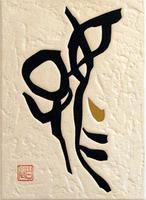
Poem 69-42
Maki Haku
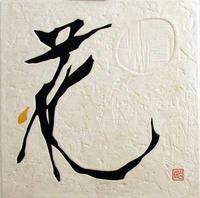
Poem 69-52
Maki Haku
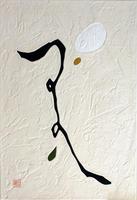
Poem 70-66
Maki Haku
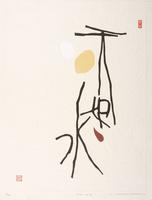
Poem 69-8
Maki Haku
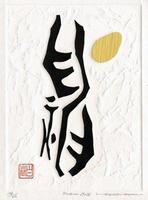
Poem 69-26
Maki Haku
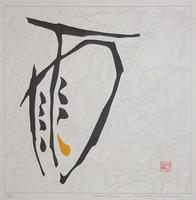
Poem 69-53
Maki Haku
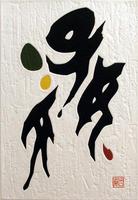
Poem 71-84
Maki Haku
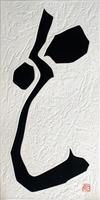
Work 73-45
Maki Haku
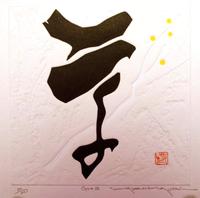
Grass
Maki Haku
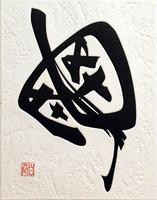
Tortoise A
Maki Haku
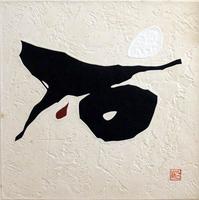
Poem 70-4
Maki Haku
Figure
Maki Haku
Beyond
Kazuaki Tanahashi
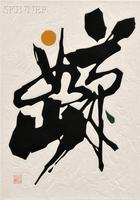
Poem 72-39
Maki Haku
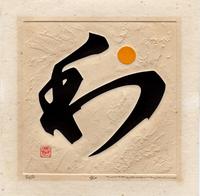
Harmony (Wa)
Maki Haku
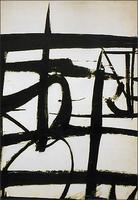
Cardinal
Franz Kline
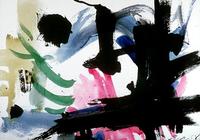
Three Greens and Black
Jack Bush
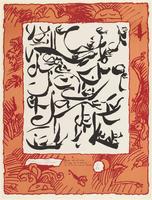
Illuminated Page (Feuille orée)
Pierre Alechinsky
Serenity
Kazuaki Tanahashi
Poem 68-44
Maki Haku