Analisi esperta di Poem 69-43 di Maki Haku
Stile: Sōsaku hanga · Genere: abstract
Artwork Analysis: "Poem 69-43" by Maki Haku
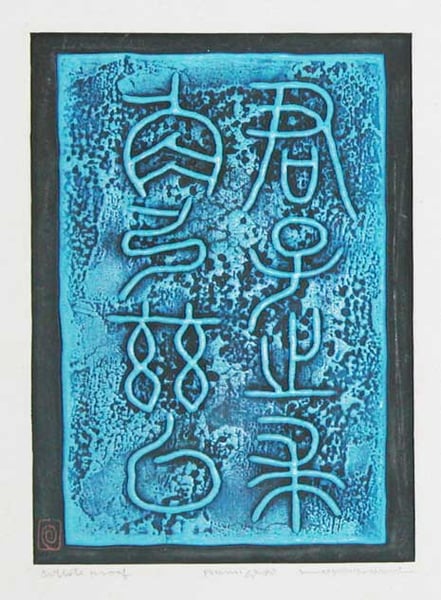
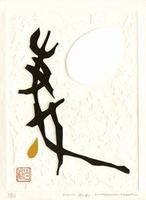
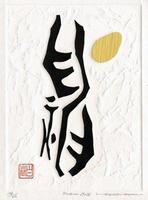
Maki Haku’s Poem 69-43 stands as a compelling example of the Sōsaku hanga (creative print) movement, which revolutionized Japanese printmaking in the 20th century by insisting that the artist alone conceive, carve, and print the work—rejecting the traditional division of labor. This abstract piece belongs to Haku’s celebrated Poem series, where he synthesizes two core Japanese art forms: the visual language of calligraphy and the tactile richness of woodblock printing.
Significance within the Sōsaku hanga style:
- Haku’s Poem 69-43 exemplifies the movement’s core philosophy: the artist’s hand is present at every stage, from the initial expressive mark to the final impression. The abstract forms here are not random but emerge from Haku’s deep engagement with kanji characters—reducing them to their essential rhythmic strokes, yet retaining the poetic resonance of their original meanings.
- Unlike earlier ukiyo-e prints that relied on artisans for carving and printing, Sōsaku hanga like this work are direct expressions of the artist’s inner world. Haku’s deliberate layering of ink, subtle textures, and bold negative space demonstrates the technical mastery and conceptual freedom that defined the movement.
Significance within the abstract genre:
- Haku’s abstraction is never purely non-objective. Even in Poem 69-43, the ghost of calligraphic structure remains—vertical rhythms, flowing curves, and compressed forms suggest a text made silent, a poem stripped of legibility but not of meaning. This bridges traditional East Asian ink painting with mid-20th-century international abstraction.
- The interplay of black ink and bare paper (often with restrained color) mirrors the Japanese aesthetic of ma (negative space) and yohaku no bi (beauty of blank space). Haku transforms the woodblock medium into a vehicle for meditative, lyrical abstraction, distinct from Western Abstract Expressionism’s gestural intensity.
Why it matters:
Poem 69-43 is significant because it redefines the woodblock print as a modernist fine art, not a decorative or commercial craft. By merging the poet’s impulse (the “poem” of the title) with the printmaker’s discipline, Haku achieves a synthesis of word and image, tradition and innovation. The work stands as a testament to Sōsaku hanga’s ability to absorb global modernist currents while retaining a distinctly Japanese sensibility—making it a vital contribution to postwar abstract art.
Visivamente simili
20 opere con composizione e palette affini
Poem 70-91
Maki Haku
Poem 70-84
Maki Haku
Poem 69-11
Maki Haku
Poem 68-44
Maki Haku
Poem 69-67
Maki Haku
Illuminated Page (Feuille orée)
Pierre Alechinsky
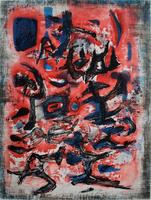
Signes en Mouvement
Zao Wou-Ki
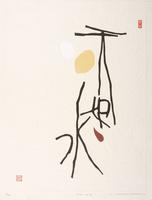
Poem 69-8
Maki Haku
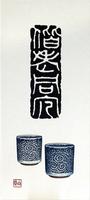
Poem-5
Maki Haku
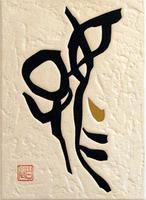
Poem 69-42
Maki Haku
Poem 69-41
Maki Haku
Poem 69-26
Maki Haku
Symbol 61-1
Maki Haku
Poem 72-9
Maki Haku
15.6.57
Julius Bissier
Illustration for Tristan Tzara's "Vingt-cinq poèmes"
Jean Arp
Several buckets
Shitao
Cardinal
Franz Kline
Tortoise A
Maki Haku
Lutins au Printemps
Willi Baumeister