Maki Haku sanatçısının Poem 69-67 eseri hakkında uzman analizi
Tarz: Sōsaku hanga · Tür: abstract
Expert Analysis of "Poem 69-67" by Maki Haku
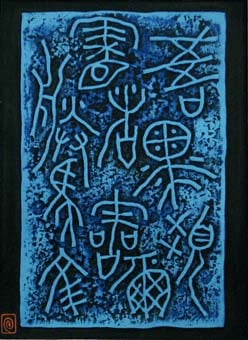
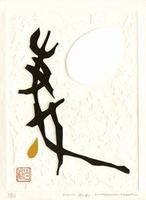
Maki Haku’s "Poem 69-67" is a striking example of the Sōsaku hanga movement, which revolutionized Japanese printmaking in the 20th century by asserting the artist as the sole creator—designing, carving, and printing the work by hand. This abstract piece is significant for its radical fusion of traditional East Asian calligraphic rhythms with the Western-influenced language of mid-century abstraction, a hallmark of Maki’s mature period.
Within the Sōsaku hanga context, "Poem 69-67" exemplifies the movement’s break from the ukiyo-e collaborative studio system. Maki’s technique is central to its meaning: he used woodblock printing not for illustration, but as a direct, expressive medium. The title suggests a serial exploration of the “poem” as a visual score—a non-narrative, lyrical abstraction. Here, bold, gestural black forms (evoking brushed ink) interact with textured, often lightly inked or negative spaces, creating a sense of spontaneous energy held in delicate balance. The work’s significance lies in how it transforms the physical act of carving (the hanga part) into a calligraphic act, making the print’s materiality—the grain of the wood, the pressure of the baren—integral to its “reading.”
Moreover, "Poem 69-67" is a key artifact of post-war Japanese art’s dialogue with global abstraction. While Sōsaku hanga artists like Maki Haku engaged with Abstract Expressionism and Art Informel, they grounded their work in indigenous aesthetics—specifically, the visual poetry of shodō (calligraphy) and the Zen-inspired appreciation for chance and imperfection. The abstract forms in this print are not random; they are disciplined, rhythmic, and evocative of classical haiku concision, yet completely modern. This duality—the simultaneous presence of ancient calligraphic grace and avant-garde freedom—makes "Poem 69-67" a quintessential and significant statement of the Sōsaku hanga ideal: art as a direct, unmediated extension of the artist’s inner world, achieved through the physical poetry of woodblock printing.
Görsel olarak benzer
İlişkili kompozisyon ve renk paletine sahip 20 eser
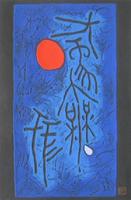
Poem 69-11
Maki Haku
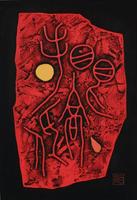
Poem 90-47
Maki Haku
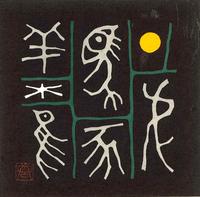
75-60
Maki Haku
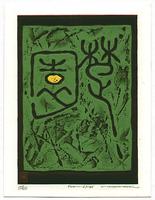
Poem 69-46
Maki Haku
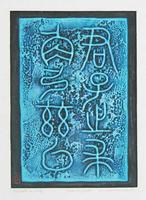
Poem 69-43
Maki Haku
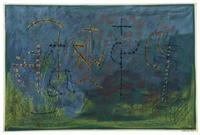
Abstract Composition
Louis Schanker
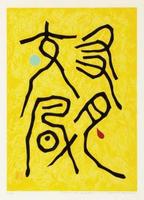
72-44
Maki Haku
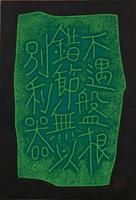
Poem 70-84
Maki Haku
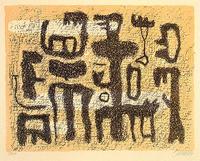
African Tale
Willi Baumeister
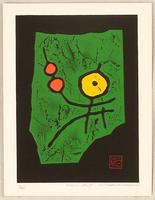
Poem 69-27
Maki Haku
Poem-P
Maki Haku
Poem 70-91
Maki Haku
Signes en Mouvement
Zao Wou-Ki
Symbol 61-1
Maki Haku
Heap 4
Maki Haku
Poem 68-44
Maki Haku
Amsterdam
Pierre Alechinsky
Green
Bradley Walker Tomlin
Poem 69-41
Maki Haku
Red waistcoat
Paul Klee