Analisi esperta di Poem 71-39 di Maki Haku
Stile: Sōsaku hanga · Genere: abstract
Expert Analysis of "Poem 71-39" by Maki Haku
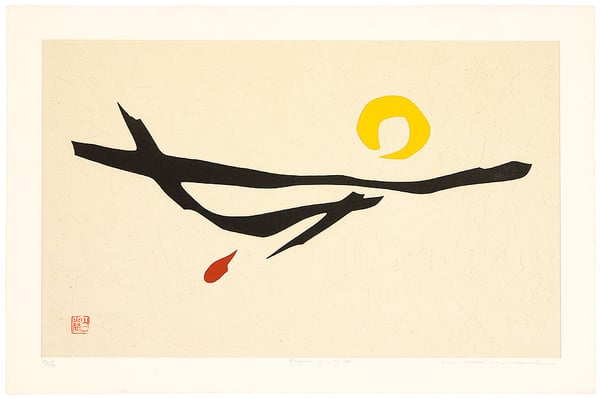
Maki Haku’s Poem 71-39 is a masterful example of the Sōsaku hanga (creative print) movement, which revolutionized Japanese printmaking by insisting the artist be the sole creator—designing, carving, and printing the work. This piece, an abstract composition from 1971, distills the movement’s core philosophy: personal expression through direct, tactile engagement with materials.
Significance within Sōsaku hanga and the Abstract Genre:
-
Fusion of Calligraphy and Abstraction: Maki Haku, a trained calligrapher, transforms the rhythmic gestures of Japanese writing into pure form. The bold, sweeping black marks on the paper evoke kanji characters yet remain illegible—freeing the brushstroke from semantic meaning. This bridges traditional East Asian ink aesthetics with Western modernist abstraction, a hallmark of postwar Sōsaku hanga innovation.
-
Materiality and Process: True to Sōsaku hanga ideals, the print bears the artist’s hand: the carved woodblock yields irregular, expressive edges, while the layered printing of dense black ink over the textured paper creates a dynamic interplay of positive and negative space. The composition’s asymmetry and spontaneous-looking forms celebrate the physical act of carving and printing—an intentional rejection of ukiyo-e’s collaborative workshop model.
-
Minimalist Power: With only black ink on white paper, Poem 71-39 achieves monumental presence through restraint. The stark contrast, varying line weights, and carefully balanced voids reflect Zen-inspired simplicity, yet the gestural energy anticipates the artist’s later 1970s works that push toward pure abstraction. This piece stands as a critical pivot: rooted in tradition, yet fully engaged with global modernism.
In summary, Poem 71-39 is significant for demonstrating how Sōsaku hanga artists like Maki Haku reframed Japanese printmaking as a vehicle for individual, abstract expression—honoring craft while breaking from narrative and representation. It captures the movement’s enduring legacy: a personal, poetic dialogue between ink, wood, and paper.
Genere
Stile
Visivamente simili
20 opere con composizione e palette affini
Untitled Composition
Maki Haku
Poem 70-4
Maki Haku
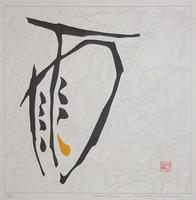
Poem 69-53
Maki Haku
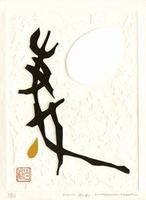
Poem 69-41
Maki Haku
Untitled
Marcel Barbeau
Birds in the clouds
Alfred Freddy Krupa
Poem 70-3
Maki Haku
Poem 68-55
Maki Haku
Castle bridge and moonlight
Alfred Freddy Krupa
Poem 70-66
Maki Haku
Africa 5
Robert Motherwell
Untitled from 'Poèmes d'Eugenio Montale', Milan
Gerard Schneider
Snow on the river Kupa
Alfred Freddy Krupa
The head of the guinea pig
Alfred Freddy Krupa
Accent Grave
Franz Kline
Untitled
Karel Appel
A few strokes of the landscape
Alfred Freddy Krupa
Les alliances Thème Rose
Jean Degottex
Poem 69-8
Maki Haku
Mind/Heart
Kazuaki Tanahashi