Expertenanalyse zu Hiroyuki Tajimas Oriental Wall
Stil: Sōsaku hanga · Genre: abstract
Expert Analysis of "Oriental Wall" by Hiroyuki Tajima
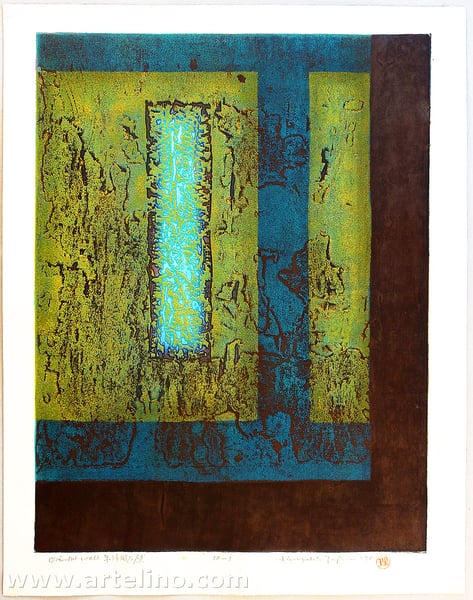
Hiroyuki Tajima’s Oriental Wall stands as a compelling example of how the Sōsaku hanga movement—Japan’s 20th-century “creative print” revolution—transformed woodblock printing into a vehicle for modernist abstraction. Unlike the collaborative, craft-based traditions of ukiyo‑e, Sōsaku hanga demanded that the artist personally carve, ink, and print every element, ensuring that each mark is a direct extension of the artist’s expressive intent.
Significance within the Style: Tajima’s abstract composition in Oriental Wall pushes Sōsaku hanga beyond its earlier narrative and figurative roots. The work reimagines the woodblock medium as a field for pure visual tension: layered planes, rhythmic textures, and a muted yet nuanced palette that evokes weathered surfaces. This approach aligns with the movement’s postwar turn toward international modernism while retaining a distinctly Japanese sensibility—finding depth in restraint and material honesty.
What Makes It Stand Out:
- Fusion of Heritage and Modernity: The title, Oriental Wall, alludes to architectural or earthen surfaces, yet the abstract geometry and subtle color modulations echo both traditional Japanese “kawara” (tile) patterns and Western non‑objective art. Tajima bridges these worlds without resorting to explicit imagery.
- Mastery of Texture: In true Sōsaku hanga fashion, the carving itself becomes part of the expressive vocabulary. Grain, gouge marks, and varying ink applications create a tactile, almost calligraphic quality that registers as both deliberate and organic—a hallmark of the artist’s hand.
- Postwar Context: Created during a period when Japanese artists were redefining cultural identity after World War II, Oriental Wall embodies a quiet resilience. It is abstract, yet its references to enclosure and surface invoke a sense of containment and contemplation, suggesting a wall as both a barrier and a canvas for introspection.
Conclusion: Oriental Wall is significant because it demonstrates how Sōsaku hanga evolved from a reform movement into a sophisticated form of abstract modernism. Tajima’s work here is not just a print—it is a manifesto of the artist as solitary creator, merging ancient technique with a universal visual language. It remains a testament to the movement’s enduring ability to speak across cultures while rooted in the physical act of carving wood.
Visuell ähnlich
20 Werke mit ähnlicher Komposition und Farbpalette
Square
Hiroyuki Tajima
Little Flower
Hiroyuki Tajima
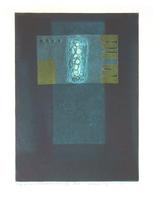
Impression of Small Monument
Hiroyuki Tajima
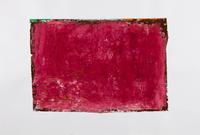
Untitled
Tiberiy Szilvashi
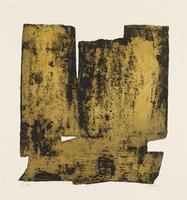
Eau forte XII
Pierre Soulages
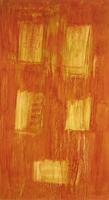
Untitled (Cansons)
Gunther Forg
Rockintored
Frank Bowling
Untitled
Tiberiy Szilvashi
The Blue Painting Lesson: A Study in Painterly Logic, number one of five
Robert Motherwell
Summer
Joe Tilson
25. 4. 69
John Hoyland
Petite boîte carée
Jean Fautrier
Geor
Modest Cuixart
No. 19
Mark Rothko
Tembi
John Hoyland
Untitled
Tiberiy Szilvashi
Lettera a Palladio
Giuseppe Santomaso
Dialogue With Red (B)
Hiroyuki Tajima
Monsignor (Study)
Doug Ohlson
Sixteenth Century
Ronnie Landfield