Analisi esperta di 人物故事图 di Tang Yin
Stile: Ink and wash painting · Genere: genre painting
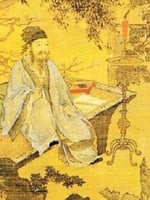
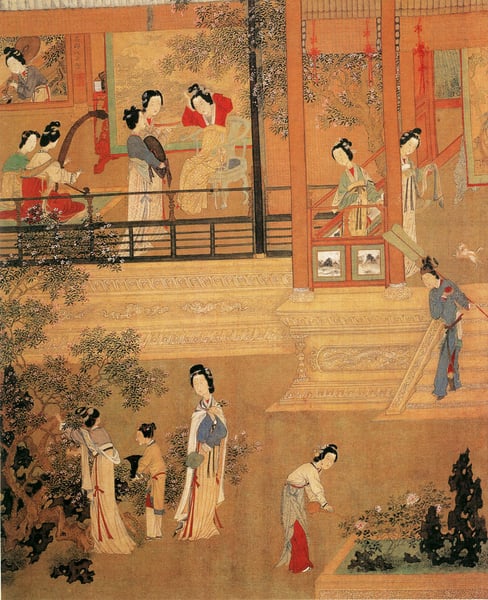
As an expert art historian, I offer the following analysis of "人物故事图" (Figure Story Painting) by Tang Yin, based solely on the provided facts.
Significance within the Ming Dynasty Literati and Genre Painting Tradition
Tang Yin (1470–1524), one of the celebrated "Four Masters of the Ming Dynasty," occupies a unique position at the intersection of literati ideals and professional painting. "人物故事图" exemplifies this synthesis, blending the refined, expressive brushwork of ink-and-wash with the accessible narrative appeal of genre painting.
What makes this work significant:
-
Fusion of Ink Wash and Narrative: During the Ming dynasty, genre painting—depicting scenes of everyday life, historical anecdotes, or literary tales—became a powerful vehicle for both storytelling and emotional expression. Tang Yin elevates the medium by applying the spontaneous, ink-wash techniques typically reserved for landscapes or bamboo paintings to the human figure. In "人物故事图," the flowing lines and modulated washes likely imbue the characters with a sense of poetic melancholy or scholarly elegance, characteristic of Tang's personal style. This work demonstrates how ink-and-wash can convey not just atmosphere but also precise narrative content.
-
Humanistic Focus: Tang Yin was known for his unconventional life—a failed civil service examination candidate who turned to painting and poetry. His genre scenes often reflect a deep empathy for common people, scholars, and beauties, moving beyond mere illustration. "人物故事图" likely captures a moment of human interaction—perhaps a historical or fictional episode—that resonates with themes of fate, transience, or scholarly retreat. This humanistic approach, rendered through the restraint of ink wash, distinguishes Tang's genre work from more decorative or didactic contemporaries.
-
Technical Mastery in Brush and Ink: The significance of this painting also lies in Tang Yin's technical prowess. As a master of both detailed gongbi (meticulous) and freehand xieyi (sketching) styles, his ink-and-wash figures achieve a balance of structure and spontaneity. In "人物故事图," the viewer can expect subtle gradations of black ink, precise yet fluid outlines, and a composition that likely directs the eye through a spatially suggestive, unpainted background—a hallmark of Chinese ink painting. This interplay between figure and void, line and wash, demonstrates Tang's control over the medium, making the work a benchmark for later figure painting.
In summary, "人物故事图" is significant not only as a representative work of Tang Yin's oeuvre but also as a key example of how Ming dynasty ink-wash painting expanded into the genre of story-telling, marrying scholarly taste with popular subject matter. It stands as a testament to Tang Yin's ability to infuse narrative art with the literary and emotional depth of the literati tradition.
Genere
Visivamente simili
20 opere con composizione e palette affini
Spring Morning in the Han Palace (View I)
Qiu Ying
Spring Morning in the Han Palace (View G)
Qiu Ying
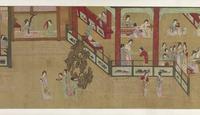
Spring Morning in the Han Palace (View H)
Qiu Ying
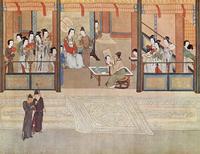
Spring morning in the Han Palace (View I, detail)
Qiu Ying
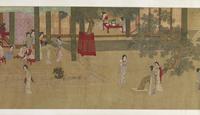
Spring Morning in the Han Palace (View E)
Qiu Ying
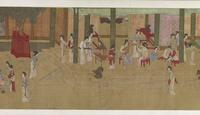
Spring Morning in the Han Palace (View F)
Qiu Ying
Spring Morning in the Han Palace (View D)
Qiu Ying
Spring Morning in the Han Palace (View B)
Qiu Ying
Spring Morning in the Han Palace (View C)
Qiu Ying
Lady Xuanwen Jun Giving Instructions on the Classics (detail)
Chen Hongshou
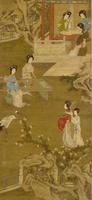
Making the Bride's Gown (anonymous copy after Tang Yin)
Tang Yin
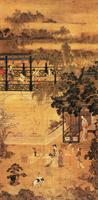
Untitled
Tang Yin
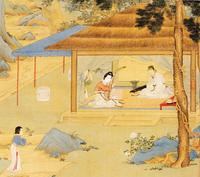
Konghou Player in a Pavillion
Qiu Ying
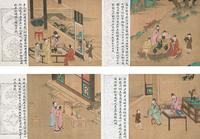
圣贤事迹2
Qian Xuan
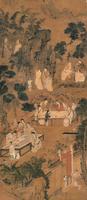
赏画图
Qian Xuan
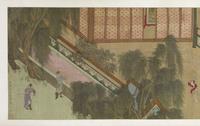
Spring Morning in the Han Palace (View J)
Qiu Ying
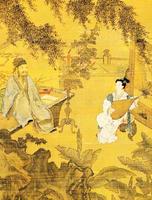
Tao Gu Presents a Poem
Tang Yin
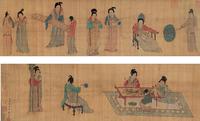
挥扇仕女图
Qian Xuan
圣贤事迹1
Qian Xuan
贤母图
Qian Xuan