
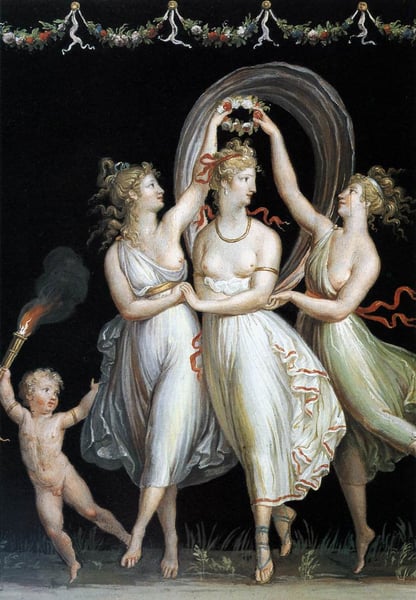
Analisi esperta di The Three Graces Dancing di Antonio Canova
Stile: Neoclassicism · Genere: mythological painting
Expert Analysis: "The Three Graces Dancing" by Antonio Canova
As a Neoclassical treatment of a beloved mythological theme, Canova’s The Three Graces Dancing exemplifies the movement’s core pursuit of idealized beauty, harmonic composition, and classical restraint. Although the artist is best known as a sculptor, this painting—within the genre of mythological art—captures the same principles that define his three-dimensional masterpieces: a serene, balanced arrangement inspired by ancient Greek and Roman prototypes.
Significance within Neoclassicism:
-
Mythological subject with moral elegance: The Three Graces (Aglaia, Euphrosyne, and Thalia) personify charm, beauty, and creativity. Canova presents them in a unified, interlocked dance, their flowing gestures embodying the Neoclassical ideal of graceful movement without emotional excess. This aligns with the era’s belief that art should instruct through noble, poised forms.
-
Structural clarity and idealized forms: The composition likely employs a pyramidal or circular grouping, a hallmark of Neoclassical design derived from classical reliefs and vase painting. Each figure is distinct yet seamlessly connected, their drapery falling in clean, rhythmic folds—a testament to Canova’s study of antique sculpture. The emphasis on contour and restrained modeling suggests a painting that prioritizes line over painterly richness, reflecting the Neoclassical rection against Rococo frivolity.
-
Emotional restraint and purity: Unlike Baroque depictions of the Graces, which might emphasize dynamic passion, Canova’s version conveys a calm, timeless grace. The figures’ faces are likely serene, with downcast eyes or subtle smiles, evoking a sense of meditative beauty. This controlled emotion is a key Neoclassical marker, linking morality to aesthetic harmony.
Why it matters:
Within Canova’s oeuvre, this painting reinforces the same ideals that made his marble Three Graces a paradigm of Neoclassical sculpture: the fusion of classical mythology with a modern sense of perfected humanity. The work stands as a pictorial counterpart to his sculpted groups, demonstrating that the principles of balance, ideal proportion, and noble subject matter transcend medium. For Neoclassicism, it solidifies the Graces as an enduring symbol of artistic and moral virtue, frozen in an eternal, harmonious dance.
Visivamente simili
20 opere con composizione e palette affini
Beauty, supported by Prudence, Scorns the Offering of Folly
Angelica Kauffman
The Three Graces
Peter Paul Rubens
Three Ladies Adorning a Herm of Hymen
Joshua Reynolds
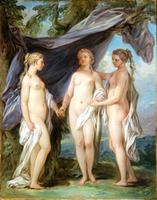
The Three Graces
Charles-Andre van Loo (Carle van Loo)
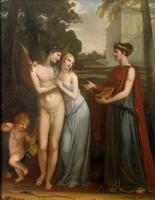
Innocence Preferring Love to Wealth
Pierre-Paul Prud'hon
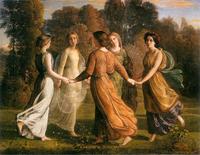
Poème de l'âme 13: Rayons de soleil
Louis Janmot
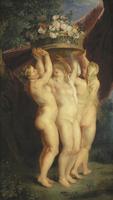
The Three Graces
Peter Paul Rubens
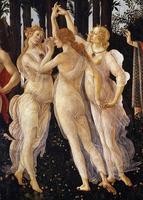
The Three Graces from Primavera
Sandro Botticelli
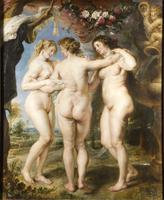
The Three Graces
Peter Paul Rubens
Death and the Maidens
Pierre Puvis de Chavannes
Love Seduces Innocence, Pleasure Entraps, and Remorse Follows
Pierre-Paul Prud'hon
Midsummer night’s dream
John Hoppner
Ronde De Mai
Henri-Pierre Picou
Venus and Cupid
Evelyn De Morgan
Doppelbildnis der Prinzessinnen Luise und Friederike
Johann Heinrich Wilhelm Tischbein
The Judgement of Paris
Peter Paul Rubens
Happiness
John Duncan

Venus and Adonis
Ferdinand Bol
The Three Graces
Jan Brueghel the Younger
Wounds of Love
William-Adolphe Bouguereau