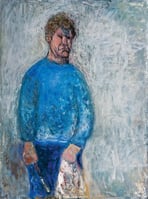
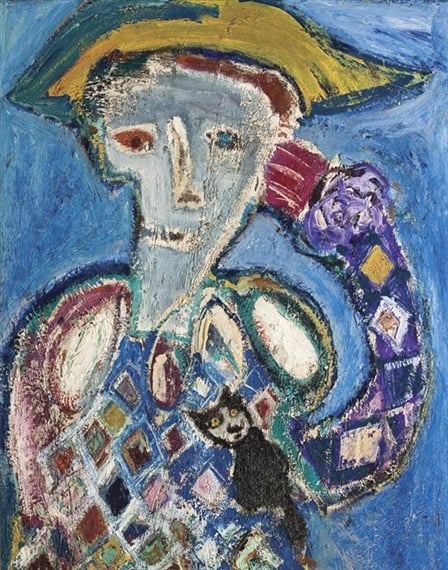
Harlequin and Cat (Charlie Chaplin)
Expertenanalyse zu Gandy Brodies Harlequin and Cat (Charlie Chaplin)
Stil: Abstract Expressionism · Genre: portrait
Expert Analysis: "Harlequin and Cat (Charlie Chaplin)" by Gandy Brodie
Gandy Brodie’s Harlequin and Cat (Charlie Chaplin) occupies a distinctive place within Abstract Expressionism—a movement typically defined by non-representational, gestural abstraction and an emphasis on the artist’s emotional state. Here, Brodie subverts that canon by reintroducing figuration and narrative without abandoning the movement’s core principles of spontaneity, paint-handling, and psychological intensity.
Significance within Style/Period
-
Figuration within Abstraction
Unlike the monumental abstractions of Pollock or Rothko, Brodie’s portrait anchors itself in a recognizable subject—Charlie Chaplin’s iconic Tramp figure merged with the theatrical Harlequin. This hybridization is significant because it demonstrates a counter-current within Abstract Expressionism: a search for meaning through ambiguous, emotionally charged imagery rather than pure non-objectivity. Brodie’s brushwork remains loose, expressive, and deliberately crude—typical of the “gestural” wing—but it nevertheless coheres into a face, a costume, and a cat, challenging the orthodox divide between abstraction and representation. -
Cultural and Archetypal Layering
The painting conflates three symbolic identities: the Harlequin (a commedia dell’arte trickster), the cat (often a symbol of independence and domesticity), and Charlie Chaplin (the modern everyman-vagabond). This triple portrait is not a literal likeness but a psychological composite. In Abstract Expressionist terms, Brodie is enacting the identity rather than depicting it—each stroke embodies the pathos, humor, and vulnerability of Chaplin’s character. The work thus aligns with the movement’s interest in existential and archetypal themes, yet it does so through a populist, accessible icon rather than mythic or primitive symbols. -
Gandy Brodie’s Role as an Outsider
Brodie is often considered a “second-generation” Abstract Expressionist, one who worked in the shadow of the New York School giants. His willingness to retain figuration—and specifically to reference popular culture—places him as a precursor to later figurative movements (such as Pop art and Neo-Expressionism). In Harlequin and Cat, the gestural energy is harnessed to a narrative subject, prefiguring the synthesis of abstraction and representation that would define mid-century American painting’s next wave. -
Technical and Emotional Significance
The paint application is thick, palpable, and quick—characteristic of action painting. Yet Brodie’s palette (earthy tones, muted reds, deep browns) and the haunted expression of the Harlequin-Chaplin figure evoke melancholy and theatricality. The cat, rendered with a few swift strokes, adds a note of intimacy and domestic surprise. This tension between aggressive mark-making and figurative tenderness makes the work a compelling document of how Abstract Expressionist techniques could be repurposed for psychological portraiture.
Conclusion
Harlequin and Cat (Charlie Chaplin) is significant because it expands the definition of Abstract Expressionism. Brodie proves that the movement’s radical brushwork and emotional urgency need not be divorced from recognizable content. By synthesizing a popular cultural icon (Chaplin) with a timeless theatrical archetype (Harlequin), and by doing so with the raw, gestural vocabulary of mid-century abstraction, he creates a work that is both historically grounded and remarkably prescient—a bridge between the inward-turning angst of Abstract Expressionism and the outward-facing imagery of the art that followed.
Genre
Visuell ähnlich
20 Werke mit ähnlicher Komposition und Farbpalette
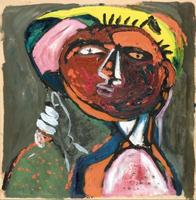
Anna Margit, Sárga Sapka 1946
Anna Margit
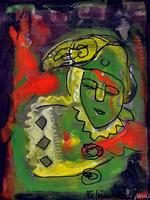
Green Harlequin
George Stefanescu
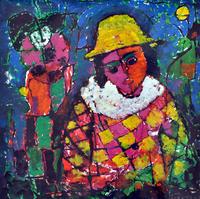
Harlequin
George Stefanescu
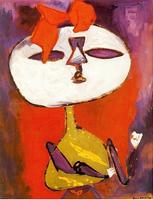
Anna Margit, Bábu. .
Anna Margit
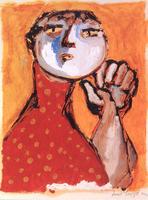
Anna MArgit Nöi Fej Pöttyös Ruhában 1947
Anna Margit
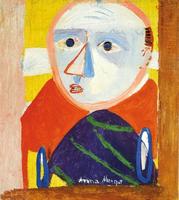
Anna Margit, Bábu Félelem 1945
Anna Margit
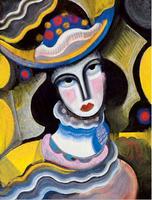
Scheiber Hugó , Femme Fatale 1930
Scheiber Hugó
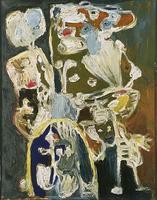
Jardin des êtres
Asger Jorn
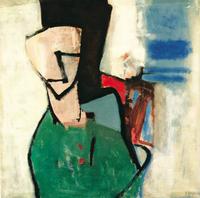
Self Portrait
Alexander Bogen
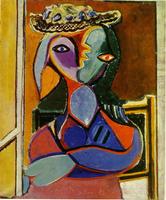
Untitled
Pablo Picasso
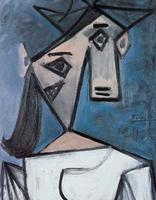
Woman’s Head
Pablo Picasso
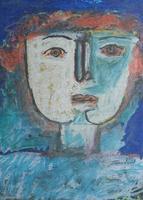
Head Portrait
Jean David
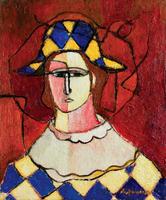
Harlequin
George Stefanescu
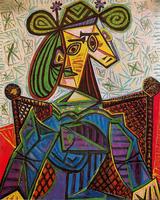
Woman sitting in an armchair
Pablo Picasso
Scheiber Hugó Bubifrizurás Hölgy Bárban, Gouache, Pasztell, Papírlemez, 67,5x50cm
Scheiber Hugó
Untitled
Pablo Picasso
Cadet
Vilen Barsky
Untitled
Pablo Picasso
Pale Woman with Red Hair
Alexej von Jawlensky
Couple et pigeon
Corneille