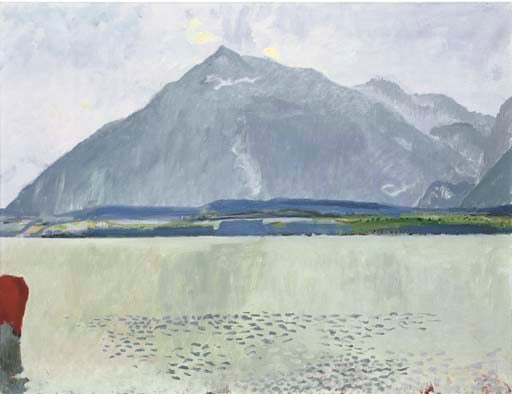
Cuno Amiet の Thunersee mit Niesen の専門的な分析
スタイル:Post-Impressionism · ジャンル:landscape
Cuno Amiet’s Thunersee mit Niesen is a vivid example of Post-Impressionist landscape painting, significant for its bold departure from naturalistic representation in favor of emotional and chromatic intensity. As a landscape, the work captures the iconic Swiss vista of Lake Thun with the pyramidal Niesen mountain—but Amiet transforms the scene through the Post-Impressionist lens of subjective color and expressive brushwork. Rather than recording the local hues of water, sky, and rock, he likely employs heightened, non-naturalistic tones and rhythmic brushstrokes to convey the landscape’s sensory and spiritual resonance. This approach aligns with the movement’s emphasis on the artist’s inner vision over mere visual accuracy. Amiet’s contribution lies in his fusion of Post-Impressionist color theory with a distinctly Swiss Alpine subject, bridging the movement’s French roots (as seen in Van Gogh or Gauguin) with a Northern European sensibility. The painting thus stands as a testament to how Post-Impressionism allowed artists to imbue familiar topography with a new, emotionally charged vitality.
視覚的に類似
構図やパレットが近い作品 20 件
Thun, Stockhornkette, in clouds
Ferdinand Hodler
Thun, Stockhornkette
Ferdinand Hodler
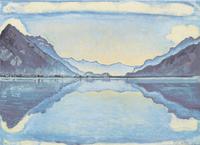
Thun with symmetric mirroring
Ferdinand Hodler
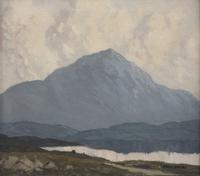
Errigal, Co. Donegal
Paul Henry
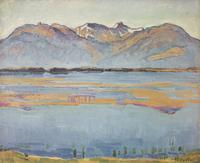
Montanasee
Ferdinand Hodler
Lake Geneva with Mont Blanc at dawn
Ferdinand Hodler
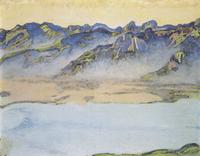
Rising mist over the Savoy Alps
Ferdinand Hodler
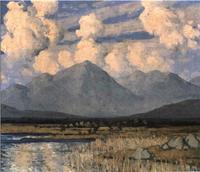
A Western Lough
Paul Henry
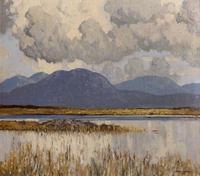
A Kerry Lake
Paul Henry
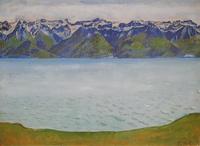
Lake Geneva with Savoyerbergen
Ferdinand Hodler
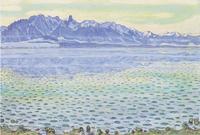
Thun, Stockhornkette
Ferdinand Hodler
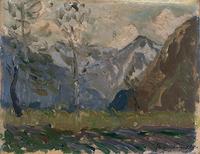
Study of mountains
Maxime Maufra
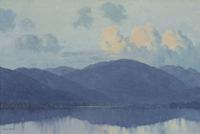
Killarney, Co. Kerry
Paul Henry
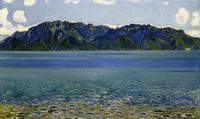
Grammont
Ferdinand Hodler
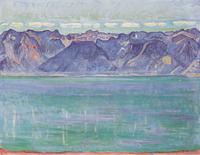
Lake Geneva, overlooking the Savoyerberge
Ferdinand Hodler
Loch Duich and the Five Sisters
Joseph Farquharson
Paisagem
Arthur Nísio
The Grand Tetons, Wyoming
Albert Bierstadt
Lake Geneva with Mont Blanc in the morning light
Ferdinand Hodler
Lake Geneva with Mont Blanc in the morning light
Ferdinand Hodler