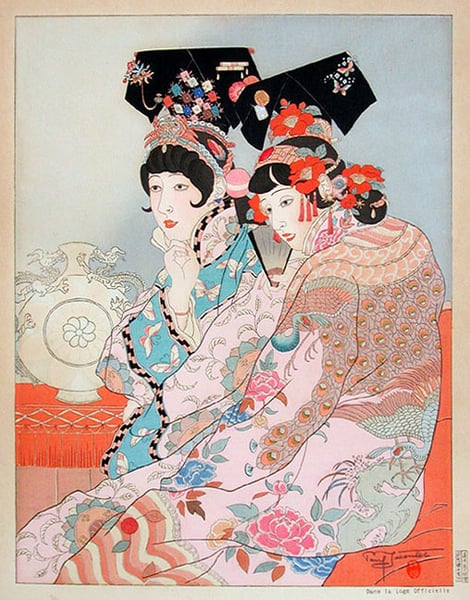
Analisi esperta di Dans La Loge Officielle di Paul Jacoulet
Stile: Ukiyo-e · Genere: genre painting
Paul Jacoulet’s "Dans La Loge Officielle" stands as a compelling 20th-century reinterpretation of the traditional Ukiyo-e style, marking a significant cross-cultural moment in the history of Japanese woodblock printing. While classic Ukiyo-e flourished during the Edo period, Jacoulet—a French-born artist who worked extensively in Japan—revived and transformed the medium in the 1930s and 1940s. His work is notable for merging Western pictorial conventions (such as nuanced chiaroscuro and a broader, more painterly color palette) with the established Ukiyo-e techniques of meticulous linework, flat color areas, and refined woodblock craftsmanship.
As a genre painting, "Dans La Loge Officielle" captures an intimate, ceremonial scene within an official theater box—likely during a performance or state occasion. The work’s significance lies in its ability to bridge two worlds: it reflects a Western artist’s fascination with Japanese ritual and social hierarchy while simultaneously engaging with the native Ukiyo-e tradition of depicting everyday life and entertainment. Jacoulet’s figures are rendered with an ethnographic precision and a theatrical elegance that elevate the scene beyond mere documentary; the composition is carefully balanced, and the use of rich, often deep hues demonstrates his mastery of color printing.
Moreover, Jacoulet’s oeuvre is recognized for its unique subject matter—often portraying Korean, Chinese, and Pacific Islander figures alongside Japanese subjects, giving his work a pan-Asian scope unusual for the genre. In "Dans La Loge Officielle," this global perspective is hinted at through the formal attire and poised demeanor of the figures, suggesting a moment of cultural performance that Jacoulet himself, as an outsider-turned-insider, was uniquely positioned to observe and eternalize. The print thus represents a vital fusion of Eastern technique and Western sensibility, securing Jacoulet’s place as a late but innovative master of the Ukiyo-e tradition.
Visivamente simili
20 opere con composizione e palette affini
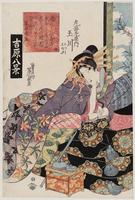
Clearing Weather at Awazu (Awazu seiran), Tamagawa of the Maru-Ebiya, kamuro Katsumi and Shinobu, No. 4 from the series Eight Views in the Yoshiwara (Yoshiwara hakkei)
Keisai Eisen
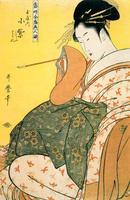
Komurasaki of the Tamaya with pipe in hand
Kitagawa Utamaro
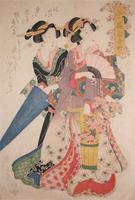
Kiyomizu Komachi
Keisai Eisen
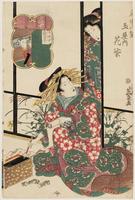
Hanamurasaki of the Tamaya, from the series Eight Views of the Pleasure Quarters (Kuruwa hakkei)
Keisai Eisen
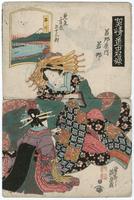
Shinagawa: Wakana of the Wakanaya
Keisai Eisen
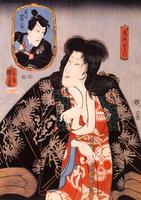
The female demond
Utagawa Kuniyoshi
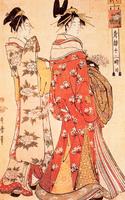
Illustration from `The Twelve Hours of the Green Houses', c.1795 (colour woodblock print)
Kitagawa Utamaro
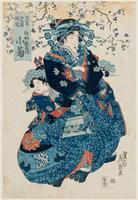
Kogiku
Keisai Eisen
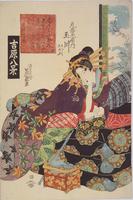
The Courtesan Tamagawa of the Maruebiya House
Keisai Eisen
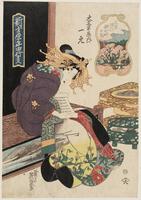
The Third Month, Cherry Blossoms in Naka-no-chô
Keisai Eisen
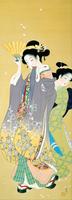
Cherry Blossom Viewing
Uemura Shoen
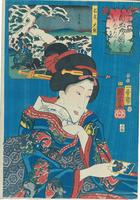
Timber in Iwami Province
Utagawa Kuniyoshi
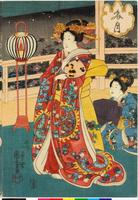
The Sixth Month (Right)
Utagawa Kuniyoshi
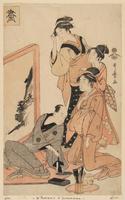
The four virtues
Kitagawa Utamaro
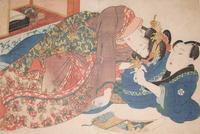
Shunga Scroll
Keisai Eisen
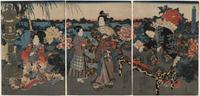
Visit to a peony garden
Utagawa Kunisada II
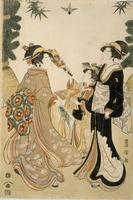
Three Beauties Playing Battledore and Shuttlecock
Utagawa Toyokuni
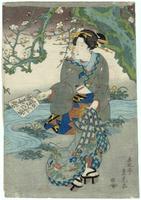
Woman under Flowering Tree
Utagawa Sadatora
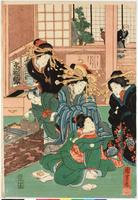
Flowers of Edo (Center)
Utagawa Kuniyoshi
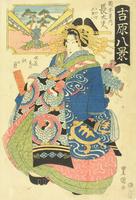
Courtesan Choto With Two Kamuro (Young Attendants) Behind Her
Utagawa Toyokuni II