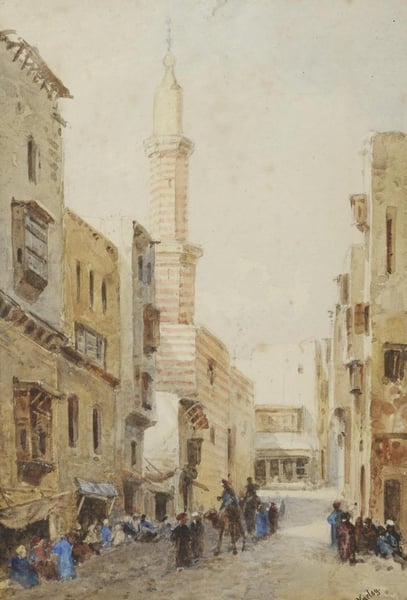
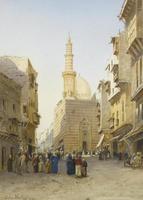
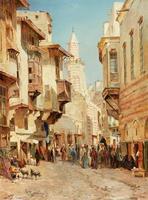
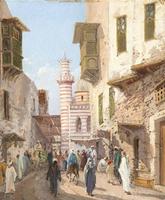
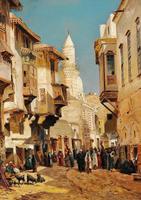
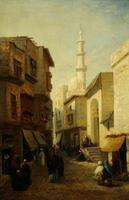
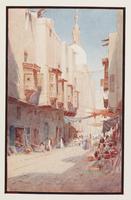
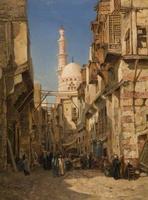
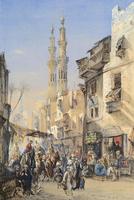
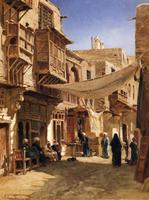
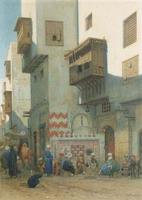
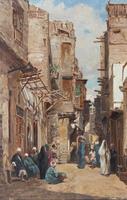
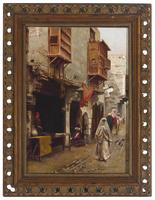
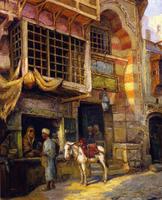
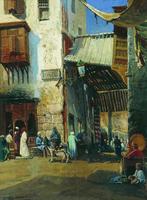
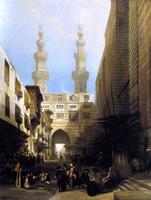
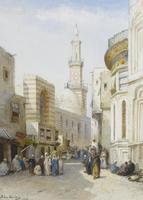
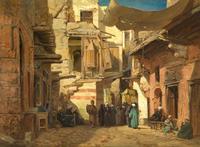
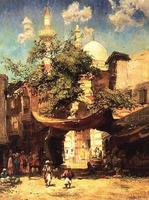
This artwork, Street Scene, Cairo (also known as A North African Street) by John Varley II, exemplifies the Realist commitment to direct, unidealized observation within the cityscape genre. Its significance lies in how it applies Realism’s core principles—accuracy, attention to everyday details, and a focus on contemporary life—to a foreign (Cairo/North African) setting.
Rather than romanticizing or exoticizing the scene through fantasy or allegory, Varley presents a specific, recognizable urban locale with architectural and cultural verisimilitude. The work is thus a key document of Orientalist Realism, a sub-movement within 19th-century art that attempted to record the “authentic” street-level reality of the East—its light, its alleyways, its daily commerce—without overt mythological embellishment. This grounding in observed fact makes the painting significant as a bridge between Western Realist conventions and the ethnographic curiosity of the period, offering a supposedly “true” window into North African urban life.