Expertenanalyse zu John Leechs THE UNDERGROUND RAILWAYS
Stil: Realism · Genre: illustration
Expert Analysis of "THE UNDERGROUND RAILWAYS" by John Leech
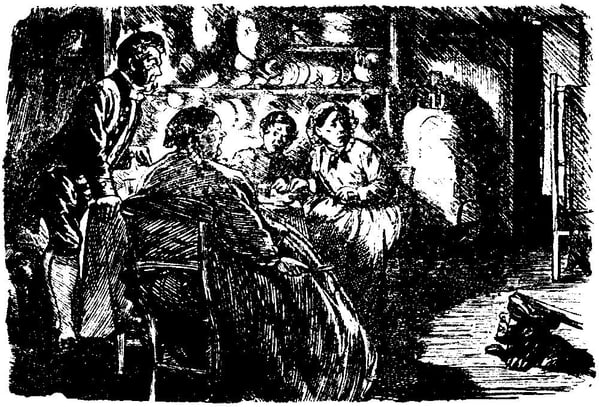
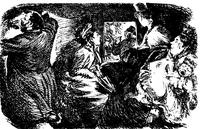
John Leech’s “THE UNDERGROUND RAILWAYS” stands as a pivotal work within the Realist tradition of illustration, distinguished by its precise, unflinching documentation of mid‑19th‑century urban life. Executed in the 1860s—when London’s Metropolitan Railway (the world’s first underground line) had recently opened—the image captures a crowded, dimly lit train compartment with a keen eye for social detail. Leech’s style avoids idealization; instead, his use of careful cross‑hatching and controlled linework anchors the scene in everyday reality, while the constrained, almost claustrophobic composition mirrors the actual cramped conditions of early subterranean travel.
What makes this illustration significant is its role as a bridge between fine‑art Realism and popular print culture. Published in Punch magazine, the work uses the vernacular of the periodical press to comment on the dizzying expansion of industrial infrastructure. Leech’s figures are not mere archetypes but individuals—a sleeping clerk, a well‑to‑do lady clutching her handbag, a worker reading a newspaper—each reacting to the novel experience of hurtling underground. The artist subtly satirizes the discomforts and social mixing that the railway forced upon a class‑conscious society, all while maintaining the documentary fidelity prized by Realist theorists.
In the context of both Realism and illustration, “THE UNDERGROUND RAILWAYS” is groundbreaking because it treats a technological marvel with neither romantic awe nor outright ridicule. Instead, Leech offers a balanced, human‑scale view of modernity’s disorienting effects, presaging the social‑documentary approach of later illustrators and photographers. The work remains a vital cultural record of how ordinary Victorians encountered—and endured—the dawn of mass transit.
Genre
Stil
Visuell ähnlich
20 Werke mit ähnlicher Komposition und Farbpalette
Five Persons at a Meal
Vincent van Gogh
A family round a table with a young woman feeding her baby with her mother preparing a meal
Léon Augustin Lhermitte
Child and Woman Pouring Coffee
Vincent van Gogh
Reading a Tract
David Wilkie
TOUT VIENT À QUI SAIT ATTENDRE
John Leech
Spoiled children
Enrico Nardi
Illustration to "A Week of Kindness"
Max Ernst
Burglary at Easter Eve
Vasily Perov
Illustration for Neelus Peeler's conditions
Thomas Eakins
Old Woman with Rags
James McNeill Whistler
Russian proverbs and sayings
Viktor Vasnetsov
Studio Scene With Sitters
Rembrandt
Mrs. Fielding's Lecture
John Leech
A party
Vladimir Makovsky
Heimkehr Nach Erster Fahrt
Toby Edward Rosenthal
News
Karl Gussow
It is better to be idle
Francisco Goya
Interior of an Inn
Adriaen van Ostade
Card tricks
Adolf Eberle
Interior with Peasant Woman Sewing
Vincent van Gogh