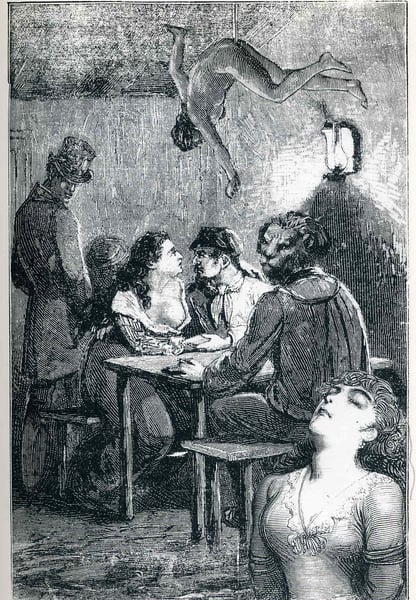
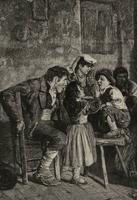
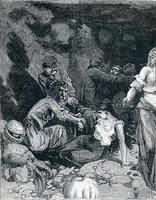
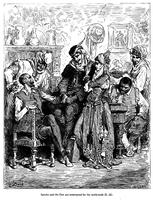
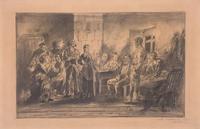
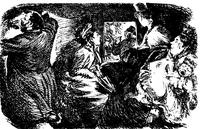
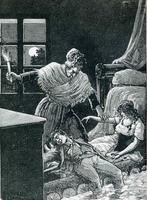
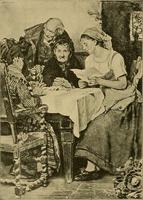
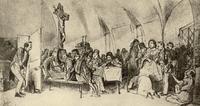
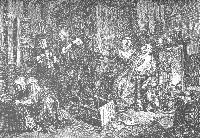
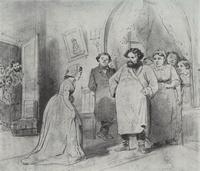
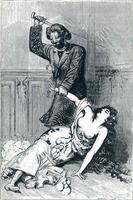
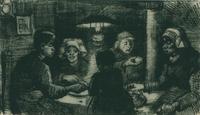
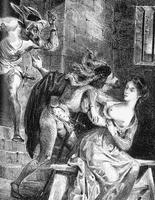
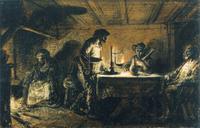
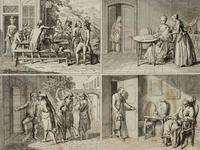
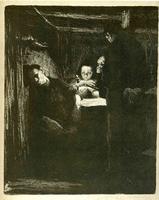
This illustration from Max Ernst’s collage novel A Week of Kindness (1934) is a landmark of Surrealist visual narrative, produced during the artist’s First French period. Its significance lies in how it epitomizes the Surrealist practice of irrational juxtaposition and automatic technique—here achieved not through paint but through the meticulous, subversive rearrangement of found engravings.
Ernst took ordinary, often banal 19th-century woodcut illustrations—scenes from Victorian novels, scientific manuals, or fashion plates—and reassembled their fragments to create a disquieting, dreamlike new reality. In this specific sheet, the impossible spaces and hybrid bodies (part human, part object, part architectural ruin) destabilize the viewer’s sense of logic and propriety. The collage method itself is the central innovation: it treats the unconscious as a force that can “cut” and “paste” reality into uncanny, poetic configurations.
The work also exemplifies the genre of illustration elevated to an autonomous artistic act. A Week of Kindness is a “collage novel” composed of 182 such images, each accompanied by enigmatic captions. The series exposes the hidden violence and eroticism lurking beneath bourgeois respectability—a hallmark of Surrealism’s attack on reason and convention. Here, Ernst transforms the illustrative format from mere decoration into a weapon of psychological disruption, making this artwork a pivotal example of Surrealist collage’s power to reveal the marvelous within the mundane.