Analisi esperta di Mrs. Fielding's Lecture di John Leech
Stile: Realism · Genere: illustration
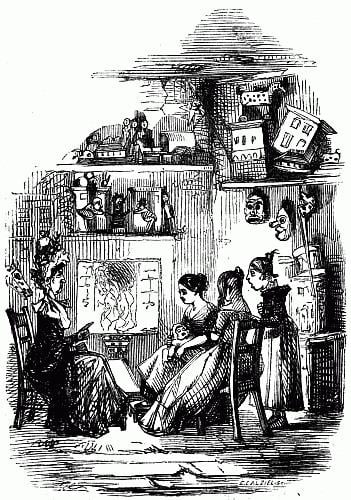
Expert Analysis of "Mrs. Fielding's Lecture" by John Leech
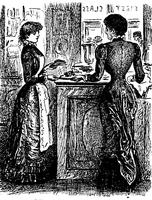
As an illustration crafted within the Realist tradition, John Leech’s “Mrs. Fielding’s Lecture” holds significance for its vivid, unidealized portrayal of Victorian domestic or social life—a hallmark of the Realist movement’s commitment to depicting the ordinary with truth and accuracy. Leech, best known for his contributions to Punch magazine, was a master of capturing contemporary manners and character types through meticulous observation. In this work, the genre of illustration is elevated to a vehicle for social commentary, avoiding the exaggeration typical of caricature in favor of a more restrained, observational style that aligns with Realism’s rejection of romanticized or heroic subjects.
The piece gains particular importance as an example of how Realist principles were applied to popular print media in mid-19th-century Britain. Rather than presenting a staged tableau, Leech likely presents a candid moment of instruction or lecture, focusing on the interactions, expressions, and domestic settings that defined middle-class life. This focus on the “everyday” as worthy of artistic attention echoes the broader Realist agenda—most famously advanced by figures like Courbet in France—adapted here to the satirical but truth-seeking ethos of periodical illustration.
Within its period, “Mrs. Fielding’s Lecture” contributes to the documentation of Victorian social roles, particularly the dynamics of gender and education, all while adhering to the Realist demand for fidelity to contemporary life. It stands as a testament to how illustration, often dismissed as a lesser genre, could serve the same serious exploration of modern existence as painting, making Leech’s work a significant bridge between fine art realism and the growing visual culture of journalism and publishing.
Visivamente simili
20 opere con composizione e palette affini
THE UNDERGROUND RAILWAYS
John Leech
An uninvited guest
Adolf Eberle
BEHIND THE SCENES
John Leech
TOUT VIENT À QUI SAIT ATTENDRE
John Leech
Women at counter
Theophile Steinlen
Miss Fabia, the Younger, astonished at the Patrician's Double-knock
John Leech
It is better to be idle
Francisco Goya
Snitchey and Craggs
John Leech
Femme
Charles Jacque
The Romans clothed by the Inhabitants of Capua
John Leech
The Dance
John Leech
Scrooge and Bob Cratchit
John Leech
Tilly Slowboy
John Leech
Don Quixote
Gustave Dore
JUVENILE ETYMOLOGY
John Leech
La Chanson De L'Aiguille
Theophile Steinlen
Reineke Fuchs1
Wilhelm von Kaulbach
Coriolanus parting from his Wife and Family
John Leech
Don Quixote
Gustave Dore
The Wife
Asher Brown Durand