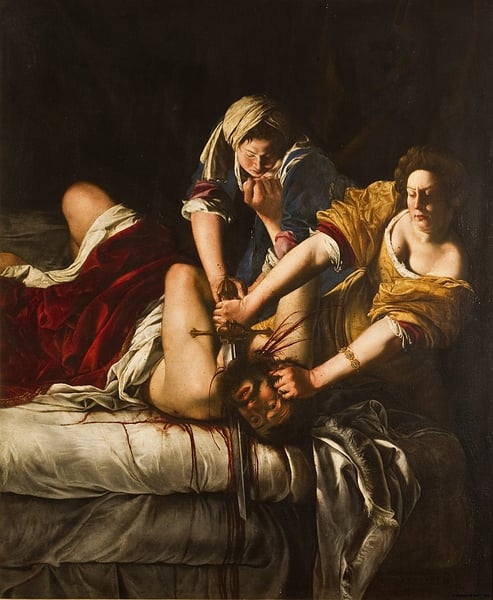
Artemisia Gentileschi
Judith Slaying Holofernes is a painting by the Italian early Baroque artist Artemisia Gentileschi, completed in 1612–13 and now at the Museo Capodimonte, Naples, Italy.
50 wesentliche Werke von Frauen, die die Kunstgeschichte prägten
Jahrhundertelang haben Künstlerinnen außergewöhnliche Werke geschaffen und dabei systemische Barrieren überwunden — ihnen wurde der Zugang zu Akademien verwehrt, sie wurden von Aktzeichenkursen ausgeschlossen und aus der Kunstgeschichte geschrieben. Trotz dieser Hindernisse haben Frauen einige der kraftvollsten Kunstwerke überhaupt geschaffen.
Von Artemisia Gentileschis kraftvollen Barockgemälden bis zu Yayoi Kusamas unendlichen Spiegelräumen feiert diese Sammlung 50 Werke von Künstlerinnen.
Nutze die Checkliste, um zu verfolgen, welche dieser Werke du persönlich gesehen hast.
Artemisia Gentileschi
Judith Slaying Holofernes is a painting by the Italian early Baroque artist Artemisia Gentileschi, completed in 1612–13 and now at the Museo Capodimonte, Naples, Italy.
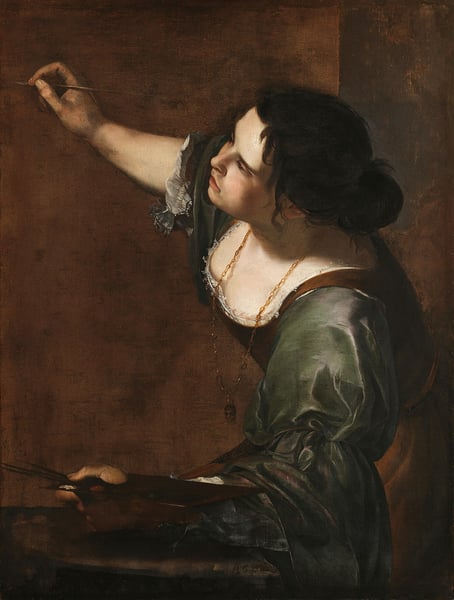
Artemisia Gentileschi
Self-Portrait as the Allegory of Painting, also known as Autoritratto in veste di Pittura or simply La Pittura, was painted by the Italian Baroque artist Artemisia Gentileschi. The oil-on-canvas painting measures 98.6 by 75.2 centimetres and was probably produced during Gentileschi's stay in England between 1638 and 1639. It was in the collection of Charles I and was returned to the Royal Colle...
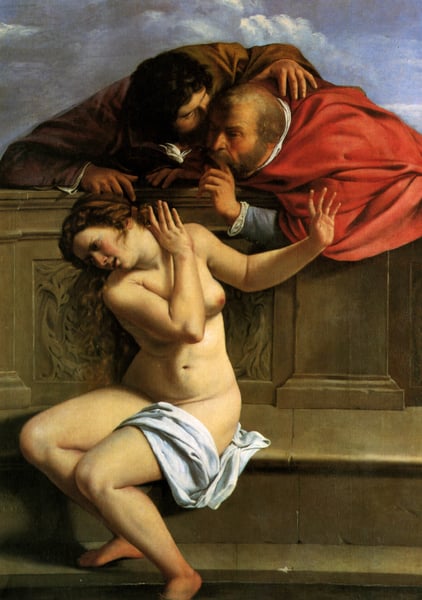
Anthony van Dyck · Baroque · religious painting
Susanna and the Elders is a Baroque religious painting by Anthony van Dyck from 1622, depicting the biblical episode in which the virtuous Susanna is confronted by two elders.
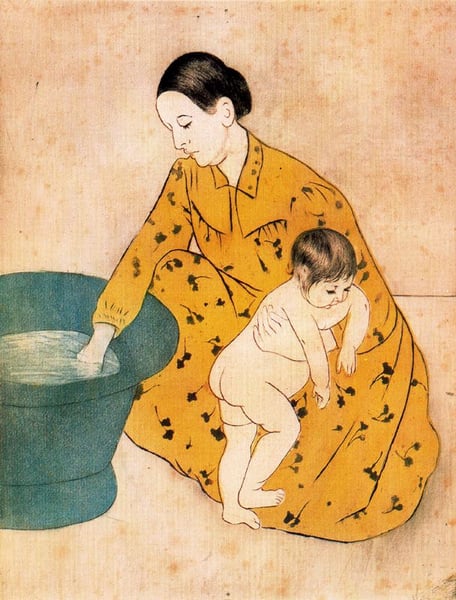
Mary Cassatt · Japonism · genre painting
Although she exhibited at the Impressionist Salon, Cassatt’s works encompassed many styles, and she frequently innovated new techniques for her paintings. In The Child’s Bath, we can see her influence from Japanese wood block prints. At the time she created this painting, the high vantage point, tight cropping of the forms, and bold outline were all unconventional artistic devices. Cassatt was ...
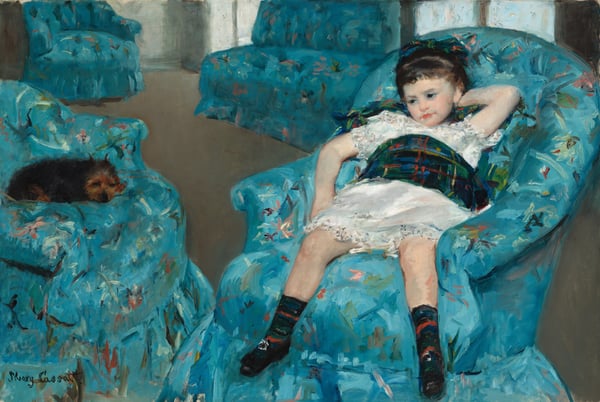
Mary Cassatt · Impressionism · portrait
In this significant piece from her later career, Cassatt decided to depict a solitary young girl within the confines of a domestic setting. The Impressionist style is evident in the discernible brushwork and casual posture of the figure. The composition's asymmetry, elevated perspective, limited depth, and abrupt cropping of the scene indicate the influence of Japanese art. Cassatt's own insigh...
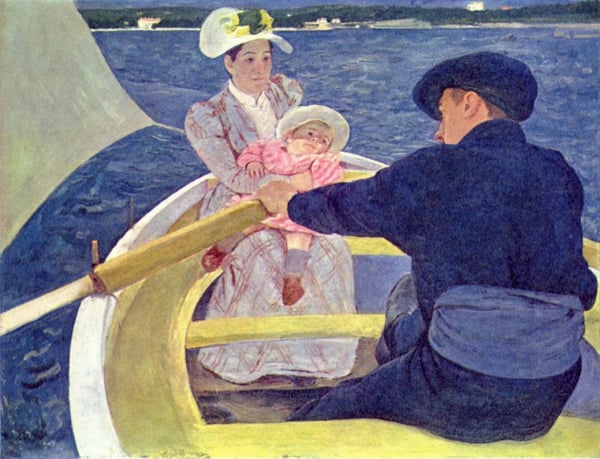
Mary Cassatt · Impressionism · genre painting
The Boating Party is an oil painting by American artist Mary Cassatt created in 1893. It is also known under the titles La partie en bateau; La barque; Les canotiers; and En canot. Measuring nearly three by four feet, it is one of Cassatt’s largest and most ambitious paintings. It has been in the Chester Dale Collection of the National Gallery of Art since 1963.
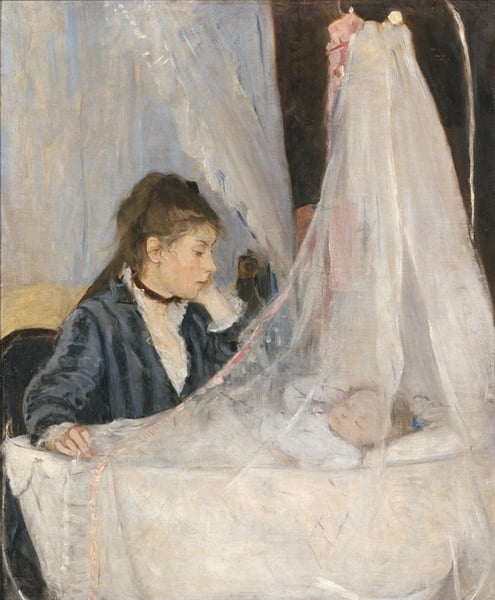
Berthe Morisot · Impressionism · genre painting
Berthe Morisot's most well-known painting, The Cradle, depicts her sister Edma looking down at her sleeping daughter Blanche in a cradle behind a gauzy veil. The painting, completed during the early part of Morisot's career, is the first example of her exploration of motherhood as a recurring subject, which was limited by the social norms of the era that restricted women's public activities wit...
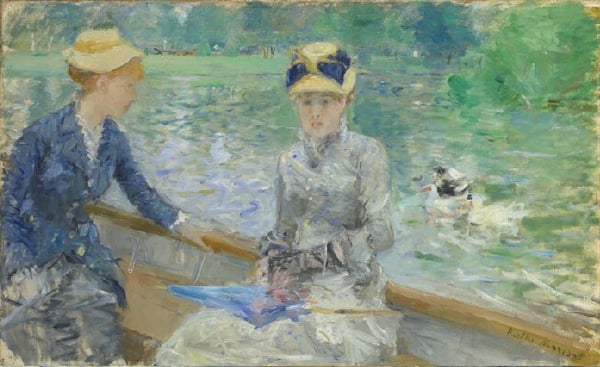
Berthe Morisot · Impressionism · genre painting
Summer's Day is an oil-on-canvas painting by the French Impressionist painter Berthe Morisot, created in 1879. The painting depicts two women seated in a row boat, and was painted in the Bois de Boulogne. It is held at the National Gallery, in London.
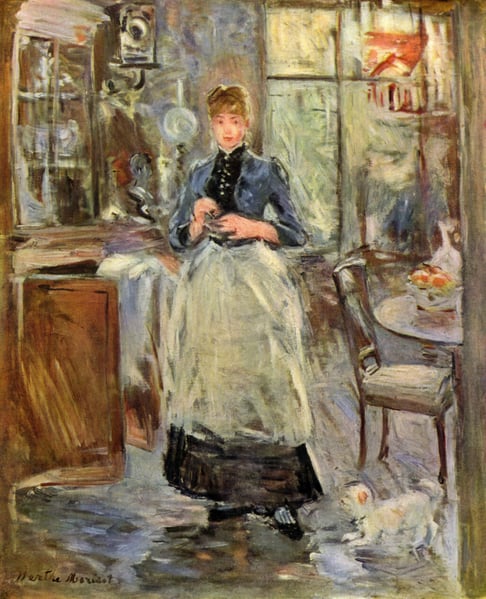
Berthe Morisot · Impressionism · genre painting
In the Dining Room is an oil-on-canvas painting by the French impressionist artist Berthe Morisot, created in 1886. It shows a young woman in the center of the domestic environment of a dining room. The painting is in the collection of the National Gallery of Art, in Washington, D.C.
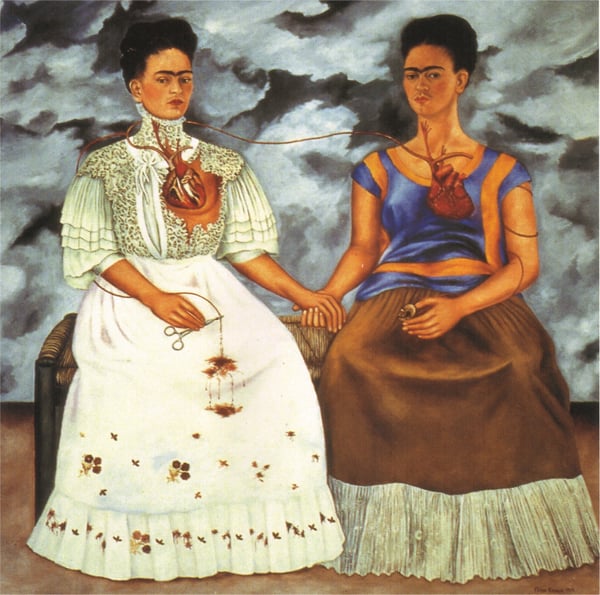
Frida Kahlo · Naïve Art (Primitivism) · self-portrait
Frida Kahlo's work placed Mexican art on the international stage. Her style was figurative and self-taught, with elements of the fantastical and an emphasis on her own individual, biographical perspective. Her self-referential art, now a media phenomenon, originated in the development of her portrait painting which, from early on, became her most effective device for expressing a certain unease...
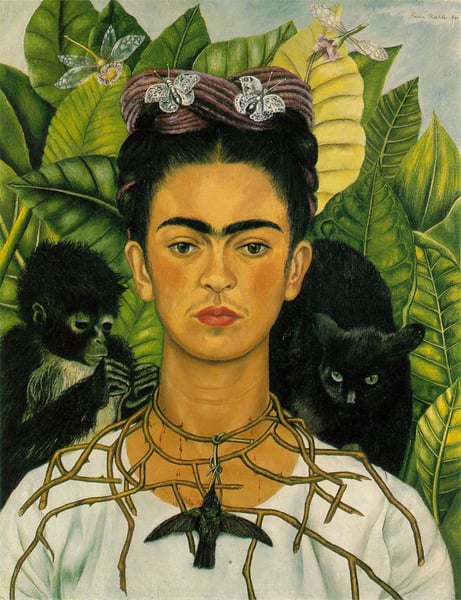
Frida Kahlo
Self-Portrait with Thorn Necklace and Hummingbird is a 1940 self-portrait by Mexican painter Frida Kahlo which also includes a black cat, a monkey, and two dragonflies. It was painted after Kahlo's divorce from Diego Rivera and the end of her affair with photographer Nickolas Muray.
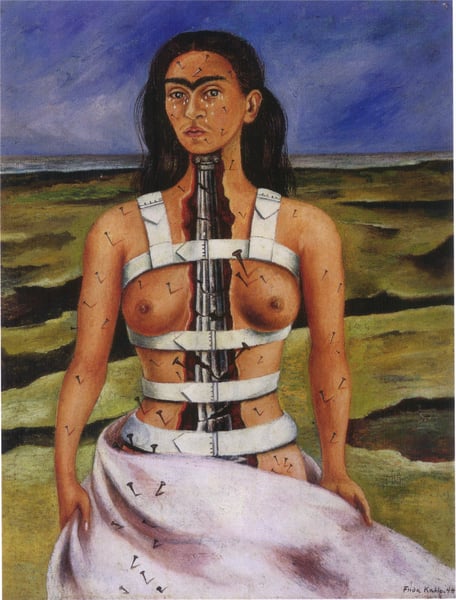
Frida Kahlo · Naïve Art (Primitivism) · self-portrait
Kahlo was 18 years old when she was involved in a horrific traffic accident, in which an iron rod pierced her abdomen, right foot was crushed, and two vertebrae were fractured, as well as a number of other bones, including eleven fractures in her right leg. As she recovered in a full body cast, her mother brought her a small lap easel, and, with a mirror over her bed, began painting self-portra...
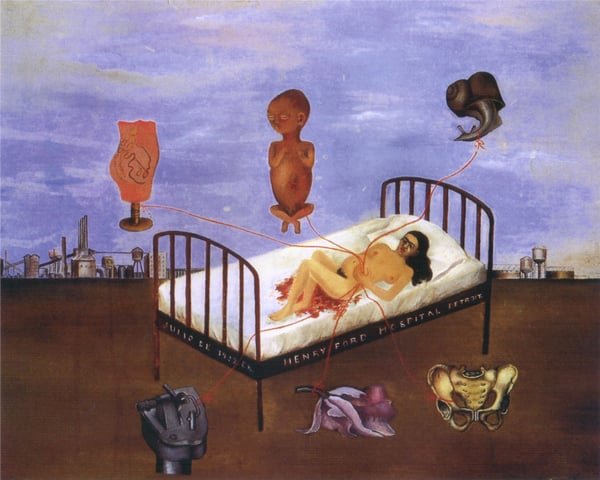
Frida Kahlo
Henry Ford Hospital depicts a woman's torso suspended in a barren landscape, connected by veins and arteries to a fetus, medical instruments, and anatomical organs rendered in clinical detail. The work combines surrealist imagery with explicit medical iconography to address themes of bodily autonomy and reproductive trauma.
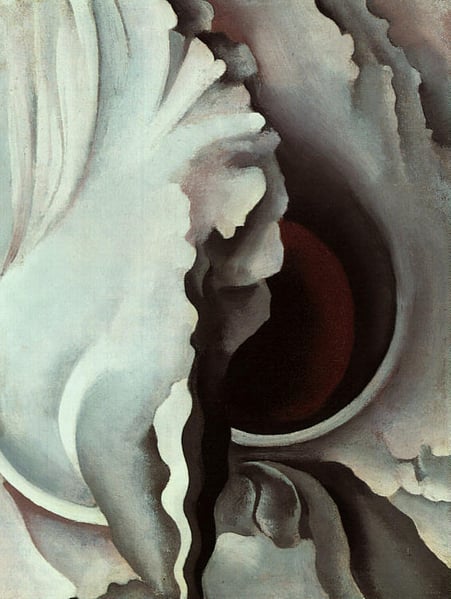
Georgia O'Keeffe · Precisionism · flower painting
Black Iris is a flower painting by Georgia O'Keeffe in the Precisionist style.
Georgia O'Keeffe
Jimson Weed/White Flower No. 1 is a work by Georgia O'Keeffe.
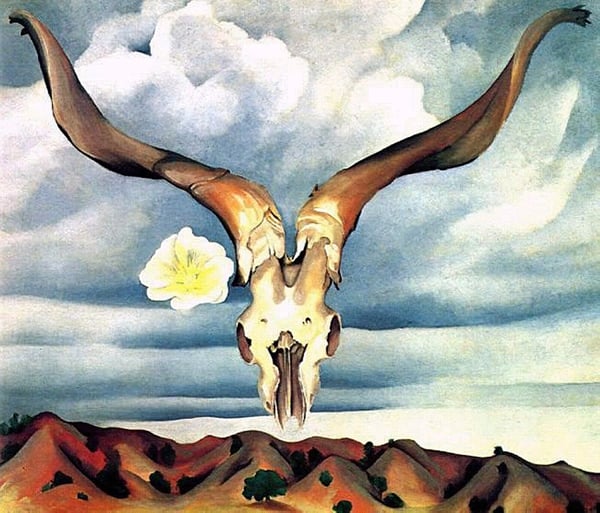
Georgia O'Keeffe
Ram's Head White Hollyhock and Little Hills is a painting by Georgia O'Keeffe that combines a ram's skull with a white hollyhock flower and abstracted landscape forms. The work exemplifies O'Keeffe's characteristic approach of uniting organic and zoological elements within a single compositional field.
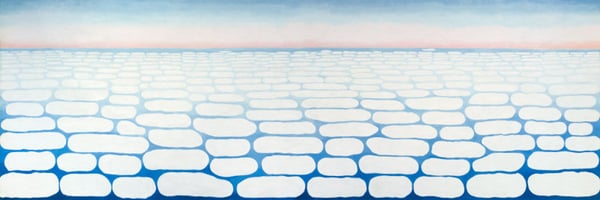
Georgia O'Keeffe · Regionalism · cloudscape
Sky Above Clouds IV is a cloudscape by Georgia O'Keeffe from 1965, painted in the Regionalism style. The work depicts clouds viewed from above, a subject O'Keeffe returned to throughout her career.
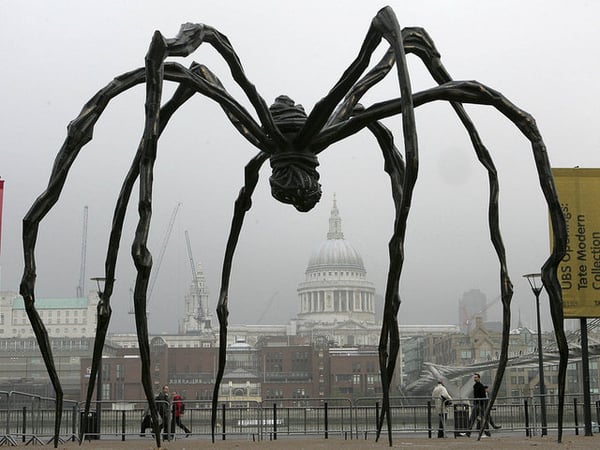
Louise Bourgeois · Confessional Art · sculpture
Maman (1999) ist die größte Plastik aus der Spinnen-Serie der Künstlerin Louise Bourgeois. Sie ist über neun Meter hoch und trägt einen Beutel, der 26 Marmoreier enthält. Maman ist das französische Wort für „Mama“.
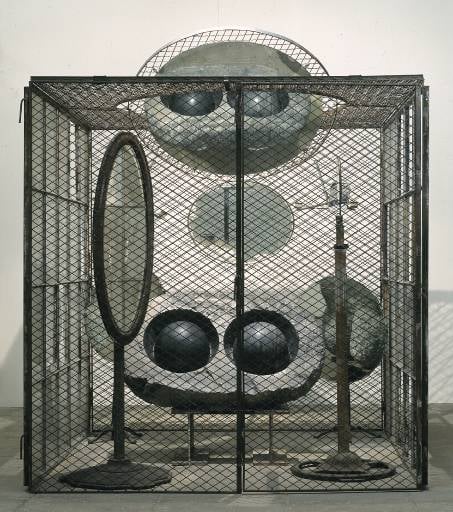
Louise Bourgeois · Confessional Art · installation
Cell (Eyes and Mirrors) is a confessional art installation by Louise Bourgeois from 1993, structured around the motifs named in its title—eyes and mirrors—within an enclosed architectural space.
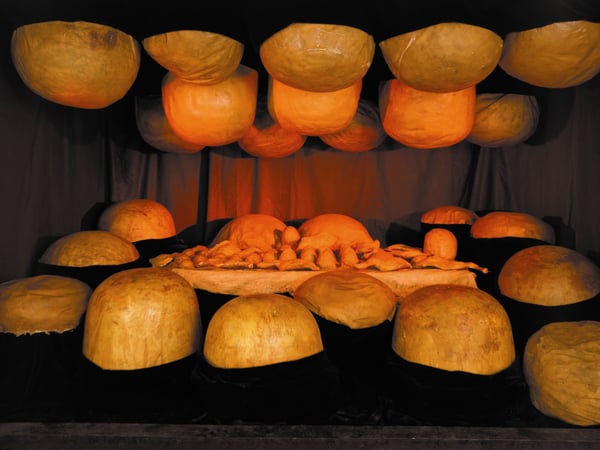
Louise Bourgeois
The Destruction of the Father is a room-sized installation by Louise Bourgeois created in the 1990s, featuring a large table surrounded by furniture and sculptural elements in a darkened space. The work is executed in the Surrealist tradition and employs visceral, organic forms that reference the human body and domestic spaces.
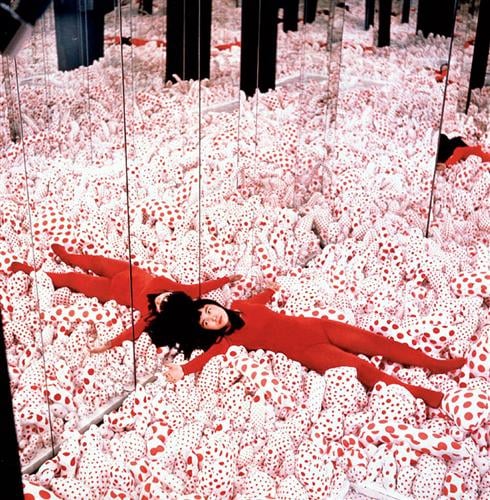
Yayoi Kusama
Yayoi Kusama's Infinity Mirror Room — Phalli's Field is an immersive installation that uses mirrors and repeated sculptural elements to create an illusion of endless space. The work exemplifies Kusama's signature technique of using multiplied forms and reflective surfaces to generate a sense of visual infinity.
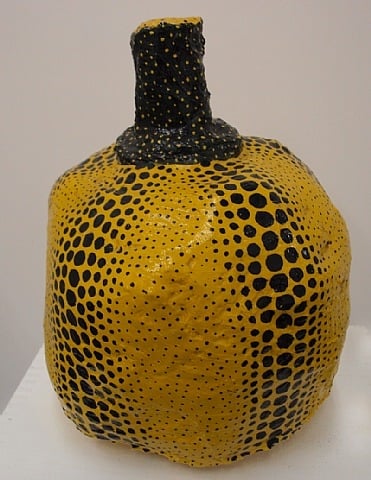
Yayoi Kusama · Art Brut, Pop Art · sculpture
Yayoi Kusama's Pumpkin (1983) is a sculpture combining Art Brut and Pop Art approaches. The work takes its subject from the pumpkin form, rendered in a style that draws on both raw, unrefined aesthetic principles and popular visual culture.
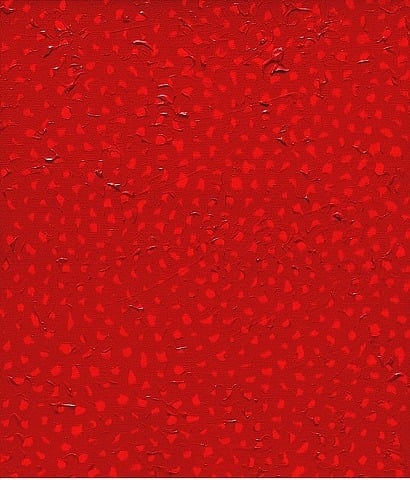
Yayoi Kusama
Infinity Nets is a series of paintings by Yayoi Kusama composed of densely repetitive nets or mesh patterns that extend across the canvas surface. The work exemplifies Kusama's characteristic use of obsessive, all-over patterning and represents her exploration of infinity through infinite repetition.
Marina Abramović
The Artist Is Present is a performance work by Marina Abramović.
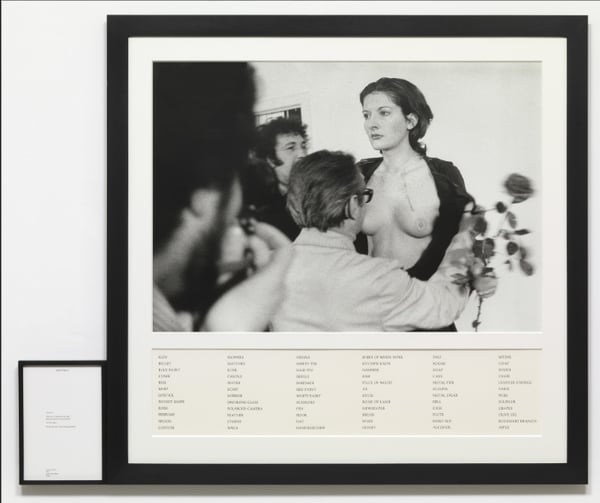
Marina Abramović · Performance Art · performance
Rhythm 0 war im Jahr 1974 ein sechsstündiges Werk der jugoslawischen Performance-Künstlerin Marina Abramović im Studio Morra, Neapel. Die Aufführung bestand aus Abramović, die stillstand oder sich anderweitig passiv verhielt, während das Publikum dazu eingeladen wurde, mit 72 Gegenständen, die sie auf einem Tisch ausgelegt hatte, alle möglichen Handlungen an ihr durchzuführen. Die Gegenstände u...
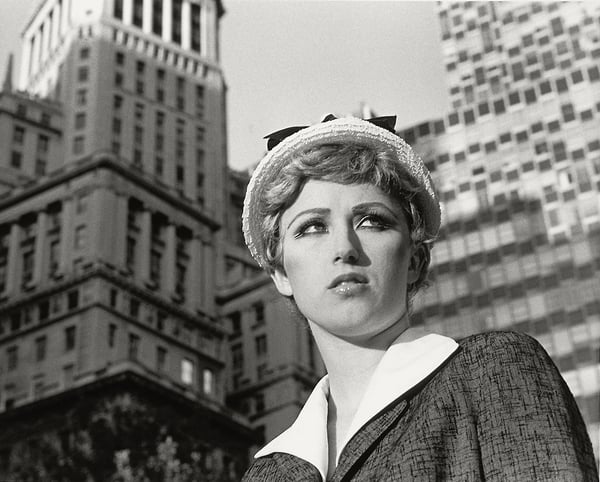
Cindy Sherman
Untitled Film Stills is a series of black and white photographs by American visual artist Cindy Sherman predominantly made between 1977 and 1980, which gained her international recognition. Sherman casts herself in various stereotypical female roles inspired by 1950s and 1960s films.
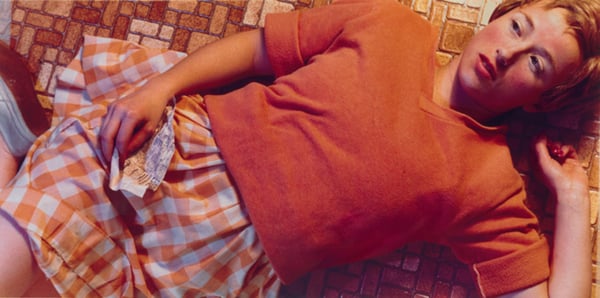
Cindy Sherman · portrait
Untitled #96 is a portrait by Cindy Sherman.
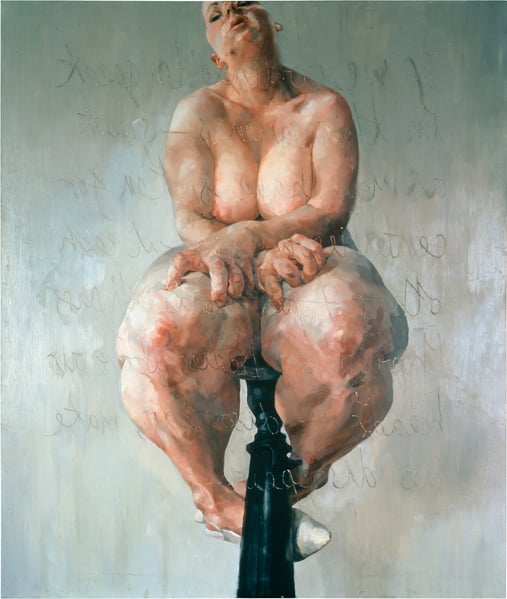
Jenny Saville · Neo-Expressionism · nude painting (nu), self-portrait
Propped is a 1992 neo-expressionist nude self-portrait by Jenny Saville.
Jenny Saville
Strategy (South Face/Front Face/North Face) is a work by Jenny Saville that consists of three distinct faces or views. The tripartite structure suggested by the subtitle indicates the artist's engagement with multiple perspectives or orientations of a single subject.
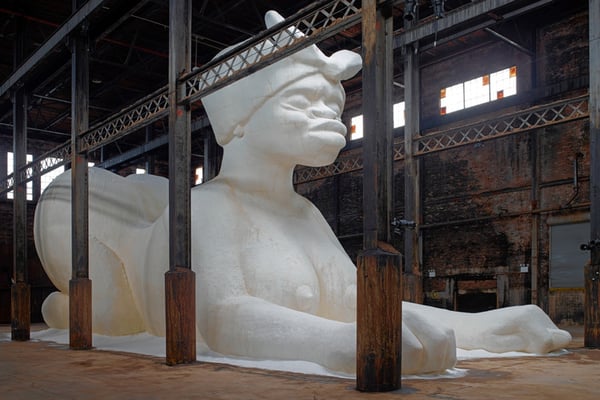
Kara Walker · Feminist Art · sculpture
A Subtlety is a 2014 piece of installation art by American artist Kara Walker. A Subtlety was dominated by its central piece, a white sculpture depicting a woman with African features in the shape of a sphinx, but also included fifteen other sculptures. These fifteen "attendants" to the sphinx were enlarged versions of contemporary blackamoor figurines.
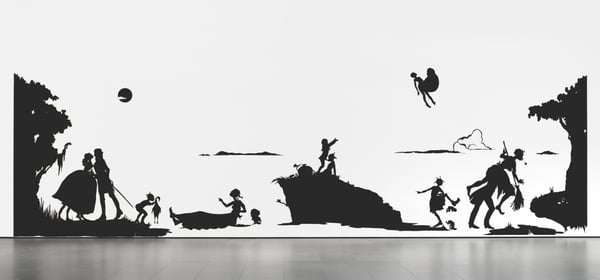
Kara Walker
Kara Walker's Gone: An Historical Romance is a work by the artist known for her silhouette-based explorations of American racial history and violence. Beyond the title's ironic framing of romance and history, the supplied facts do not specify the medium, dimensions, date, or visual content of the work, so further description cannot be grounded.
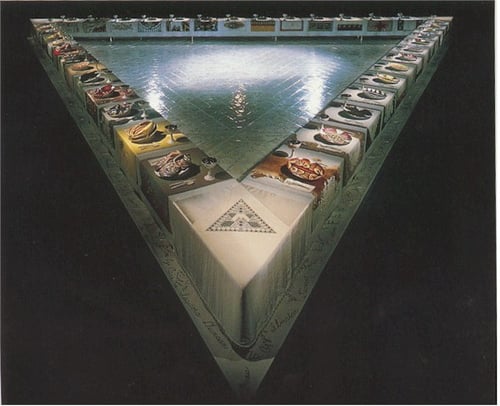
Judy Chicago · Feminist Art · installation
The Dinner Party ist eine Installation der amerikanischen feministischen Künstlerin Judy Chicago, die die Geschichte der Frauen in der westlichen Zivilisation anhand einzelner bedeutender Frauen darstellen soll. Dazu werden 39 aufwendig arrangierte Gedecke auf einer Festtafel ausgestellt. Jedes Gedeck steht für eine bekannte Frau aus der Mythologie oder der Geschichte. Die einzelnen Gedecke sin...
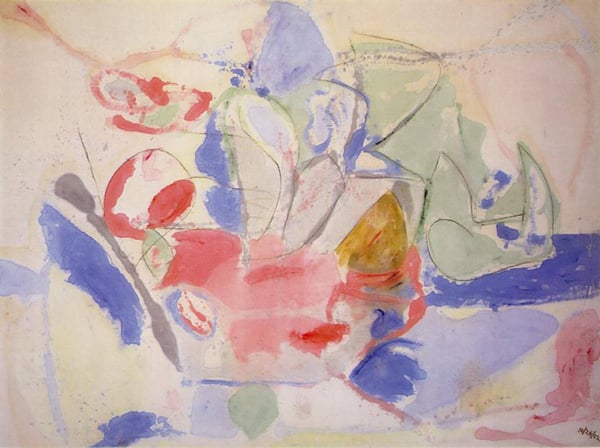
Helen Frankenthaler · Abstract Expressionism, Lyrical Abstraction · abstract
Initially associated with abstract expressionism, her career was launched in 1952 with the exhibition of Mountains and Sea. This painting (inspired by inspired by a trip to Nova Scotia) is large - measuring seven feet by ten feet - and has the effect of a watercolor, though it is painted in oils. In it, she introduced the technique of painting directly onto an unprepared canvas so that the mate...
Juan Gris · Synthetic Cubism · still life
The Bay is a still life painting by Juan Gris executed in 1921 within the synthetic cubist style. The work employs the fragmented, planar composition characteristic of cubism to organize its subject matter across the canvas.
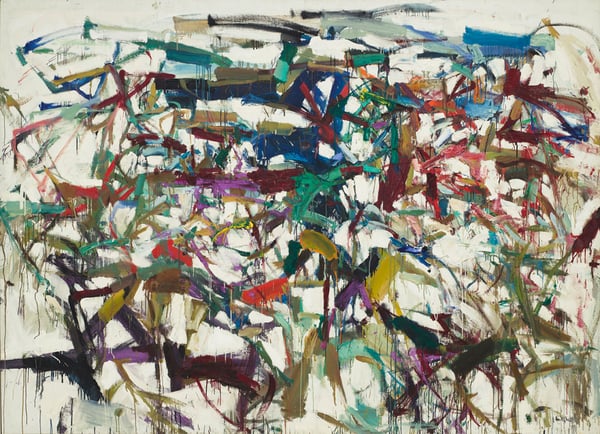
Joan Mitchell · Abstract Expressionism · abstract
Die Marienkäfer (Coccinellidae) sind eine weltweit verbreitete Familie halbkugeliger, flugfähiger Käfer, deren Deckflügel meist eine unterschiedliche Anzahl von auffälligen Punkten aufweisen. Viele Arten ernähren sich von Blatt- und Schildläusen. Es sind mehr als 6000 Arten bekannt.
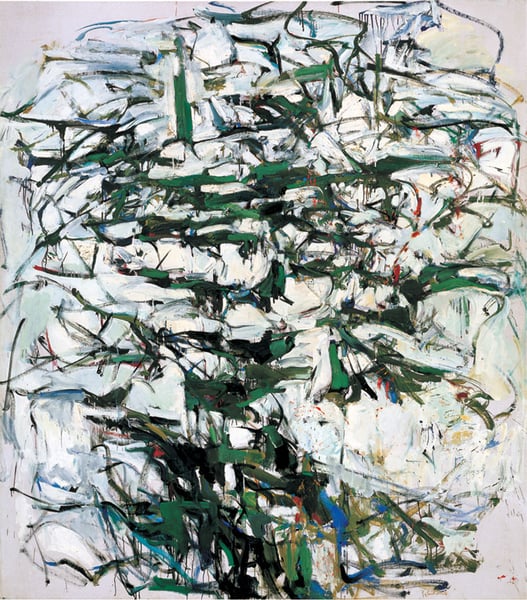
Joan Mitchell · Abstract Expressionism · abstract
Hemlock is a 1956 oil on canvas painting by the American New York School abstract expressionist artist Joan Mitchell. On this canvas Mitchell mixed horizontal strokes of green with white. The work is in the collection of the Whitney Museum of American Art, in New York.
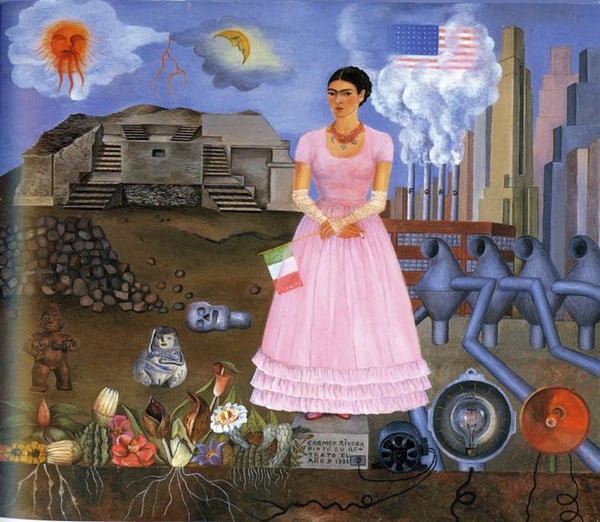
Frida Kahlo
Self-Portrait on the Border Line Between Mexico and the United States depicts the artist standing centrally, positioned between two distinct landscapes. On the left stands a lush, organic environment; on the right, an industrial cityscape with factories and mechanical forms.
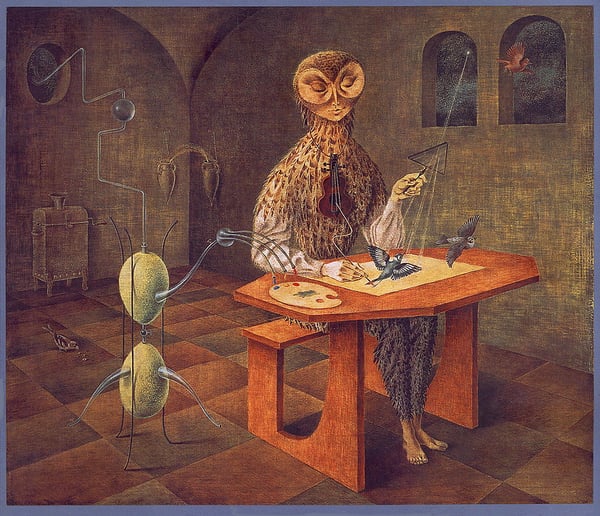
Remedios Varo · Surrealism · symbolic painting
Creation of the Birds is a symbolic surrealist painting by Remedios Varo from 1957, depicting a scene centered on the making of birds.
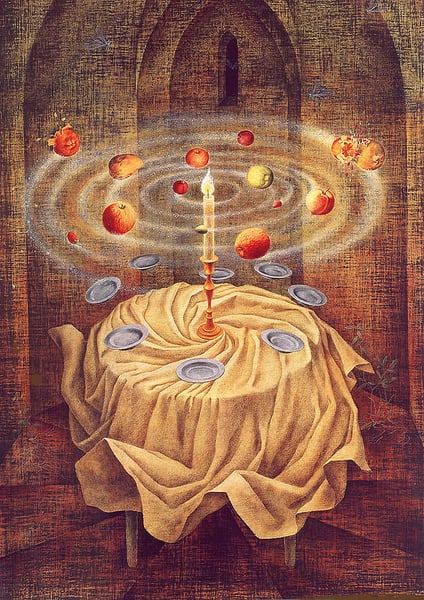
Remedios Varo
Remedios Varo's Still Life Reviving belongs to the surrealist tradition, merging dreamlike imagery with meticulously rendered forms characteristic of her work.
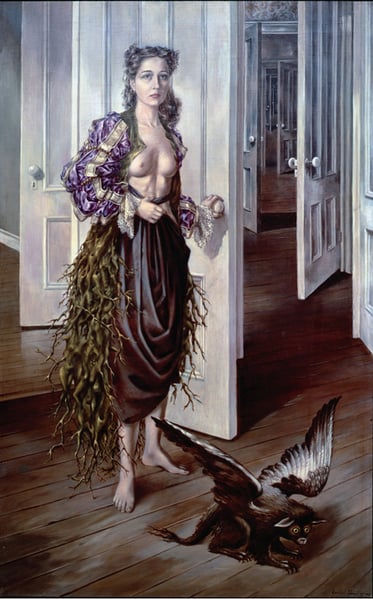
Dorothea Tanning · Surrealism · symbolic painting
Als Geburtstag wird sowohl der Tag der Geburt einer Person als auch der Jahrestag dieses Ereignisses bezeichnet.
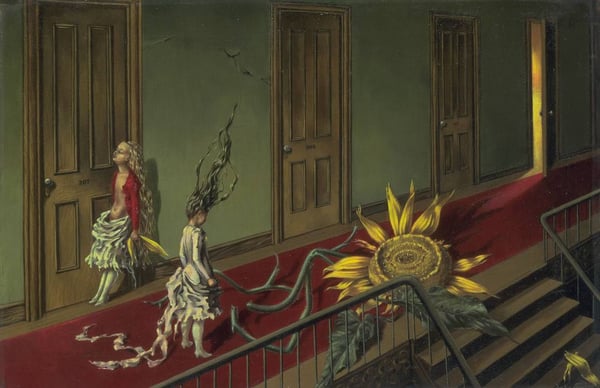
Dorothea Tanning
Die Serenade Nr. 13 für Streicher in G-Dur KV 525 ist eine der populärsten Kompositionen von Wolfgang Amadeus Mozart. Ihren Beinamen Eine kleine Nachtmusik verdankt sie Mozarts Eintrag in seinem Werkverzeichnis: „Eine kleine Nachtmusik, bestehend in einem Allegro.Menuett und Trio.-Romance.Menuett und Trio, und Finale.-2 violini, viola e bassi.“
Élisabeth Vigée Le Brun
The Roses is a painting by Élisabeth Vigée Le Brun.
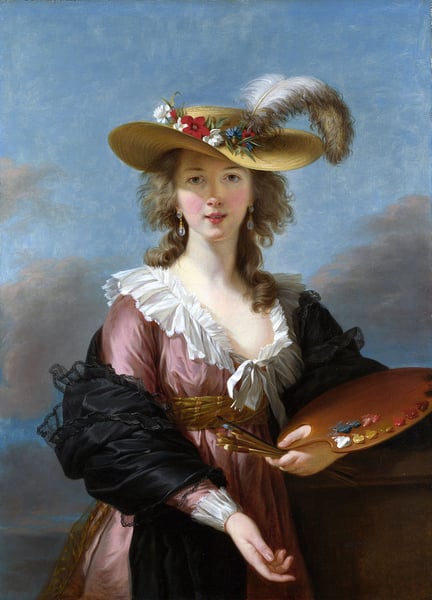
Louise Elisabeth Vigee Le Brun · Rococo · self-portrait
Selbstbildnis mit Strohhut ist ein signiertes Selbstportrait der französischen Malerin Élisabeth Vigée Le Brun, gemalt 1782, in Öl auf Leinwand mit den Maßen 97,8 cm auf 70,5 cm. Seit 1897 gehört es zur Sammlung der National Gallery London.
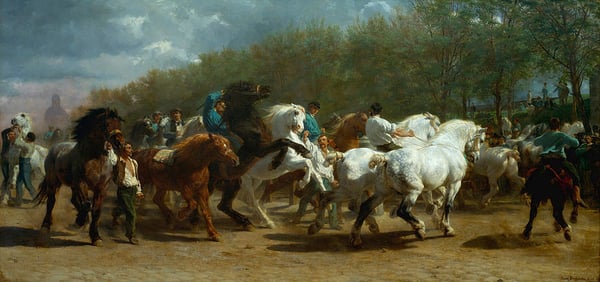
Rosa Bonheur · Realism · genre painting
It is undoubtedly the most reproduced and famous painting by Rosa Bonheur. It took her 18 months of constant work to create it, through dozens of [url href=https://www.wikiart.org/en/rosa-bonheur/the-horse-fair-study-1850]sketches[/url], in two final versions with very different sizes. The original one is huge and is now exposed to the Met Museum of New York. The other one is about a quarter of...
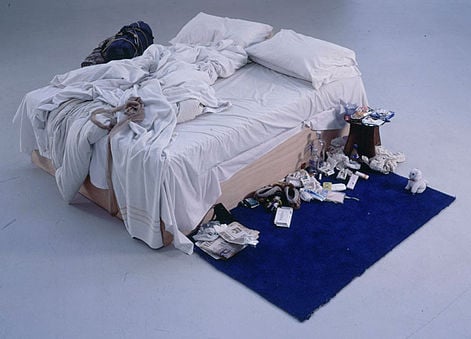
Tracey Emin · Conceptual Art · installation
My Bed is a work by the British artist Tracey Emin. First created in 1998, it was exhibited at the Tate Gallery in 1999 as one of the shortlisted works for the Turner Prize. It consisted of her bed with bedroom objects in an abject state, and gained much media attention. Although it did not win the prize, its notoriety has persisted.
The artwork generated considerable media furore, particula...
Tracey Emin
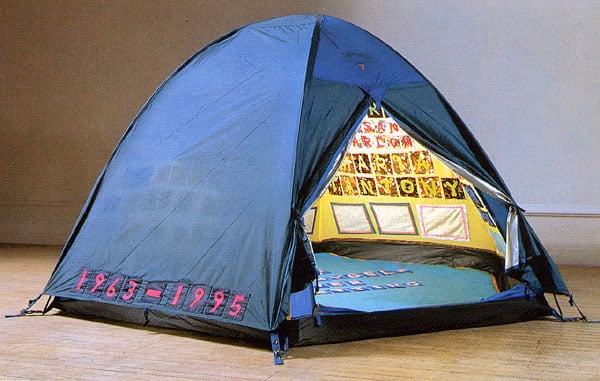
Everyone I Have Ever Slept With 1963–1995 (1995), also known as The Tent, was an artwork by Tracey Emin. The work was a tent with the appliquéd names of, literally, everyone she had ever slept with. It achieved iconic status and was owned by Charles Saatchi. Since its destruction in the 2004 Momart London warehouse fire, Emin has refused to recreate the piece.
Edward Krasinski · Minimalism · sculpture
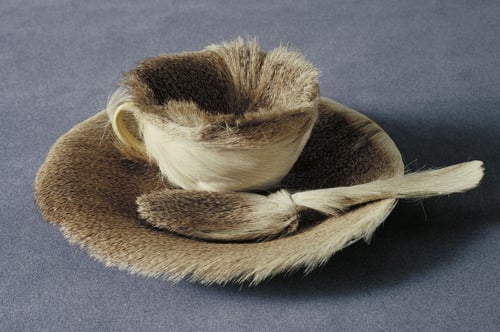
Edward Krasinski's Object (1960) is a minimalist sculpture created during the early development of the style. The work exemplifies Krasinski's engagement with geometric reduction and material presence characteristic of Minimalism's emphasis on essential forms and spatial relationships.
Barbara Kruger
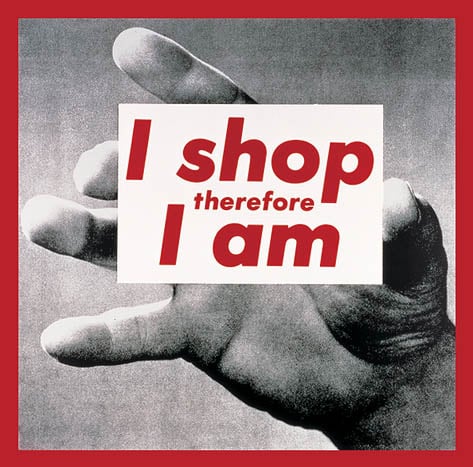
I Shop Therefore I Am is a text-based work by Barbara Kruger that appropriates the structure of Descartes' philosophical statement "I think therefore I am," substituting "shop" for "think." The work exemplifies Kruger's approach of combining language with visual design to interrogate meaning and challenge conventional assumptions.
Barbara Kruger
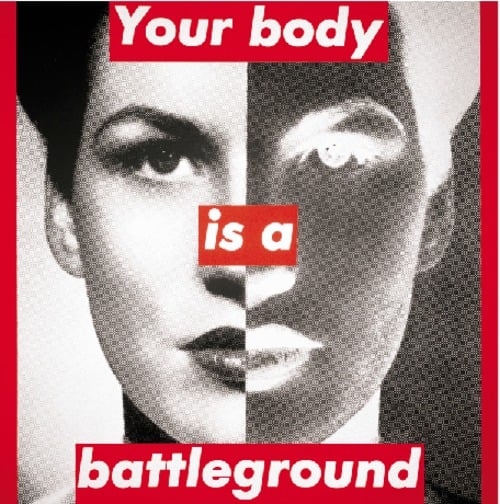
Barbara Kruger's Untitled (Your Body Is a Battleground) pairs a photograph of a female face, bisected by a bold red line, with white sans-serif text imposed across the image.
Henri Rousseau · Naïve Art (Primitivism) · genre painting
The Waterfall, painted by Henri Rousseau in 1910, is a genre painting in the Naïve art style. The work depicts a waterfall as its subject, rendered in the characteristic approach of Primitivism that Rousseau pioneered.
Noch keine Kommentare — sei der Erste.