Analisi esperta di The Extraction of Tooth di Gerrit Dou
Stile: Baroque · Genere: genre painting
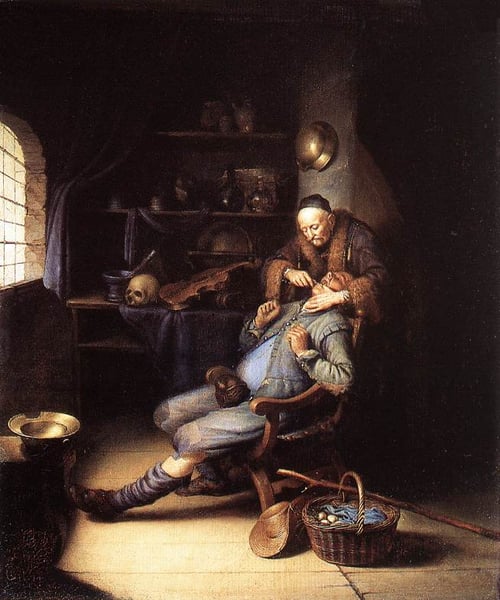
"The Extraction of Tooth" by Gerrit Dou (c. 1630–1635)
This work is a masterful example of genre painting within the Dutch Baroque tradition, executed by one of the period’s most celebrated fijnschilders (fine painters). Gerrit Dou, a pupil of Rembrandt, brought an almost microscopic attention to detail, luminous chiaroscuro, and a keen psychological insight to mundane scenes—elevating them into moral and social commentaries.
Significance within Baroque style and genre painting:
- Technical virtuosity: Dou’s hallmark is his painstaking rendering of textures—the glint of a metal forceps, the glossy sheen of a patient’s skin, the coarse fabric of the barber-surgeon’s sleeve, and the warm, flickering light of a single candle. This candlelight not only creates dramatic Baroque chiaroscuro but also serves as a subtle symbol of truth or revelation, illuminating the discomfort and foolishness of the scene.
- Narrative and moral undertone: The painting depicts a tooth extraction—a common, often painful, and sometimes comedic event in 17th-century Dutch life. But Dou infuses it with layers of meaning. The patient grimaces, clutching a handkerchief, while the “surgeon” (often a charlatan) works with theatrical confidence. A small child or onlooker appears in the background, perhaps pointing or laughing, reinforcing the theme of human folly and the absurdity of seeking quick, painful remedies.
- Influence and legacy: As a student of Rembrandt, Dou absorbed his teacher’s use of light and expressive faces but turned them toward intimate, domestic vignettes rather than grand history paintings. This shift helped define the Leiden school of fine painting and influenced later genre artists such as Jan Steen and even the Dutch tronie tradition.
- Genre painting’s rise: In the Baroque era, genre scenes like this one were no longer dismissed as “low” art. Dou’s meticulous handling gave everyday life the same gravity and artistry once reserved for religious or mythological subjects. The tooth-pulling motif, in particular, appears in several Dutch works of the period, often as a metaphor for deception, pain, or the body’s frailties—themes Dou renders with exquisite detail and wry humor.
In short: This painting is significant because it marries Rembrandtesque drama with fijnschilder precision, transforming a humble, painful procedure into a nuanced meditation on human vulnerability, folly, and the theatricality of daily existence—a hallmark of the Dutch Baroque’s celebrated genre tradition.
Museum / Gallery
Visivamente simili
20 opere con composizione e palette affini
Smokers in an Interior
David Teniers the Younger
Sick old Man
Jan Steen
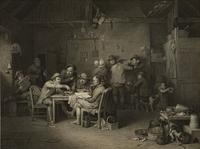
Village Politicians
David Wilkie
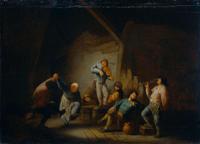
Dancing Couple and Merry Company in an Interior
Adriaen van Ostade
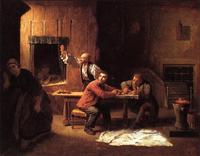
The Counterfeiters
Eastman Johnson
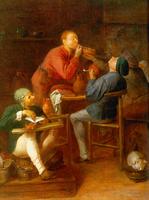
The Smokers or The Peasants of Moerdijk
Adriaen Brouwer
Peasant Inn
Adriaen Brouwer
Figures Gambling in a Tavern
David Teniers the Younger
Lean Kitchen
Jan Steen
Village barbershop
Adriaen Brouwer
Amorous Couple in An Inn
Jan Miense Molenaer
Peasants Drinking and Making Music in a Barn
Adriaen van Ostade
Peasants in an Interior
Adriaen van Ostade
The King Drinks
Jan Miense Molenaer
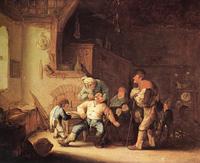
Barber Extracting of Tooth
Adriaen van Ostade
In the Tavern
Jan Steen
Inn Scene
Adriaen van Ostade
Prayer before Meal
Jan Steen
Peasants Smoking And Drinking
Adriaen Brouwer
Trump
Ferdinand de Braekeleer