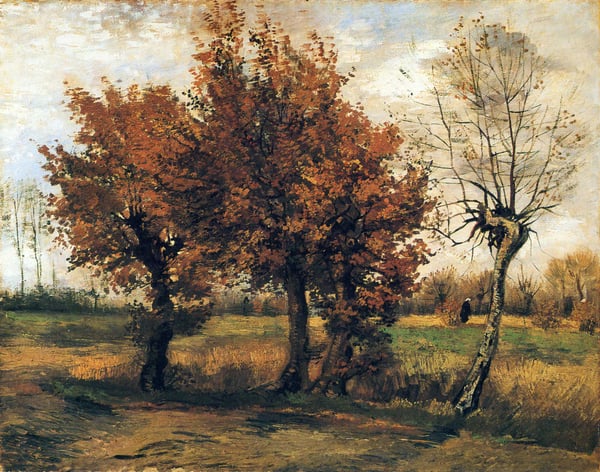
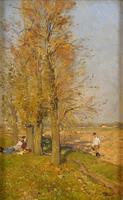
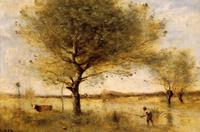
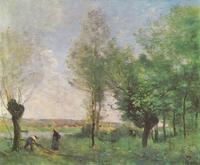
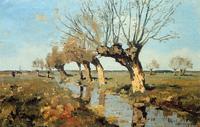
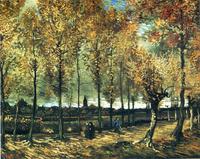
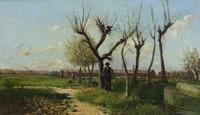
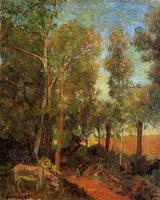
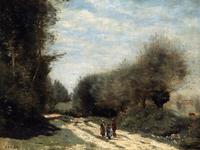
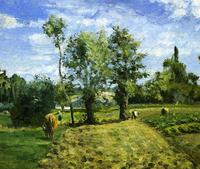
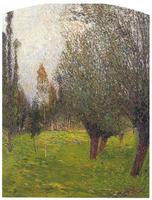
This analysis is based solely on the provided facts: the artwork is "Autumn Landscape with Four Trees" by Vincent van Gogh, categorized as Realism in the landscape genre.
Expert Analysis:
Within the context of Realism, this work is significant for how van Gogh applies the movement’s core tenets—truthful, unsentimental observation of nature—to a seemingly simple subject. The composition’s focus on four trees in an autumn setting is a classic Realist choice: an ordinary, unidealized slice of rural landscape, devoid of dramatic narrative or romantic exaggeration.
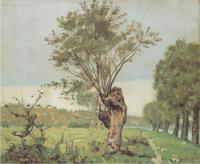
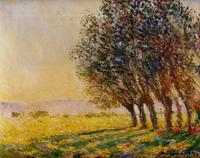
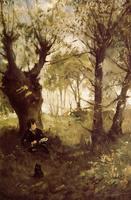
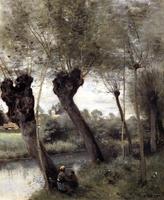
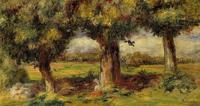
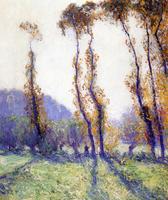
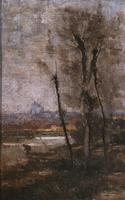
What elevates the painting is van Gogh’s early mastery of atmosphere. The autumn season is rendered with precise, earthy tonalities—ochres, russets, and muted greens—that anchor the scene in a specific time of day and year. The four trees act as both structural anchors and individual characters, their irregular shapes and bare branches studied with the empirical eye of a Realist. Yet even within this disciplined style, whispers of van Gogh’s later Post-Impressionist energy appear: the stippled leaves and textured brushwork hint at a personal, almost tactile engagement with the landscape.
For van Gogh’s development, this work is pivotal. It shows him fully committing to the Realist principle of painting from direct observation, while subtly pushing toward the expressive color and rhythm that would later define his signature. As a Realist landscape, “Autumn Landscape with Four Trees” demonstrates that van Gogh could achieve the movement’s goal of capturing the dignified, quiet truth of the natural world—long before he broke its conventions.